Walk into the local health food shop or pick up today's paper and the chances are that you'll see adverts for acupuncture and herbal medicine, hypnotists and homeopaths.
Sextants at Greenwich consists of two main sections: The introductory chapters and the catalogue of navigating instruments of the National Maritime Museum.
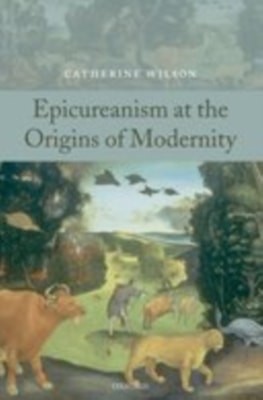
This landmark study examines the role played by the rediscovery of the writings of the ancient atomists, Epicurus and Lucretius, in the articulation of the major philosophical systems of the seventeenth century, and, more broadly, their influence on the evolution of natural science and moral and political philosophy.
Against the backdrop of unprecedented concern for the future of health care, this Very Short Introduction surveys the history of medicine from classical times to the present.
This Handbook explores the history of mathematics under a series of themes which raise new questions about what mathematics has been and what it has meant to practice it.
This book presents the life and personality, the scientific and philosophical work of Ludwig Boltzmann, one of the great scientists who marked the passage from 19th- to 20th-Century physics.
In a startling reinterpretation of the evidence, Stillman Drake advances the hypothesis that Galileo's trial and condemnation by the Inquisition was caused not by his defiance of the Church, but by the hostility of contemporary philosophers.
The popular stereotype of the scientist as mad boffin or weedy nerd has been peddled widely in film and fiction, with the implication that the world of science is far removed from the intellectual and emotional messiness of other human activities.
In 1953 Watson and Crick discovered the double helical structure of DNA and Watson's personal account of the discovery, The Double Helix, was published in 1968.
This book covers the history of 'Big Ben', the great clock and bells at Westminster, from the origins of Westminster as the seat of government right up to the celebrations of the Great Clock's 150th anniversary in 2009.
This book began with the aim of telling the almost forgotten story of Thomas Hancock, the rubber developer who in his own day was acknowledged as one of the great scientific pioneers of the Industrial Revolution.
Physics was the leading science of the twentieth century and the book retraces important discoveries, made between 1895 and 2001, in 100 self-contained episodes.
From the sheep, dog, and cockerel that were sent aloft in Montgolfier's balloon, to Galvani's frog's legs, Dolly the Sheep, the finches of the Galapagos, and even imaginary cats and simulated life forms, Pavlov's Dogs and Schrodinger's Cat explores the fascinating history of the role of living things in science.
This Very Short Introduction uses Newton's own unpublished writings to provide fascinating insight into the man who kept the Royal Society under his thumb, was Head of the Mint, and whose contributions to our understanding of the heavens and the earth are considered by many to be unparalleled.
This book presents a biography of Abdus Salam, the first Muslim to win a Nobel Prize for Science (Physics 1979), who was nevertheless excommunicated and branded as a heretic in his own country.
Terrors of the Table is an absorbing account of the struggle to find the necessary ingredients of a healthy diet, and the fads and quackery that have always waylaid the unwary and the foolish when it comes to the matter of food and health.
This Very Short Introduction traces the history and cultural impact of the elements on humankind, and examines why people have long sought to identify the substances around them.
The US decision to drop an atomic bomb on the Japanese city of Hiroshima on 6 August 1945 remains one of the most controversial events of the twentieth century.
Peter Byrne tells the story of Hugh Everett III (1930-1982), whose "e;many worlds"e; theory of multiple universes has had a profound impact on physics and philosophy.
This book began with the aim of telling the almost forgotten story of Thomas Hancock, the rubber developer who in his own day was acknowledged as one of the great scientific pioneers of the Industrial Revolution.
For 150 years, Down's Syndrome has constituted the archetypal mental disability, easily recognisable by distinct facial anomalies and physical stigmata.