Asthma is a familiar and growing disease today, but its story goes back to the ancient world, as we know from accounts in ancient texts from China, India, Greece and Rome.
The organisation of higher education across the world is one of several factors that conspire to create the assumption that our own map of the intellectual disciplines is, broadly speaking, valid cross-culturally.
Walk into the local health food shop or pick up today's paper and the chances are that you'll see adverts for acupuncture and herbal medicine, hypnotists and homeopaths.
Physics was the leading science of the twentieth century and the book retraces important discoveries, made between 1895 and 2001, in 100 self-contained episodes.
Sextants at Greenwich consists of two main sections: The introductory chapters and the catalogue of navigating instruments of the National Maritime Museum.
Charles Ortloff provides a new perspective on archaeological studies of the urban and agricultural water supply and distribution systems of the major ancient civilizations of South America, the Middle East, and South-East Asia, by using modern computer analysis methods to extract the true hydraulic/hydrological knowledge base available to these peoples.
This landmark study examines the role played by the rediscovery of the writings of the ancient atomists, Epicurus and Lucretius, in the articulation of the major philosophical systems of the seventeenth century, and, more broadly, their influence on the evolution of natural science and moral and political philosophy.
From the sheep, dog, and cockerel that were sent aloft in Montgolfier's balloon, to Galvani's frog's legs, Dolly the Sheep, the finches of the Galapagos, and even imaginary cats and simulated life forms, Pavlov's Dogs and Schrodinger's Cat explores the fascinating history of the role of living things in science.
Selected and introduced by Richard Dawkins, The Oxford Book of Modern Science Writing is a celebration of the finest writing by scientists for a wider audience - revealing that many of the best scientists have displayed as much imagination and skill with the pen as they have in the laboratory.
Against the backdrop of unprecedented concern for the future of health care, this Very Short Introduction surveys the history of medicine from classical times to the present.
This Handbook explores the history of mathematics under a series of themes which raise new questions about what mathematics has been and what it has meant to practice it.
'Man still bears in his bodily frame the indelible stamp of his lowly origin' On topics ranging from intelligent design and climate change to the politics of gender and race, the evolutionary writings of Charles Darwin occupy a pivotal position in contemporary public debate.
This book presents a biography of Abdus Salam, the first Muslim to win a Nobel Prize for Science (Physics 1979), who was nevertheless excommunicated and branded as a heretic in his own country.
Our lives, states of health, relationships, behaviour, experiences of the natural world, and the technologies that shape our contemporary existence are subject to a superfluity of competing, multi-faceted and sometimes incompatible explanations.
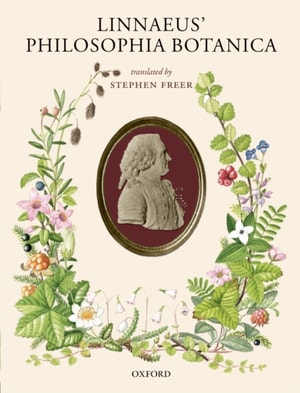
Carl Linnaeus (1707-1778) was a Swedish botanist, physician, and zoologist, who laid the foundations of modern biological systematics and nomenclature.
In a startling reinterpretation of the evidence, Stillman Drake advances the hypothesis that Galileo's trial and condemnation by the Inquisition was caused not by his defiance of the Church, but by the hostility of contemporary philosophers.
Among all the great discoveries and inventions of the nineteenth century, few offer us a more fascinating insight into Victorian society than the discovery of anaesthesia.
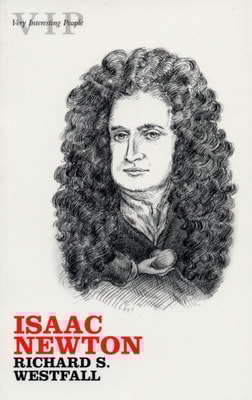
This Very Short Introduction uses Newton's own unpublished writings to provide fascinating insight into the man who kept the Royal Society under his thumb, was Head of the Mint, and whose contributions to our understanding of the heavens and the earth are considered by many to be unparalleled.
In 1912 Lawrence Bragg explained the interaction of X-rays with crystals, and he and his father, William thereby pioneered X-ray spectroscopy and X-ray crystallography.
Margarita Diaz-Andreu offers an innovative history of archaeology during the nineteenth century, encompassing all its fields from the origins of humanity to the medieval period, and all areas of the world.
This book is a historical account of how natural philosophers and scientists have endeavoured to understand the universe at large, first in a mythical and later in a scientific context.
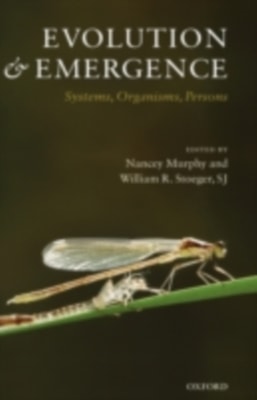
A collection of essays by experts in the field, exploring how nature works at every level to produce more complex and highly organized objects, systems, and organisms from much simpler components, and how our increasing understanding of this universal phenomenon of emergence can lead us to a deeper and richer appreciation of who we are as human beings and of our relationship to God.
This book presents the life and personality, the scientific and philosophical work of Ludwig Boltzmann, one of the great scientists who marked the passage from 19th- to 20th-Century physics.
Imagine a world without rubber - neither tyres for motoring or flying, nor bouncing balls for sports, neither seals for washing machines and dishwashers, nor medical gloves - no elastics.
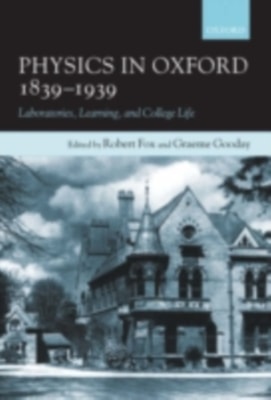
Physics in Oxford, 1839-1939 offers a challenging new interpretation of pre-war physics at the University of Oxford, which was far more dynamic than most historians and physicists have been prepared to believe.
A History of Mathematics: From Mesopotamia to Modernity covers the evolution of mathematics through time and across the major Eastern and Western civilizations.
Unlike humans, who came down from the trees and developed bipedal locomotion, chimpanzees have remained in the original habitat of our ancestors: the tropical rainforests of Africa.