Immanuel Kant's Critique of Pure Reason is widely taken to be the starting point of the modern period of mathematics while David Hilbert was the last great mainstream mathematician to pursue important nineteenth cnetury ideas.
Immanuel Kant's Critique of Pure Reason is widely taken to be the starting point of the modern period of mathematics while David Hilbert was the last great mainstream mathematician to pursue important nineteenth cnetury ideas.
During the 20th century, scientists discovered what the Universe is made of; as the 21st century begins, they are preparing experiments to find out how it came to be like this.
David Owen explores Hume's account of reason and its role in human understanding, seen in the context of other notable accounts by philosophers of the early modern period.
This Very Short Introduction traces the history and cultural impact of the elements on humankind, and examines why people have long sought to identify the substances around them.
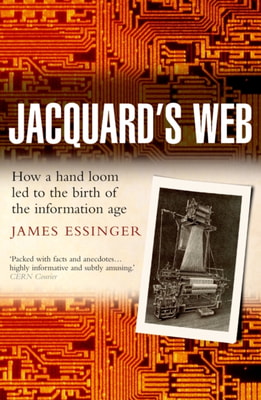
Jacquard's Web is the story of some of the most ingenious inventors the world has ever known, a fascinating account of how a hand-loom invented in Napoleonic France led to the development of the modern information age.
The US decision to drop an atomic bomb on the Japanese city of Hiroshima on 6 August 1945 remains one of the most controversial events of the twentieth century.
A Commonwealth of Knowledge addresses the relationship between social and scientific thought, colonial identity, and political power in nineteenth- and twentieth-century South Africa.
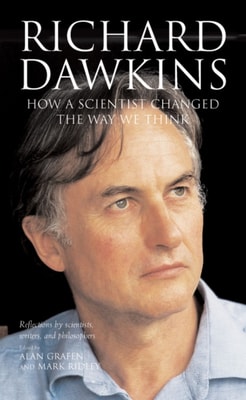
Published to coincide with the 30th anniversary of The Selfish Gene, this sparkling collection explores the impact of Richard Dawkins as scientist, rationalist, and one of the most important thinkers alive today.
Drawing on entirely new evidence, The English Renaissance Stage: Geometry, Poetics, and the Practical Spatial Arts 1580-1630 examines the history of English dramatic form and its relationship to the mathematics, technology, and early scientific thought during the Renaissance period.
How could the professional triumph of man-midwifery and contemporary tales of pregnant men, rabbit-breeding mothers, and meddling midwives in eighteenth-century Britain help construct the emergence of modern corporate and individual identities?
This edited volume, aimed at both students and researchers in philosophy, mathematics and history of science, highlights leading developments in the overlapping areas of philosophy and the history of modern mathematics.
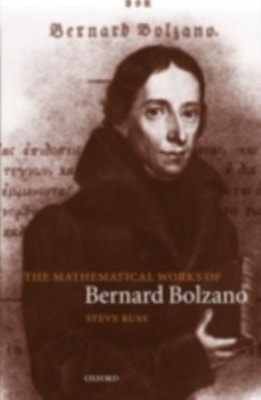
Bernard Bolzano (1781-1848, Prague) was a remarkable thinker and reformer far ahead of his time in many areas, including philosophy, theology, ethics, politics, logic, and mathematics.
The Shortt clock, made in the 1920s, is the most famous accurate clock pendulum ever known, having an accuracy of one second per year when kept at nearly constant temperature.
Terrors of the Table is an absorbing account of the struggle to find the necessary ingredients of a healthy diet, and the fads and quackery that have always waylaid the unwary and the foolish when it comes to the matter of food and health.
When Benjamin Franklin, the 18th-century American statesman and scientist, watched the calming effect of a drop of oil on the waves and ripples of a London pond, he was observing what Pliny the Elder and generations of seafarers had done before him.
The Human Sciences address problems in nature and society that often require coordinated approaches of several scientific disciplines and scholarly research, embracing the social and biological sciences, and history.
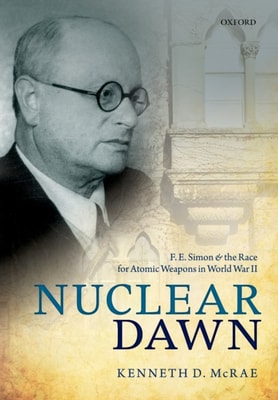
This book provides a rounded biography of Franz (later Sir Francis) Simon, his early life in Germany, his move to Oxford in 1933, and his experimental contributions to low temperature physics approximating absolute zero.
This book provides a rounded biography of Franz (later Sir Francis) Simon, his early life in Germany, his move to Oxford in 1933, and his experimental contributions to low temperature physics approximating absolute zero.
Galileo is known as a pioneer of science - especially of mechanics and astronomy - but far less attention has been paid to his work on the senses generally, and more specifically on vision.
Galileo is known as a pioneer of science - especially of mechanics and astronomy - but far less attention has been paid to his work on the senses generally, and more specifically on vision.
Tracing unexplored connections between nineteenth-century astronomy and literature, The Starry Sky Within offers a new understanding of literary point of view as essentially multiple, mobile, and comparative.
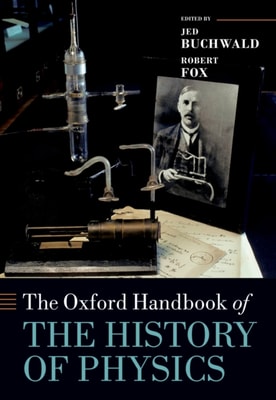
The Oxford Handbook of the History of Physics brings together cutting-edge writing by more than twenty leading authorities on the history of physics from the seventeenth century to the present day.
This book focuses on the ancient Near East, early imperial China, South-East Asia, and medieval Europe, shedding light on mathematical knowledge and practices documented by sources relating to the administrative and economic activities of officials, merchants and other actors.
How does the physics we know today - a highly professionalised enterprise, inextricably linked to government and industry - link back to its origins as a liberal art in Ancient Greece?
How does the physics we know today - a highly professionalised enterprise, inextricably linked to government and industry - link back to its origins as a liberal art in Ancient Greece?
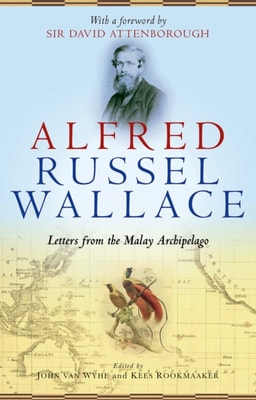
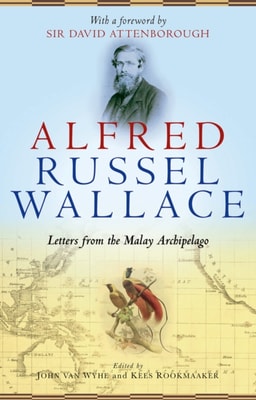
This volume brings together the letters of the great Victorian naturalist Alfred Russel Wallace (1823-1913) during his famous travels of 1854-62 in the Malay Archipelago (now Singapore, Malaysia, and Indonesia).
This volume brings together the letters of the great Victorian naturalist Alfred Russel Wallace (1823-1913) during his famous travels of 1854-62 in the Malay Archipelago (now Singapore, Malaysia, and Indonesia).
Primate Sexuality provides an authoritative and comprehensive synthesis of current research on the evolution and physiological control of sexual behaviour in the primates - prosimians, monkeys, apes, and human beings.
Jacquard's Web is the story of some of the most ingenious inventors the world has ever known, a fascinating account of how a hand-loom invented in Napoleonic France led to the development of the modern information age.
Published to coincide with the 30th anniversary of The Selfish Gene, this sparkling collection explores the impact of Richard Dawkins as scientist, rationalist, and one of the most important thinkers alive today.
Rising from a humble background in rural southern Ireland, John Tyndall became one of the foremost physicists, communicators of science, and polemicists in mid-Victorian Britain.