This volume explores the Industrial Age (1860-1914), bringing together published and archival primary sources with introductory essays that contextualize a period of extraordinary social, cultural, and economic transformation.
'How can a three-pound mass of jelly that you can hold in your palm imagine angels, contemplate the meaning of infinity, and even question its own place in the cosmos?
'The importance of the end in view prompted me to undertake all this work, which seemed to me destined to bring about a revolution in physics and chemistry.
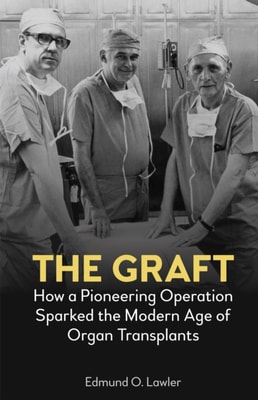
The first human organ transplant in 1950 at a suburban hospital is the focus of The Graft: How a Pioneering Operation Sparked the Modern Age of Organ Transplants.
Oft schon totgesagt, erweist sich die "Frankfurter Schule" als erstaunlich überlebensfähig, ja es gibt Anzeichen dafür, dass sie gerade von einer jungen Generation neu rezipiert und fortgesetzt wird.
Culinary Technology of the Ancient Near East discusses the technical aspects of meal preparation, cooking, and baking in the ancient Near East, exploring a wide range of topics including kitchens, cooking equipment, cooking and baking vessels, and serving and eating utensils.
Through a presentation of the oldest rock art dated in the Americas, located in Monte Alegre, Brazil, this book analyzes an ancient ecological-astronomy strategy that theoretically made the rapid human migration in the Americas successful.
This book analyses aspects of the material culture of early modern Greece from an object-based perspective, using surviving artefacts from that period as primary sources.
Go on an awe-inspiring journey, unraveling the secrets of our universe from the tiniest particles to the vastness of spaceIn this thought-provoking exploration, physicists Chris Ferrie and Geraint F.
This book explores and compares the reflections on space and quantity found in the works of five philosophers: Spinoza, Leibniz, Bergson, Whitehead, and Deleuze.
Die Studie widmet sich der amerikanischen Kernphysikerelite, die nach dem Zweiten Weltkrieg die Möglichkeiten ihrer Wissenschaft für Krieg und Frieden deutete.
In the twenty-first century, there is a battle raging over the hearts and minds of our people, especially for the education of our children in scientific fields.
Whereas scholarly study of Creationism usually places it in the context of religion and the history or philosophy of science, The Creationist Debate, here revised and completely updated in its second edition, has been written in the conviction that creationism is ultimately about the status of the Bible in the modern world.
Whereas scholarly study of Creationism usually places it in the context of religion and the history or philosophy of science, The Creationist Debate, here revised and completely updated in its second edition, has been written in the conviction that creationism is ultimately about the status of the Bible in the modern world.
The Age of Genius explores the eventful intertwining of outward event and inner intellectual life to tell, in all its richness and depth, the story of the 17th century in Europe.
Ground Control: A Design History of Technical Lands and NASA's Space Complex explores the infrastructural history of the United States rocket launch complex.
A comprehensive examination of American women scientists across the sciences throughout the 20th century, providing a rich historical context for understanding their achievements and the way they changed the practice of science.
Diarmuid Jeffreys traces the story of aspirin from the drug's origins in ancient Egypt, through its industrial development at the end of the nineteenth century and its key role in the great flu pandemic of 1918, to its subsequent exploitation by the pharmaceutical conglomerates and the marvelous powers still being discovered today.
The historian and author of Lillian Gilbreth examines the "e;Great Man"e; myth of science with profiles of women scientists from Marie Curie to Jane Goodall.
Eighty years ago, Ettore Majorana, a brilliant student of Enrico Fermi, disappeared under mysterious circumstances while going by ship from Palermo to Naples.