Eighty years ago, Ettore Majorana, a brilliant student of Enrico Fermi, disappeared under mysterious circumstances while going by ship from Palermo to Naples.
Challenging the "e;two cultures"e; debate, The Experimental Imagination tells the story of how literariness came to be distinguished from its epistemological sibling, science, as a source of truth about the natural and social worlds in the British Enlightenment.
This volume offers a comprehensive history of the Mount Desert Island Biological Laboratory (MDIBL), one of the major marine laboratories in the United States and a leader in using marine organisms to study fundamental physiological concepts.
This is the story of the astronomer Milton La Salle Humason, whose career was integral to developing our understanding of stellar and universal evolution and who helped to build the analytical basis for the work of such notable astronomers and astrophysicists as Paul Merrill, Walter Adams, Alfred Joy, Frederick Seares, Fritz Zwicky, Walter Baade and Edwin Hubble.
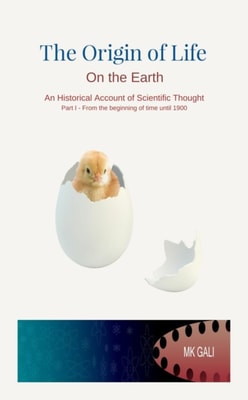
This book collects three outstanding examples of the work of Mexican biologist Alfonso Luis Herrera (1868-1943), a pioneer in experimental origins of life research.
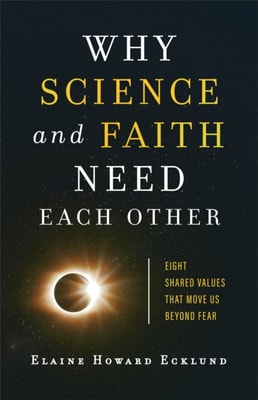
The Latest Scientific Discoveries Point to an Intentional Creator Most of us remember the basics from science classes about how Earth came to be the only known planet that sustains complex life.
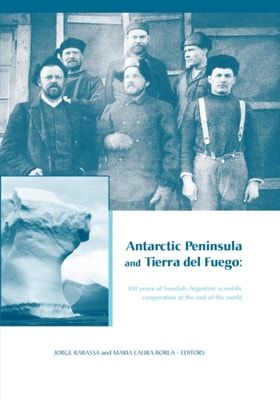
This symposium, held in Argentina in March 2003, commemorates Otto Nordenskjold's 1901 expedition, and pays tribute to the Swedish and Argentinian explorers who took on the challenge of early fieldwork in Patagonia and Antarctica.
chapter 1 Time in the Classical and Medieval Worldviews From the Beginnings to the Pre-Socratic School Zeno's Time Arrow and Aristotle's Continuum 6 Time and Creation According to Saint Augustine 15 Time and Medieval Astronomy 18 20 Calendars and Clocks chapter 2 Time in the Worldview of Classical Physics 25 Absolute Time According to Newton 26 Relational Time According to Leibniz 30 Time in Classical Mechanics 31 Time in Kant's Epistemology 35 chapter 3 Relativistic Spacetime 43 Time in Special Relativity Theory 44 Time in General Relativity Theory 50 Time in Relativistic Cosmology 54 chapter 4 Time and the Quantum World 61 Time in Quantum Mechanics 62 Time in Quantum Field Theories 70 Time, Black Holes, and the Anthropic Principle 78 Time and Thermodynamics chapter 5 83 Time in Equilibrium Thermodynamics 84 Time in Nonequilibrium Thermodynamics 2 9 Time, Irreversibility, and Self-Organization 100 chapter 6 Time and Life 107 Time in Darwin's Theory of Evolution 108 Time in Molecular Evolution 111 Time Hierarchies and Biological Rhythms 117 chapter 7 Time and Consciousness 121 Temporal Rhythms and Brain Physiology 122 The Experience of Time and the Emergence of Consciousness 124 Computation Time and Artificial Intelligence 128 chapter 8 Time in History and Culture 137 Time in Historical Cultures 138 Time in Technological-Industrial Cultures 144 The Time Horizon of the Technological World and the Philosophy of Time 152 Further Reading 161 Index 167 Acknowledgments The Little Book of Time was inspired by my research in
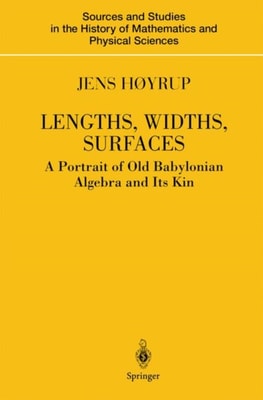
In this examination of the Babylonian cuneiform "e;algebra"e; texts, based on a detailed investigation of the terminology and discursive organization of the texts, Jens Hoyrup proposes that the traditional interpretation must be rejected.
From the reviews: "e;A prominent research mathematician and a high school teacher have combined their efforts in order to produce a high school geometry course.
Gill Blanchard's practical and informative handbook will help you to trace your ancestors in the traditional counties of East Anglia Norfolk, Suffolk, Cambridgeshire and Essex and it will give you an insight into their lives.
The conventional opposition of scholastic Aristotelianism and humanistic science has been increasingly questioned in recent years, and in these articles William Wallace aims to demonstrate that a progressive Aristotelianism in fact provided the foundation for Galileo's scientific discoveries.
This book analyses aspects of the material culture of early modern Greece from an object-based perspective, using surviving artefacts from that period as primary sources.
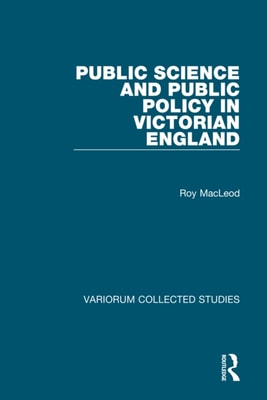
This book comprises nine essays, selected from Roy MacLeod's work on the social history of Victorian science, and is concerned with the analysis of science as a responsibility and opportunity for 19th-century statecraft.
The rise of scientific thinking in finding, catching, and convicting criminals-and, just as important, freeing the innocent-has transformed society's assault on crime.
Starting at the dawn of science, History of Industrial Gases traces the development of gas theory from its Aristotelian roots to its modern achievements as a global industry.
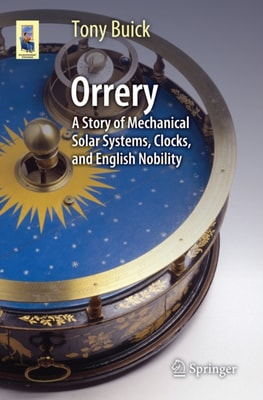
"e;Orrery"e; appeals to almost anyone interested in popular astronomy, astronomical mechanical devices, scientific instruments, the history of clocks - and even the history of aristocratic and prestigious families!