This book presents the first ever English translation of the Medicina Plinii, one of the most influential books of applied medicine and self-medication in Late Antiquity and the Middle Ages.
This book presents the first ever English translation of the Medicina Plinii, one of the most influential books of applied medicine and self-medication in Late Antiquity and the Middle Ages.
This book provides a comprehensive overview of the very rich thinking about environmental issues which has grown up in Russia since the nineteenth century, a body of knowledge and thought which is not well known to Western scholars and environmentalists.
This book provides a comprehensive overview of the very rich thinking about environmental issues which has grown up in Russia since the nineteenth century, a body of knowledge and thought which is not well known to Western scholars and environmentalists.
This book deals with two key aspects of the history of steam engines, a cornerstone of the Industrial Revolution, specifically the road that led to its discovery and the process of diffusion of the early steam engines.
This book deals with two key aspects of the history of steam engines, a cornerstone of the Industrial Revolution, specifically the road that led to its discovery and the process of diffusion of the early steam engines.
First published in 1935 (this edition in 1946), this short account of the science of embryology was the first book in English to provide a simple outline of the whole of this important subject.
First published in 1935 (this edition in 1946), this short account of the science of embryology was the first book in English to provide a simple outline of the whole of this important subject.
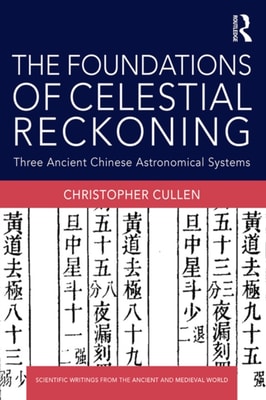
The Foundations of Celestial Reckoning gives the reader direct access to the foundational documents of the tradition of calculation created by astronomers of the early Chinese empire between the late second century BCE and the third century CE.
Charles Darwin is well-known throughout the world for his revolutionary work from 1859; The Origin of Species, the foundational study of evolution which greatly challenged the near-universal belief in the Christian world, at that time, of creationism.
Charles Darwin is well-known throughout the world for his revolutionary work from 1859; The Origin of Species, the foundational study of evolution which greatly challenged the near-universal belief in the Christian world, at that time, of creationism.
Originally published in 1912, Industry in England provides a complete history of industry and industrial changes in England from pre-roman times to modern England as it stood in the early twentieth century.
Originally published in 1912, Industry in England provides a complete history of industry and industrial changes in England from pre-roman times to modern England as it stood in the early twentieth century.
Digital media, networks and archives reimagine and revitalize individual, social and cultural memory but they also ensnare it, bringing it under new forms of control.
Digital media, networks and archives reimagine and revitalize individual, social and cultural memory but they also ensnare it, bringing it under new forms of control.
Over his philosophical career, David Wiggins has produced a body of work that, though varied and wide-ranging, stands as a coherent and carefully integrated whole.
Over his philosophical career, David Wiggins has produced a body of work that, though varied and wide-ranging, stands as a coherent and carefully integrated whole.
First published in 1989, this dictionary of the whole field of the physical sciences is an invaluable guide through the changing terminology and practices of scientific research.
First published in 1989, this dictionary of the whole field of the physical sciences is an invaluable guide through the changing terminology and practices of scientific research.
The use of the term "e;biology"e; to refer to a unified science of life emerged around 1800 (most prominently by scientists such as Lamarck and Treviranus, although scholarship has indicated its usage at least 30-40 years earlier).
The use of the term "e;biology"e; to refer to a unified science of life emerged around 1800 (most prominently by scientists such as Lamarck and Treviranus, although scholarship has indicated its usage at least 30-40 years earlier).
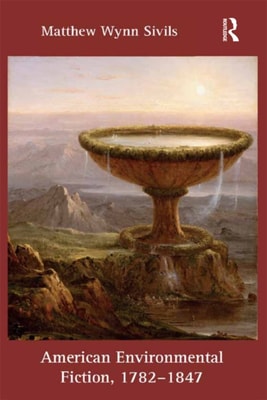
While Ralph Waldo Emerson and Henry David Thoreau are often credited with inventing American environmental writing, Matthew Wynn Sivils argues that the works of these Transcendentalists must be placed within a larger literary tradition that has its origins in early Republic natural histories, Indian captivity narratives, Gothic novels, and juvenile literature.
While Ralph Waldo Emerson and Henry David Thoreau are often credited with inventing American environmental writing, Matthew Wynn Sivils argues that the works of these Transcendentalists must be placed within a larger literary tradition that has its origins in early Republic natural histories, Indian captivity narratives, Gothic novels, and juvenile literature.
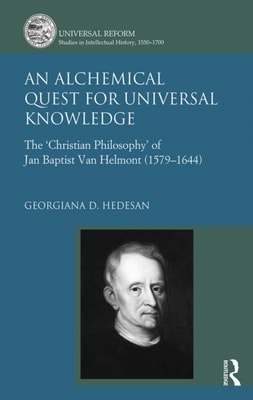
History of science credits the Flemish physician, alchemist and philosopher Jan Baptist Van Helmont (1579-1644) for his contributions to the development of chemistry and medicine.
History of science credits the Flemish physician, alchemist and philosopher Jan Baptist Van Helmont (1579-1644) for his contributions to the development of chemistry and medicine.
Agricultural Economists in Early Twentieth-Century Italy describes how Italian agricultural economists collected information about the economy of Italy, between the Giolittian and the Fascist era.
Agricultural Economists in Early Twentieth-Century Italy describes how Italian agricultural economists collected information about the economy of Italy, between the Giolittian and the Fascist era.
Set against the backdrop of a rapidly fissuring disciplinary landscape where poetry and science are increasingly viewed as irreconcilable and unrelated, Bernhard Kuhn's study uncovers a previously ignored, fundamental connection between autobiography and the natural sciences.
Set against the backdrop of a rapidly fissuring disciplinary landscape where poetry and science are increasingly viewed as irreconcilable and unrelated, Bernhard Kuhn's study uncovers a previously ignored, fundamental connection between autobiography and the natural sciences.