This collection of essays is the first book published in English to provide a thorough survey of the practices of science in the Spanish and Portuguese empires from 1500 to 1800.
Addressing the relationship between law and the visual, this book examines the importance of photography in Central, East, and Southeast European show trials.
For as long as humanity has ventured on the seas, naval warfare has been an integral part of their activities and the focal point for many histories and ideas of heritage.
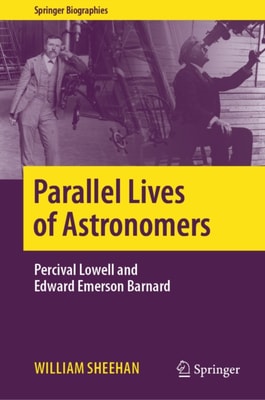
Using the "e;Parallel Lives"e; approach adopted by the Greek biographer Plutarch, noted historian of astronomy William Sheehan contrasts the lives and research careers of two famous astronomers, Percival Lowell and Edward Emerson Barnard.
A systematic survey and comparison of the work of 19th-century American and British women in scientific research, this book covers the two countries in which women of the period were most active in scientific work and examines all the fields in which they were engaged.
This study, beginning with the Dutch-invented telescope of 1608 and then Galileo''s discoveries, casts the European advancements in modern science, technology, and economic development into a global framework.
This study, beginning with the Dutch-invented telescope of 1608 and then Galileo''s discoveries, casts the European advancements in modern science, technology, and economic development into a global framework.
This book examines complex physical, philosophical and historiographical issues relating to quantum chromodynamics for graduate students and researchers.
This book examines complex physical, philosophical and historiographical issues relating to quantum chromodynamics for graduate students and researchers.
This book presents personality psychology, incorporating historical perspectives and how past developments have led to progressions within science and research.
Annotated with original illustrations, this valuable text brings together all known shorter publications, letters and journals written by Charles Darwin.
This book addresses the most important developments and debates in this exciting area of research for historians, philosophers of science and physicists.
This book presents personality psychology, incorporating historical perspectives and how past developments have led to progressions within science and research.
Uniquely, this book traces Descartes'' groundbreaking theory of scientific explanation back to the mathematical demonstrations of Aristotelian mechanics.
This book describes the relationship between science and poetry in the Hellenistic period, transforming our understanding of the origins of Western mathematics.