Following Amartya Sen's insistence to expand the framework of rational choice theory by taking into account 'non-utility information,' economists, political scientists and philosophers have recently concentrated their efforts in analysing the issues related to rights, freedom, diversity intentions and equality.
Following on from Roy Bhaskar's first two books, A Realist Theory of Science and The Possibility of Naturalism, Scientific Realism and Human Emancipation, establishes the conception of social science as explanatory-and thence emancipatory-critique.
Following on from Roy Bhaskar's first two books, A Realist Theory of Science and The Possibility of Naturalism, Scientific Realism and Human Emancipation, establishes the conception of social science as explanatory-and thence emancipatory-critique.
Research Ethics for Scientists is about best practices in all the major areas of research management and practice that are common to scientific researchers, especially those in academia.
Research Ethics for Scientists is about best practices in all the major areas of research management and practice that are common to scientific researchers, especially those in academia.
The major innovations which have occurred between the end of the 20th and the beginning of the 21st century represent a fresh challenge to the responsibility of innovators.
The major innovations which have occurred between the end of the 20th and the beginning of the 21st century represent a fresh challenge to the responsibility of innovators.
In this provocatively compelling new book, Michael Luntley offers a revolutionary reading of the opening section of Wittgenstein s Philosophical Investigations Critically engages with the most recent exegetical literature on Wittgenstein and other state-of-the-art philosophical work Encourages the re-incorporation of Wittgenstein studies into the mainstream philosophical conversation Has profound consequences for how we go on to read the rest of Wittgenstein s major work Makes a significant contribution not only to the literature on Wittgenstein, but also to studies in philosophy of language
2017 PROSE Award Honorable MentionThe PROSE Awards draw attention to pioneering works of research and for contributions to the conception, production, and design of landmark works in their fields.
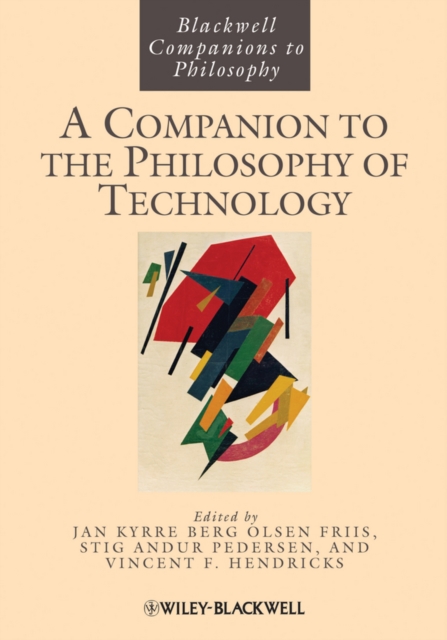
The new edition of this authoritative introduction to the philosophy of technology includes recent developments in the subject, while retaining the range and depth of its selection of seminal contributions and its much-admired editorial commentary.
The new edition of this authoritative introduction to the philosophy of technology includes recent developments in the subject, while retaining the range and depth of its selection of seminal contributions and its much-admired editorial commentary.
Drawing on essays from leading international and multi-disciplinary scholars, A Companion to the Philosophy of Technology is the first comprehensive and authoritative reference source to cover the key issues of technology s impact on society and our lives.
Newton is an evocative intellectual history of the life and ideas of Isaac Newton the natural philosopher, covering his influential thoughts about philosophical problems, our knowledge of nature, and even the nature of the divine.
Newton is an evocative intellectual history of the life and ideas of Isaac Newton the natural philosopher, covering his influential thoughts about philosophical problems, our knowledge of nature, and even the nature of the divine.
Evidence-Based Technical Analysis examines how you can apply the scientific method, and recently developed statistical tests, to determine the true effectiveness of technical trading signals.
Comparing and contrasting the reality of subjectivity in the work of history's great scientists and the modern Bayesian approach to statistical analysis Scientists and researchers are taught to analyze their data from an objective point of view, allowing the data to speak for themselves rather than assigning them meaning based on expectations or opinions.
This Element examines causality, mechanisms, explanations and discovery in classical experimental embryology as well as molecular developmental biology.
This Element examines causality, mechanisms, explanations and discovery in classical experimental embryology as well as molecular developmental biology.
This exploration of the global structure of spacetime within the context of general relativity examines the causal and singular structures of spacetime.