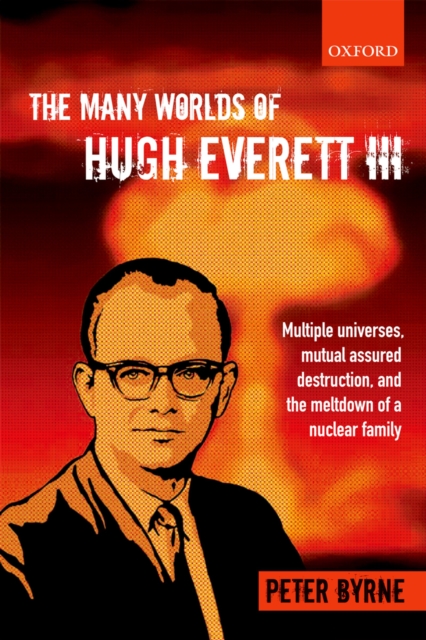
Peter Byrne tells the story of Hugh Everett III (1930-1982), whose "e;many worlds"e; theory of multiple universes has had a profound impact on physics and philosophy.
Quantum Information Theory and the Foundations of Quantum Mechanics is a conceptual analysis of one the most prominent and exciting new areas of physics, providing the first full-length philosophical treatment of quantum information theory and the questions it raises for our understanding of the quantum world.
In recent years philosophers of science have urged that many scientific theories are extremely useful and successful despite being internally inconsistent.
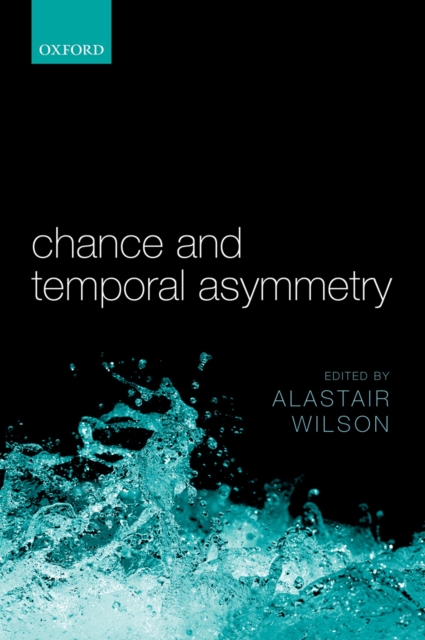
Chance and Temporal Asymmetry presents a collection of cutting-edge research papers in the metaphysics of science, tackling the perplexing philosophical problems raised by recent progress in the physics and metaphysics of chance and time.
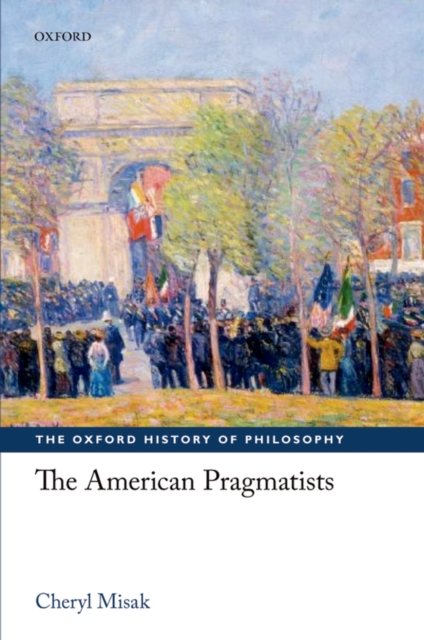
Cheryl Misak presents a history of the great American philosophical tradition of pragmatism, from its inception in the Metaphysical Club of the 1870s to the present day.
Our lives, states of health, relationships, behaviour, experiences of the natural world, and the technologies that shape our contemporary existence are subject to a superfluity of competing, multi-faceted and sometimes incompatible explanations.
Scientific Metaphysics collects original essays by some of the world's leading philosophers of science on the question of whether metaphysics can and should be naturalized--that is, conducted as a part of natural science.
Paul Horwich develops an interpretation of Ludwig Wittgenstein's later writings that differs in substantial respects from what can already be found in the literature.
The 'Adaptive Landscape' has been a central concept in population genetics and evolutionary biology since this powerful metaphor was first formulated by Sewall Wright in 1932.
The 'Adaptive Landscape' has been a central concept in population genetics and evolutionary biology since this powerful metaphor was first formulated by Sewall Wright in 1932.
The claim that contemporary analytic philosophers rely extensively on intuitions as evidence is almost universally accepted in current meta-philosophical debates and it figures prominently in our self-understanding as analytic philosophers.
John Dupre explores recent revolutionary developments in biology and considers their relevance for our understanding of human nature and human society.
This volume presents an interconnected set of sixteen essays, four of which are previously unpublished, by Allan Gotthelf--one of the leading experts in the study of Aristotle's biological writings.
In 1996, Alan Sokal, a Professor of Physics at New York University, wrote a paper for the cultural-studies journal Social Text, entitled 'Transgressing the Boundaries: Towards a transformative hermeneutics of quantum gravity'.
Is mathematics a highly sophisticated intellectual game in which the adepts display their skill by tackling invented problems, or are mathematicians engaged in acts of discovery as they explore an independent realm of mathematical reality?
Is mathematics a highly sophisticated intellectual game in which the adepts display their skill by tackling invented problems, or are mathematicians engaged in acts of discovery as they explore an independent realm of mathematical reality?
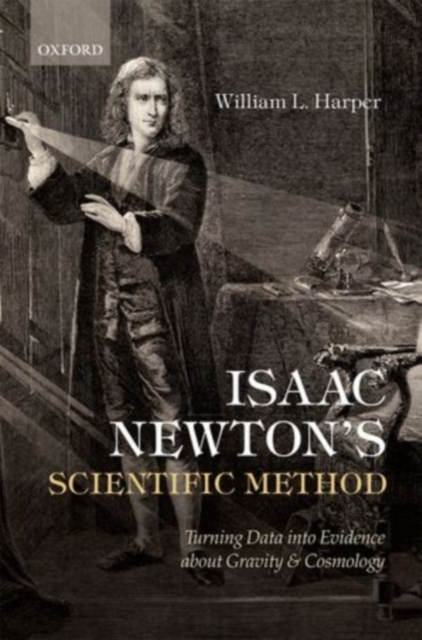
Isaac Newton's Scientific Method examines Newton's argument for universal gravity and his application of it to resolve the problem of deciding between geocentric and heliocentric world systems by measuring masses of the sun and planets.
Traditionally, philosophers of quantum mechanics have addressed exceedingly simple systems: a pair of electrons in an entangled state, or an atom and a cat in Dr.