In order to describe the logic of morality, "e;contractualist"e; philosophers have studied how individuals behave when they choose to follow their moral intuitions.
Across public discourse, in the media, politics, many branches of academic inquiry, and ordinary daily interactions, we spend a lot time talking about race: race relations, racial violence, discrimination based on race, racial integration, racial progress.
Across public discourse, in the media, politics, many branches of academic inquiry, and ordinary daily interactions, we spend a lot time talking about race: race relations, racial violence, discrimination based on race, racial integration, racial progress.
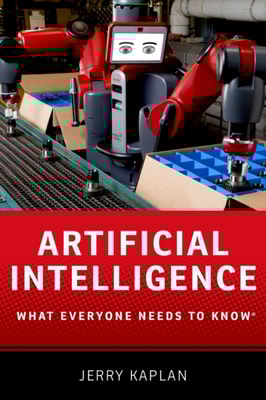
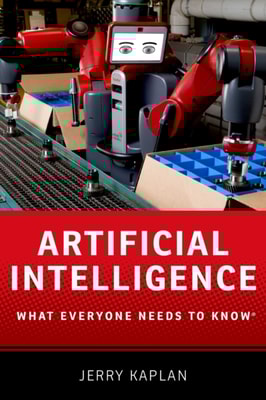
Over the coming decades, Artificial Intelligence will profoundly impact the way we live, work, wage war, play, seek a mate, educate our young, and care for our elderly.
Over the coming decades, Artificial Intelligence will profoundly impact the way we live, work, wage war, play, seek a mate, educate our young, and care for our elderly.
The 21st century offers a dizzying array of new technological developments: robots smart enough to take white collar jobs, social media tools that manage our most important relationships, ordinary objects that track, record, analyze and share every detail of our daily lives, and biomedical techniques with the potential to transform and enhance human minds and bodies to an unprecedented degree.
The 21st century offers a dizzying array of new technological developments: robots smart enough to take white collar jobs, social media tools that manage our most important relationships, ordinary objects that track, record, analyze and share every detail of our daily lives, and biomedical techniques with the potential to transform and enhance human minds and bodies to an unprecedented degree.
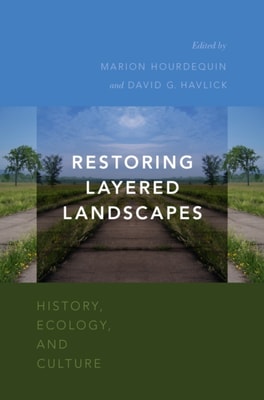
Restoring Layered Landscapes brings together historians, geographers, philosophers, and interdisciplinary scholars to explore ecological restoration in landscapes with complex histories shaped by ongoing interactions between humans and nature.
The essays in this volume address three fundamental questions in the philosophy of science: What is required for some fact to be evidence for a scientific hypothesis?
Humanity's physical design flaws have long been apparent--we get hemorrhoids and impacted wisdom teeth, for instance--but do the imperfections extend down to the level of our genes?
The biological and social sciences often generalize causal conclusions from one context or location to others that may differ in some relevant respects, as is illustrated by inferences from animal models to humans or from a pilot study to a broader population.
The global reality of suffering and death has always demanded an authentic theological response and impelled debate concerning Gods relationship to suffering, as well as the conceivability of the suffering of God.
Oracles of Science examines the popular writings of the six scientists who have been the most influential in shaping our perception of science, how it works, and how it relates to other fields of human endeavor, especially religion.
When ordinary people--mathematicians among them--take something to follow (deductively) from something else, they are exposing the backbone of our self-ascribed ability to reason.
Universally recognized as bringing about a revolutionary transformation of the notions of space, time, and motion in physics, Einstein's theory of gravitation, known as "e;general relativity,"e; was also a defining event for 20th century philosophy of science.
This book brings together an impressive group of leading scholars in the sciences of complexity, and a few workers on the interface of science and religion, to explore the wider implications of complexity studies.
As author of the bestselling Why People Believe Weird Things and How We Believe, and Editor-in-Chief of Skeptic magazine, Michael Shermer has emerged as the nation's number one scourge of superstition and bad science.
This intellectual biography of Immanuel Kant's early years-- from 1746 when he wrote his first book, to 1766 when he lost his faith in metaphysics --makes an outstanding contribution to Kant scholarship.