How a computational framework can account for the successes and failures of human cognitionAt the heart of human intelligence rests a fundamental puzzle: How are we incredibly smart and stupid at the same time?
Technology, perhaps the most salient feature of our time, affects everything from jobs to international law yet ranks among the most unpredictable facets of human life.
Hermann Weyl (1885-1955) was one of the twentieth century's most important mathematicians, as well as a seminal figure in the development of quantum physics and general relativity.
A look at the extraordinary ways the brain turns thoughts into actions-and how this shapes our everyday livesWhy is it hard to text and drive at the same time?
The case for a thoughtful secularism from some of today's most distinguished scientists, philosophers, and writersCan secularism offer us moral, aesthetic, and spiritual satisfaction?
Songs, barks, roars, hoots, squeals, and growls: exploring the mysteries of how animals communicate by soundWhat is the meaning of a bird's song, a baboon's bark, an owl's hoot, or a dolphin's clicks?
This book highlights the key phases and central findings of Alzheimer's Disease research since the introduction of the label 'Alzheimer's Disease' in 1910.
From conservation to protecting endangered species to sustainable living, A Christian's Guide to Planet Earth offers a faith-based framework for viewing our responsibility to the natural world as well as practical, biblical ways we can care for the magnificent creation around us.
The science fiction genre maintains a remarkable hold on the imagination and enthusiasm of the filmgoing public, captivating large audiences worldwide and garnering ever-larger profits.
This work is a large, powerfully illustrated interdisciplinary natural sciences volume, the first of its kind to examine the critically important nature of ecological paradox, through an abundance of lenses: the biological sciences, taxonomy, archaeology, geopolitical history, comparative ethics, literature, philosophy, the history of science, human geography, population ecology, epistemology, anthropology, demographics, and futurism.
This book is a historical analysis of the quantum mechanical revolution and the emergence of a new discipline from the perspective, not of a professor, but of a recent or actual Ph.
This is a second edition of a textbook that provides the first comprehensive, easy-to-read, and up-to-date account of the fascinating discipline of archaeoastronomy, in which the relationship between ancient constructions and the sky is studied in order to gain a better understanding of the ideas of the architects of the past and of their religious and symbolic worlds.
A major synthesis of homology, written by a top researcher in the fieldHomology-a similar trait shared by different species and derived from common ancestry, such as a seal's fin and a bird's wing-is one of the most fundamental yet challenging concepts in evolutionary biology.
Songs, barks, roars, hoots, squeals, and growls: exploring the mysteries of how animals communicate by soundWhat is the meaning of a bird's song, a baboon's bark, an owl's hoot, or a dolphin's clicks?
This book attempts to advance Donald Griffin's vision of the "e;final, crowning chapter of the Darwinian revolution"e; by developing a philosophy for the science of animal consciousness.
Diderot, tanrisal, dinsel inancin yerine akli geciren adamdir, onun savasimi buydu ve butun kor inanclari silip supuren bu akil, gorunen dunyayi, dogayi, felsefenin, sanatin, sag torenin temel ilkesi durumuna getirdi.
Feminist Epistemology and Philosophy of Science: An Introduction is structured around six questions and the answers to them that have been offered by feminist epistemologists and philosophers of science.
Feminist Epistemology and Philosophy of Science: An Introduction is structured around six questions and the answers to them that have been offered by feminist epistemologists and philosophers of science.
This revealing work examines an approach from ancient astronomy to what was then a particularly important question, namely that of understanding the relationship between the position in the ecliptic and the time it takes for a fixed-length of the ecliptic beginning at that point to rise above the eastern horizon.
This book provides both an introduction to the philosophy of scientific modeling and a contribution to the discussion and clarification of two recent philosophical conceptions of models: artifactualism and fictionalism.
For a brief time in history, it was possible to imagine that a sufficiently advanced intellect could, given sufficient time and resources, in principle understand how to mathematically prove everything that was true.
This monograph, now in its 2nd edition with 31 new chapters and significant updates, is the first book of its kind written specifically for graduate students and clinicians.
This book argues that philosophy is as practical as plumbing and what we need right now is what philosophers can offer as philosophers to help us all, our species, and beyond, through this ecological emergency, this climate change, this anthropocene.
This work provides an overview of attempts to assess the current condition of the concept of creation order within reformational philosophy compared to other perspectives.
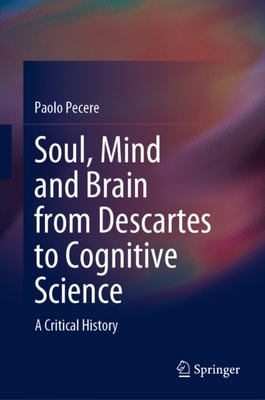
This interdisciplinary book ties the historical work of Descartes to his successors through current research and critical overviews on the neuroscience of consciousness, the brain, and cognition.