This book defends the very contentious Idealist interpretation of Hume on external objects, and draws from it far-reaching metaphysical and epistemological consequences for Hume's philosophy.
Bioethics: 50 Puzzles, Problems, and Thought Experiments collects 50 cases-both real and imaginary-that have been, or should be, of special interest and importance to philosophical bioethics.
This book explores Rene Descartes's attempts to describe particular bodies, such as rocks, minerals, metals, plants, and animals, within the mechanistic interpretation of nature of his philosophical program.
This book explores Rene Descartes's attempts to describe particular bodies, such as rocks, minerals, metals, plants, and animals, within the mechanistic interpretation of nature of his philosophical program.
Critical Realism and the Objective Value of Sustainability contributes to the growing discussion surrounding the concept of sustainability, using a critical realist approach within a transdisciplinary theoretical framework to examine how sustainability objectively occurs in the natural world and in society.
Critical Realism and the Objective Value of Sustainability contributes to the growing discussion surrounding the concept of sustainability, using a critical realist approach within a transdisciplinary theoretical framework to examine how sustainability objectively occurs in the natural world and in society.
Contemporary Debates in Philosophy of Science contains sixteen original essays by leading authors in the philosophy of science, each one defending the affirmative or negative answer to one of eight specific questions, including: Are there laws of social science?
This is the first volume devoted to the sections of the Aristotelian Mirabilia on natural science, filling a significant gap in the history of the Aristotelian study of nature and especially of animals.
This is the first volume devoted to the sections of the Aristotelian Mirabilia on natural science, filling a significant gap in the history of the Aristotelian study of nature and especially of animals.
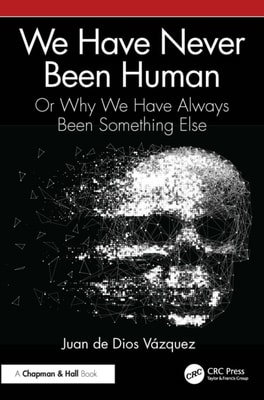
We Have Never Been Human: Or Why We Have Always Been Something Else boldly reimagines what it means to be human, challenging the traditional notions that bind our identity to biology and culture.
Philosophical questions regarding both the existence and nature of properties are ubiquitous in ordinary life, the sciences, and philosophical theorising.
Philosophical questions regarding both the existence and nature of properties are ubiquitous in ordinary life, the sciences, and philosophical theorising.
This volume brings together philosophers and physicists to explore the parallels between Quantum Bayesianism, or QBism, and the phenomenological tradition.
This book departs from existing accounts of Alan Turing's imitation game and test by placing Turing's proposal in its historical, social, and cultural context.
God and the Book of Nature develops theological views of the natural sciences in light of the recent theological turn in science-and-religion scholarship and the 'science-engaged theology' movement.
This collection of essays investigates the notions of life, living organisms, and human nature in Classical German Philosophy from a historical and conceptual perspective.