In Enhancing Evolution, leading bioethicist John Harris dismantles objections to genetic engineering, stem-cell research, designer babies, and cloning and makes an ethical case for biotechnology that is both forthright and rigorous.
Why psychology is in peril as a scientific discipline-and how to save itPsychological science has made extraordinary discoveries about the human mind, but can we trust everything its practitioners are telling us?
This book is the first attempt to provide a general theory of self-destruction in complex systems applicable to natural, social and cultural phenomena.
How scientists through the ages have conducted thought experiments using imaginary entities-demons-to test the laws of nature and push the frontiers of what is possible Science may be known for banishing the demons of superstition from the modern world.
This volume examines the New Science of the 17th century in the context of Baroque culture, analysing its emergence as an integral part of the high culture of the period.
David Miller elegantly and provocatively reformulates critical rationalismthe revolutionary approach to epistemology advocated by Karl Popperby answering its most important critics.
Tagore's Sadhana is a spiritual classic, delivering strong and penetrating insight into the human connection with the universe, the many fallacies of science and much more, all in beatiful English prose.
Too often conversations on Science and Christianity skate over much deeper assumptions--or perceptions--on the nature and interpretation of Scripture, and the nature of science and of God.
Beginning with her award-winning book Theology in the Age of Scientific Reasoning (1990), Nancey Murphy has used philosophy of science as a way into, and catalyst for, fresh thinking in cosmology, divine action, epistemology, cognitive neuroscience, theological anthropology, philosophy of mind, and Christian virtue ethics.
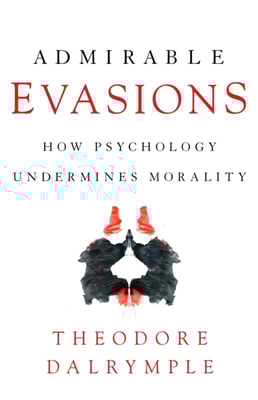
In Admirable Evasions, Theodore Dalrymple explains why human self-understanding has not been bettered by the false promises of the different schools of psychological thought.
This book draws on advances in computational neuroscience and theoretical biology to provide a clear and accessible agentive account of the nature of causality and scientific explanations.
This, the first in-depth and comprehensive book-length study of the Russian neo-Kantian movement in English language, challenges the assumption of the isolation of neo-Kantianism to Germany.
This book explores the strong links between sustainability and the humanities, which go beyond the inclusion of social sciences in discussions on sustainability, and offers a holistic discussion on the intellectual and moral aspects of sustainable development.
This book offers the first comprehensive and authoritative text on the history of physics in Italy's industrial and financial capital, from the foundation of the University of Milan's Institute of Physics in 1924 up to the early 1960s, when it moved to its current location.