This book proposes a conceptual framework for understanding measurement across a broad range of scientific fields and areas of application, such as physics, engineering, education, and psychology.
This work is a large, powerfully illustrated interdisciplinary natural sciences volume, the first of its kind to examine the critically important nature of ecological paradox, through an abundance of lenses: the biological sciences, taxonomy, archaeology, geopolitical history, comparative ethics, literature, philosophy, the history of science, human geography, population ecology, epistemology, anthropology, demographics, and futurism.
With the aid of entertaining short stories, anecdotes, lucid explanations and straight-forward figures, this book challenges the perception that the world of physics is inaccessible to the non-expert.
This book addresses current issues in the neuroscience and ethics of dementia care, including philosophical as well as ethical legal, and social issues (ELSIs), issues in clinical, institutional, and private care-giving, and international perspectives on dementia and care innovations.
This edited volume contains 24 different research papers by members of the History and Heritage Working Group of the Southeast Asian Astronomy Network.
Philosophy in Reality offers a new vision of the relation between science and philosophy in the framework of a non-propositional logic of real processes, grounded in the physics of the real world.
This volume explores various themes at the intersection of archaeology and philosophy: inference and theory; interdisciplinary connections; cognition, language and normativity; and ethical issues.
This book is a historical analysis of the quantum mechanical revolution and the emergence of a new discipline from the perspective, not of a professor, but of a recent or actual Ph.
This book offers a close and rigorous examination of the arguments for and against scientific realism and introduces key positions in the scientific realism/antirealism debate, which is one of the central debates in contemporary philosophy of science.
This book offers global perspectives from Mediterranean, Asian, Australian, and American cultures on sacred sites and their related stories in regional history.
This book examines the views of Hermann Helmholtz, Hermann Cohen and Gottlob Frege in reaction to the epistemic crises induced by rapid changes in 19th century scientific practice.
This book offers a comprehensive introduction to Nature of Science (NOS), one of the most important aspects of science teaching and learning, and includes tested strategies for teaching aspects of the NOS in a variety of instructional settings.
National Science Foundation (NSF) is a unique federal agency because it supports scientific research financially, but does not engage in scientific work itself.
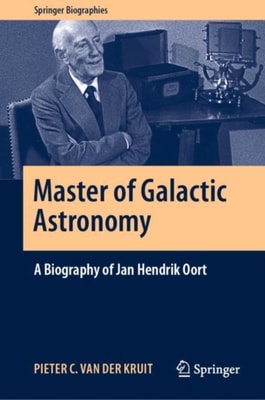
This accessible and entertaining biography chronicles the life and triumphs of astronomer Jan Hendrik Oort, who helped lay the foundations of modern astronomy in the 20th century.
This book provides a fascinating insight into the life and scientific work of Laura Bassi, the first female member of the influential Academy of Sciences of the Institute of Bologna and also the first woman to be appointed a university professor in physics, or universal philosophy as it was then termed.
This collection explores the arguments related to veg(etari)anism as they play out in the public sphere and across media, historical eras, and geographical areas.
In this creative exploration of climate change and the big questions confronting our high-energy civilization, Adam Briggle connects the history of philosophy with current events to shed light on the Anthropocene (the age of humanity).
This book highlights the existence of a diversity of methods in science, in general, in groups of sciences (natural, social or the artificial), and in individual sciences.
Drawing on published works, correspondence and manuscripts, this book offers the most comprehensive reconstruction of Boscovich's theory within its historical context.
This book presents a unified evolutionary framework based on three sets of metaphors that will help to consolidate discussions on evolutionary transitions.
This interdisciplinary book ties the historical work of Descartes to his successors through current research and critical overviews on the neuroscience of consciousness, the brain, and cognition.
This book presents a multidisciplinary guide to gauge theory and gravity, with chapters by the world's leading theoretical physicists, mathematicians, historians and philosophers of science.
This book explores the interconnections between world politics and non-human nature to overcome the anthropocentric boundaries that characterize the field of international relations.