During the 20th century, scientists discovered what the Universe is made of; as the 21st century begins, they are preparing experiments to find out how it came to be like this.
Will we ever discover a single scientific theory that tells us everything that has happened, and everything that will happen, on every level in the Universe?
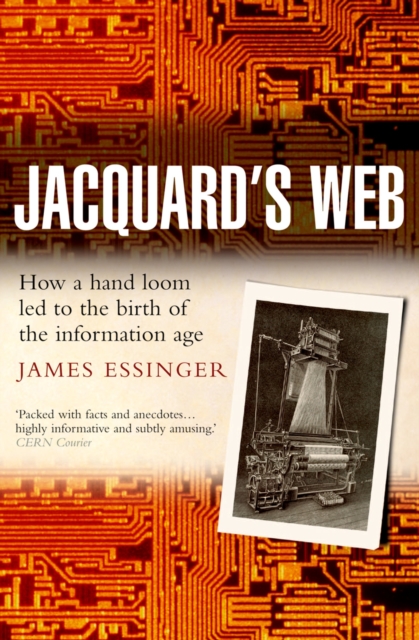
Jacquard's Web is the story of some of the most ingenious inventors the world has ever known, a fascinating account of how a hand-loom invented in Napoleonic France led to the development of the modern information age.
Vanity, Vitality, and Virility is a fascinating portrait gallery of chemicals involved in our everyday life, from Viagra and selenium to whispering asphalt, nappies, and chewing gum.
In this compelling introduction to the fundamental particles that make up the universe, Frank Close takes us on a journey into the atom to examine known particles such as quarks, electrons, and the ghostly neutrino.
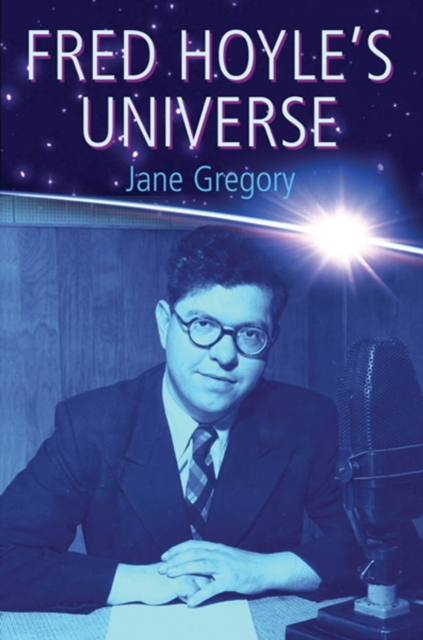
Fred Hoyle was one of the most widely acclaimed and colourful scientists of the twentieth century, a down-to-earth Yorkshireman who combined a brilliant scientific mind with a relish for communication and controversy.
Health foods and dietary supplements are widely used throughout the world - it is estimated that more than seventy million people in Europe regularly buy these products, and it is a billion dollar business in the USA.
This is a book about the dramatic periods in the Earth's history called mass extinctions - short periods (by geological standards) when life nearly died out on Earth.
Terrors of the Table is an absorbing account of the struggle to find the necessary ingredients of a healthy diet, and the fads and quackery that have always waylaid the unwary and the foolish when it comes to the matter of food and health.
When Benjamin Franklin, the 18th-century American statesman and scientist, watched the calming effect of a drop of oil on the waves and ripples of a London pond, he was observing what Pliny the Elder and generations of seafarers had done before him.
Most people remember chemistry from their schooldays as largely incomprehensible, a subject that was fact-rich but understanding-poor, smelly, and so far removed from the real world of events and pleasures that there seemed little point, except for the most introverted, in coming to terms with its grubby concepts, spells, recipes, and rules.
Most people remember chemistry from their schooldays as a subject that was largely incomprehensible, fact-rich but understanding-poor, smelly, and so far removed from the real world of events and pleasures that there seemed little point, except for the most introverted, in coming to terms with its grubby concepts, spells, recipes, and rules.
Most people remember chemistry from their schooldays as a subject that was largely incomprehensible, fact-rich but understanding-poor, smelly, and so far removed from the real world of events and pleasures that there seemed little point, except for the most introverted, in coming to terms with its grubby concepts, spells, recipes, and rules.
How does the physics we know today - a highly professionalised enterprise, inextricably linked to government and industry - link back to its origins as a liberal art in Ancient Greece?
How does the physics we know today - a highly professionalised enterprise, inextricably linked to government and industry - link back to its origins as a liberal art in Ancient Greece?
An extraordinary discovery has recently shaken the foundations of Cosmology and Particle Physics, sparking a scientific revolution that has profoundly modified our understanding of our Universe and that is still far from over.
An extraordinary discovery has recently shaken the foundations of Cosmology and Particle Physics, sparking a scientific revolution that has profoundly modified our understanding of our Universe and that is still far from over.
Taking an ecological approach to our evolution, Clive Finlayson considers the origins of modern humans within the context of a drying climate and changing landscapes.
Taking an ecological approach to our evolution, Clive Finlayson considers the origins of modern humans within the context of a drying climate and changing landscapes.