Understanding the complex relationships between humans and the natural world is essential for achieving environmental sustainability and improving human well-being, yet many studies are unable to reveal complex interactions and hidden trends.
While quantum theory has been used to study the physical universe with great profit, both intellectual and financial, ever since its discovery eighty-five years ago, over the last fifty years we have found out more and more about the theory itself, and what it tells us about the universe.
Over a decade ago, as the Human Genome Project completed its mapping of the entire human genome, hopes ran high that we would rapidly be able to use our knowledge of human genes to tackle many inherited diseases, and understand what makes us unique among animals.
Over a decade ago, as the Human Genome Project completed its mapping of the entire human genome, hopes ran high that we would rapidly be able to use our knowledge of human genes to tackle many inherited diseases, and understand what makes us unique among animals.
How do individuals decide whether to accept human causes of climate change, vaccinate their children against childhood diseases, or practice social distancing during a pandemic?
How do individuals decide whether to accept human causes of climate change, vaccinate their children against childhood diseases, or practice social distancing during a pandemic?
Scientific knowledge is the most solid and robust kind of knowledge that humans have because of the self-correcting character inherent in its own processes.
Scientific knowledge is the most solid and robust kind of knowledge that humans have because of the self-correcting character inherent in its own processes.
After decades of painstaking planning, NASA's first dedicated exoplanet detection mission, the Kepler space telescope, was launched in 2009 from Cape Canaveral.
After decades of painstaking planning, NASA's first dedicated exoplanet detection mission, the Kepler space telescope, was launched in 2009 from Cape Canaveral.
The goal of Molecules, Microbes, and Meals is to provide an overview of the science of food, exploring all aspects of how food products we purchase and consume come to have the characteristics they do.
The goal of Molecules, Microbes, and Meals is to provide an overview of the science of food, exploring all aspects of how food products we purchase and consume come to have the characteristics they do.
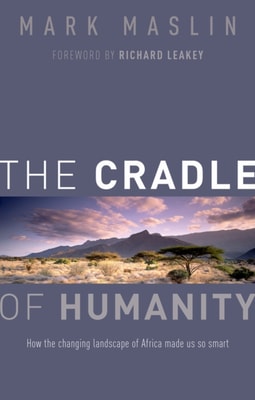
Human beings have long seen themselves as the center of the universe, the apple of God's eye, specially-created creatures who are somehow above and beyond the natural world.
Human beings have long seen themselves as the center of the universe, the apple of God's eye, specially-created creatures who are somehow above and beyond the natural world.
Since the release of the documentary Blackfish in 2013, millions around the world have focused on the plight of the orca, the most profitable and controversial display animal in history.
Since the release of the documentary Blackfish in 2013, millions around the world have focused on the plight of the orca, the most profitable and controversial display animal in history.
Though the pygmy hippopotamus has been designated as a flagship species of West African forests (meaning that by raising conservation efforts for a single species, an entire ecological region could benefit), very little research has been published on the animal.
Though the pygmy hippopotamus has been designated as a flagship species of West African forests (meaning that by raising conservation efforts for a single species, an entire ecological region could benefit), very little research has been published on the animal.
Over the coming decades, Artificial Intelligence will profoundly impact the way we live, work, wage war, play, seek a mate, educate our young, and care for our elderly.
Over the coming decades, Artificial Intelligence will profoundly impact the way we live, work, wage war, play, seek a mate, educate our young, and care for our elderly.
Oracles of Science examines the popular writings of the six scientists who have been the most influential in shaping our perception of science, how it works, and how it relates to other fields of human endeavor, especially religion.