Joseph Rotblat was the Jewish nuclear scientist whose disillusionment with nuclear weapons encouraged him to become one of the prime architects of the anti-nuclear movement, and resulted in his lifelong efforts to promote social responsibility in science.
Joseph Rotblat was the Jewish nuclear scientist whose disillusionment with nuclear weapons encouraged him to become one of the prime architects of the anti-nuclear movement, and resulted in his lifelong efforts to promote social responsibility in science.
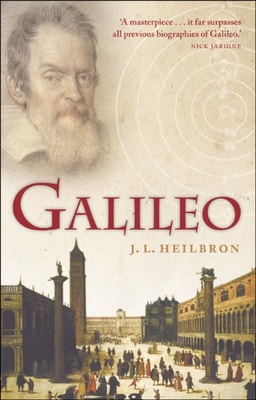
Just over four hundred years ago, in 1610, Galileo published the Siderius nuncius, or Starry Messenger, a 'hurried little masterpiece' in John Heilbron's words.
From the mathematics of mazes, to cones with a twist, and the amazing sphericon - and how to make one - Ian Stewart is back with more mathematical stories and puzzles that are as quirky as they are fascinating, and each from the cutting edge of the world of mathematics.
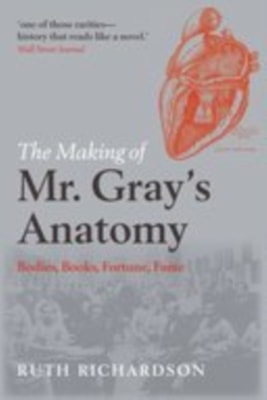
Gray's Anatomy is probably one of the most iconic scientific books ever published: an illustrated textbook of anatomy that is still a household name 150 years since its first edition, known for its rigorously scientific text, and masterful illustrations as beautiful as they are detailed.
Asthma is a familiar and growing disease today, but its story goes back to the ancient world, as we know from accounts in ancient texts from China, India, Greece and Rome.
Galaxies are the building blocks of the Universe: standing like islands in space, each is made up of many hundreds of millions of stars in which the chemical elements are made, around which planets form, and where on at least one of those planets intelligent life has emerged.
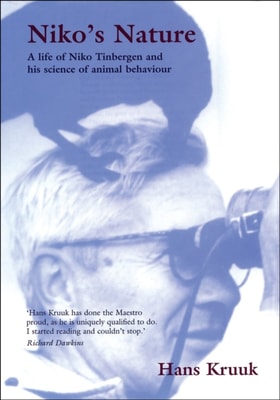
A charismatic naturalist, bird-watcher, teacher, artist, photographer, film-maker, and winner of the Nobel Prize, Niko Tinbergen was a prominent and influential scientist.
Among all the great discoveries and inventions of the nineteenth century, few offer us a more fascinating insight into Victorian society than the discovery of anaesthesia.
In 1912 Lawrence Bragg explained the interaction of X-rays with crystals, and he and his father, William thereby pioneered X-ray spectroscopy and X-ray crystallography.
Through an innovative, closely integrated design of images and text, and his characteristically clear, precise, and economical exposition, Peter Atkins explains the processes involved in chemical reactions.
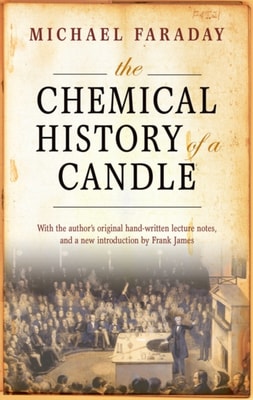
Michael Faraday's celebrated series of lectures,The Chemical History of a Candle, turned into one of the most successful science books ever published and was a classic work of Victorian popular science.
The sixteenth and seventeenth centuries witnessed such fervent investigations of the natural world that the period has been called the 'Scientific Revolution.
For 150 years, Down's Syndrome has constituted the archetypal mental disability, easily recognisable by distinct facial anomalies and physical stigmata.
Our lives are dominated by giant molecules, which have remarkable properties, some of which are only just being discovered and exploited by science, though many have long been exploited far more effectively by Nature.
Through an innovative, closely integrated design of images and text, and his characteristically clear, precise, and economical exposition, Peter Atkins explains the processes involved in chemical reactions.
Michael Faraday's celebrated series of lectures,The Chemical History of a Candle, turned into one of the most successful science books ever published and was a classic work of Victorian popular science.