The sixteenth and seventeenth centuries witnessed such fervent investigations of the natural world that the period has been called the 'Scientific Revolution.
In this scientific 'Credo', Peter Atkins considers the universal questions of origins, endings, birth, and death to which religions have claimed answers.
In this scientific 'Credo', Peter Atkins considers the universal questions of origins, endings, birth, and death to which religions have claimed answers.
From the sudden expansion of a cloud of gas or the cooling of a hot metal, to the unfolding of a thought in our minds and even the course of life itself, everything is governed by the four Laws of Thermodynamics.
Just over four hundred years ago, in 1610, Galileo published the Siderius nuncius, or Starry Messenger, a 'hurried little masterpiece' in John Heilbron's words.
From the mathematics of mazes, to cones with a twist, and the amazing sphericon - and how to make one - Ian Stewart is back with more mathematical stories and puzzles that are as quirky as they are fascinating, and each from the cutting edge of the world of mathematics.
On March 13, 1989, the entire Quebec power grid collapsed, automatic garage doors in California suburbs began to open and close without apparent reason, and microchip production came to a halt in the Northeast; in space, communications satellites had to be manually repointed after flipping upside down, and pressure readings on hydrogen tank supplies on board the Space Shuttle Discovery peaked, causing NASA to consider aborting the mission.
This book presents the life and personality, the scientific and philosophical work of Ludwig Boltzmann, one of the great scientists who marked the passage from 19th- to 20th-Century physics.
The popular stereotype of the scientist as mad boffin or weedy nerd has been peddled widely in film and fiction, with the implication that the world of science is far removed from the intellectual and emotional messiness of other human activities.
October 15, 1951 marks the birthday of one of the key episodes in 20th century social history: the first synthesis of a steroid oral contraceptive in a small laboratory in Mexico City - an event that triggered the development of the Pill.
In 1953 Watson and Crick discovered the double helical structure of DNA and Watson's personal account of the discovery, The Double Helix, was published in 1968.
'Coen's book is spiced with historic quotations and examples of plants' and animals' intriguing behaviour contains a wealth of interesting material Coen communicates his immense learning with a hundred appealing tales' Max Perutz How is a tiny fertilised egg able to turn itself into a human being?
At this very moment the most ambitious scientific experiment of all time is beginning, and yet its precise aims are little understood by the general public.
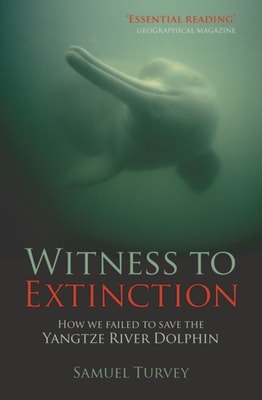
The extent to which human activity has influenced species extinctions during the recent prehistoric past remains controversial due to other factors such as climatic fluctuations and a general lack of data.
From the sheep, dog, and cockerel that were sent aloft in Montgolfier's balloon, to Galvani's frog's legs, Dolly the Sheep, the finches of the Galapagos, and even imaginary cats and simulated life forms, Pavlov's Dogs and Schrodinger's Cat explores the fascinating history of the role of living things in science.
As part of a trilogy of books exploring the science of patterns in nature, acclaimed science writer Philip Ball here looks at the form and growth of branching networks in the natural world, and what we can learn from them.
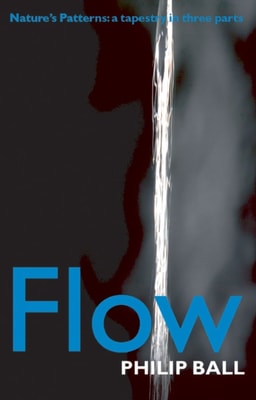
From the swirl of a wisp of smoke to eddies in rivers, and the huge persistent storm system that is the Great Spot on Jupiter, we see similar forms and patterns wherever there is flow - whether the movement of wind, water, sand, or flocks of birds.