Will we ever discover a single scientific theory that tells us everything that has happened, and everything that will happen, on every level in the Universe?
This Very Short Introduction uses Newton's own unpublished writings to provide fascinating insight into the man who kept the Royal Society under his thumb, was Head of the Mint, and whose contributions to our understanding of the heavens and the earth are considered by many to be unparalleled.
When we interact with animals, we intuitively read thoughts and feelings into their expressions and actions - it is easy to suppose that they have minds like ours.
Trust - our belief in the truth or reliability of someone or something - lies at the very heart of our relationships, our society and our everyday lives.
Terrors of the Table is an absorbing account of the struggle to find the necessary ingredients of a healthy diet, and the fads and quackery that have always waylaid the unwary and the foolish when it comes to the matter of food and health.
From termite mounds that in relative terms are three times as tall as a skyscraper, to the elaborate nests of social birds and the deadly traps of spiders, the constructions of the animal world can amaze and at times humble our own engineering and technology.
Fred Hoyle was one of the most widely acclaimed and colourful scientists of the twentieth century, a down-to-earth Yorkshireman who combined a brilliant scientific mind with a relish for communication and controversy.
This is a book about the dramatic periods in the Earth's history called mass extinctions - short periods (by geological standards) when life nearly died out on Earth.
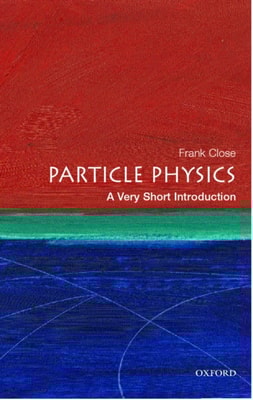
In this compelling introduction to the fundamental particles that make up the universe, Frank Close takes us on a journey into the atom to examine known particles such as quarks, electrons, and the ghostly neutrino.
Peter Byrne tells the story of Hugh Everett III (1930-1982), whose "e;many worlds"e; theory of multiple universes has had a profound impact on physics and philosophy.
Humans are extraordinary creatures, with the unique ability among animals to imitate and so copy from one another ideas, habits, skills, behaviours, inventions, songs, and stories.
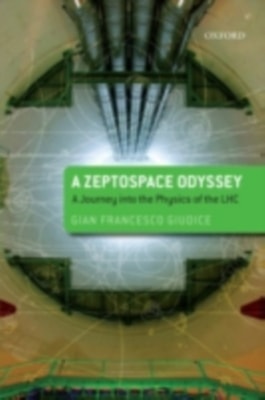
At this very moment the most ambitious scientific experiment of all time is beginning, and yet its precise aims are little understood by the general public.
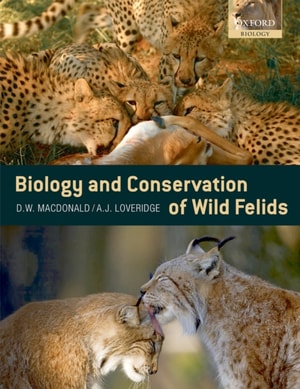
The editors utilize their 50 years of combined experience in professional engagement with the behaviour and ecology of wild felids to draw together a unique network of the world's most respected and knowledgeable experts.
From the sudden expansion of a cloud of gas or the cooling of a hot metal, to the unfolding of a thought in our minds and even the course of life itself, everything is governed by the four Laws of Thermodynamics.
For 150 years, Down's Syndrome has constituted the archetypal mental disability, easily recognisable by distinct facial anomalies and physical stigmata.