Asthma is a familiar and growing disease today, but its story goes back to the ancient world, as we know from accounts in ancient texts from China, India, Greece and Rome.
Our lives are dominated by giant molecules, which have remarkable properties, some of which are only just being discovered and exploited by science, though many have long been exploited far more effectively by Nature.
Gray's Anatomy is probably one of the most iconic scientific books ever published: an illustrated textbook of anatomy that is still a household name 150 years since its first edition, known for its rigorously scientific text, and masterful illustrations as beautiful as they are detailed.
The extent to which human activity has influenced species extinctions during the recent prehistoric past remains controversial due to other factors such as climatic fluctuations and a general lack of data.
From the sheep, dog, and cockerel that were sent aloft in Montgolfier's balloon, to Galvani's frog's legs, Dolly the Sheep, the finches of the Galapagos, and even imaginary cats and simulated life forms, Pavlov's Dogs and Schrodinger's Cat explores the fascinating history of the role of living things in science.
Trust - our belief in the truth or reliability of someone or something - lies at the very heart of our relationships, our society and our everyday lives.
The History of British Birds reviews our knowledge of avifaunal history over the last 15,000 years, setting it in its wider historical and European context.
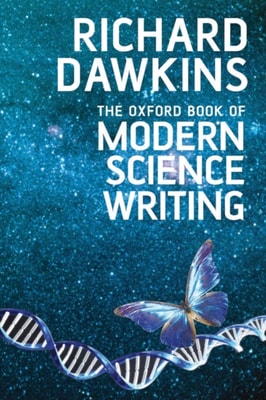
Selected and introduced by Richard Dawkins, The Oxford Book of Modern Science Writing is a celebration of the finest writing by scientists for a wider audience - revealing that many of the best scientists have displayed as much imagination and skill with the pen as they have in the laboratory.
Our lives, states of health, relationships, behaviour, experiences of the natural world, and the technologies that shape our contemporary existence are subject to a superfluity of competing, multi-faceted and sometimes incompatible explanations.
Among all the great discoveries and inventions of the nineteenth century, few offer us a more fascinating insight into Victorian society than the discovery of anaesthesia.
This Very Short Introduction uses Newton's own unpublished writings to provide fascinating insight into the man who kept the Royal Society under his thumb, was Head of the Mint, and whose contributions to our understanding of the heavens and the earth are considered by many to be unparalleled.
A unique collaboration between leading poets and scientists, Contemporary Poetry and Contemporary Science demonstrates through its form, and through practice as well as reflection, that poetry and science can meet with productive results.
As part of a trilogy of books exploring the science of patterns in nature, acclaimed science writer Philip Ball here looks at the form and growth of branching networks in the natural world, and what we can learn from them.
From the swirl of a wisp of smoke to eddies in rivers, and the huge persistent storm system that is the Great Spot on Jupiter, we see similar forms and patterns wherever there is flow - whether the movement of wind, water, sand, or flocks of birds.