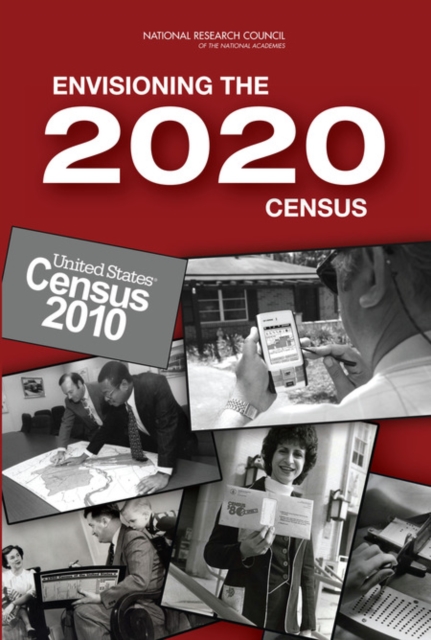
For over 100 years, the evolution of modern survey methodologyusing the theory of representative sampling to make interferences from a part of the population to the wholehas been paralleled by a drive toward automation, harnessing technology and computerization to make parts of the survey process easier, faster, and better.
This volume assembles papers commissioned by the National Research Council's Board on Science, Technology, and Economic Policy (STEP) to inform judgments about the significant institutional and policy changes in the patent system made over the past two decades.
This report reviews the methods used to estimate the national number of people eligible to participate in the Special Supplemental Nutrition Program for Women, Infants, and Children (WIC) under full funding of the program.
The past decade has demonstrated the utility of SESTAT, but the SESTAT design shows some deficiencies with respect to response rates, coverage of populations of interest, and its ability to support some useful analyses.
The final report of the National Research Council's (NRC) Panel on Statistical Methods for Testing and Evaluating Defense Systems (National Research Council, 1998) was intended to provide broad advice to the U.
Scientists and engineers have long relied on the power of imaging techniques to help see objects invisible to the naked eye, and thus, to advance scientific knowledge.
This report summarizes the proceedings of a workshop convened in June 2010 to critically examine the various databases that could provide national and state-level estimates of low-income uninsured children and could be effectively used as criteria for monitoring children's health insurance coverage.
Recent years have seen a growing tendency for social scientists to collect biological specimens such as blood, urine, and saliva as part of large-scale household surveys.
Information about the characteristics of jobs and the individuals who fill them is valuable for career guidance, reemployment counseling, workforce development, human resource management, and other purposes.
The Survey of Earned Doctorates (SED) collects data on the number and characteristics of individuals receiving research doctoral degrees from all accredited U.
Since 1992, the Committee on National Statistics (CNSTAT) has produced a book on principles and practices for a federal statistical agency, updating the document every 4 years to provide a current edition to newly appointed cabinet secretaries at the beginning of each presidential administration.
Developing credible short-term and long-term projections of Medicare health care costs is critical for public- and private-sector policy planning, but faces challenges and uncertainties.
Recent years have seen a growing tendency for social scientists to collect biological specimens such as blood, urine, and saliva as part of large-scale household surveys.
Intangible assetswhich include computer software, research and development (RD), intellectual property, workforce training, and spending to raise the efficiency and brand identification of firmscomprise a subset of services, which, in turn, accounts for three-quarters of all economic activity.
Information about the characteristics of jobs and the individuals who fill them is valuable for career guidance, reemployment counseling, workforce development, human resource management, and other purposes.
Improving the Measurement of Late-Life Disability in Population Surveys summarizes a workshop organized to draw upon recent advances to improve the measurement of physical and cognitive disability in population surveys of the elderly population.
Beginning in 2006, the Census Bureau embarked on a program to reengineer the Survey of Income and Program Participation (SIPP) to reduce its costs and improve data quality and timeliness.
The Survey of Earned Doctorates (SED) collects data on the number and characteristics of individuals receiving research doctoral degrees from all accredited U.
Intangible assetswhich include computer software, research and development (RD), intellectual property, workforce training, and spending to raise the efficiency and brand identification of firmscomprise a subset of services, which, in turn, accounts for three-quarters of all economic activity.
Improving the Measurement of Late-Life Disability in Population Surveys summarizes a workshop organized to draw upon recent advances to improve the measurement of physical and cognitive disability in population surveys of the elderly population.
Beginning in 2006, the Census Bureau embarked on a program to reengineer the Survey of Income and Program Participation (SIPP) to reduce its costs and improve data quality and timeliness.
Many racial and ethnic groups in the United States, including blacks, Hispanics, Asians, American Indians, and others, have historically faced severe discriminationpervasive and open denial of civil, social, political, educational, and economic opportunities.
Since 1992, the Committee on National Statistics (CNSTAT) has produced a book on principles and practices for a federal statistical agency, updating the document every 4 years to provide a current edition to newly appointed cabinet secretaries at the beginning of each presidential administration.
In March 2008, the Committee on National Statistics of the National Academies held a workshop to assist the Bureau of Economic Analysis (BEA) with next steps as it develops plans to produce a satellite health care account.
Designed to protect the privacy of individual student test scores, grades, and other education records, the Family Educational Rights and Privacy Act (FERPA) of 1974 places limits the access of educational researches, and slows research not only in education but also in related fields, such as child welfare and health.
The stability of the financial system and the potential for systemic events to alter its function have long been critical issues for central bankers and researchers.
An exploration of the statistical foundations of scientific inference, The Nature of Scientific Evidence asks what constitutes scientific evidence and whether scientific evidence can be quantified statistically.