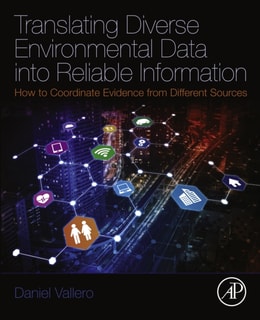
Translating Diverse Environmental Data into Reliable Information: How to Coordinate Evidence from Different Sources is a resource for building environmental knowledge, particularly in the era of Big Data.
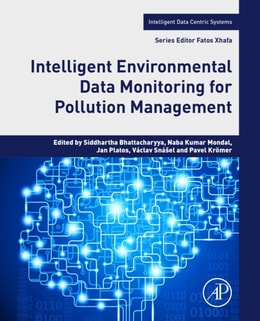
Intelligent Environmental Data Monitoring for Pollution Management discusses evolving novel intelligent algorithms and their applications in the area of environmental data-centric systems guided by batch process-oriented data.
Molecular Characterization of Autophagic Responses, Part B presents a collection of methods for the qualitative and quantitative evaluation of virtually all the morphological, biochemical, and functional manifestations of autophagy, in vitro, ex vivo and in vivo, in organisms as distant as yeast and man.
This volume of Progress in Molecular Biology and Translational Science introduces emerging strategies of studying RNA structure and function using nanotechnological tools.
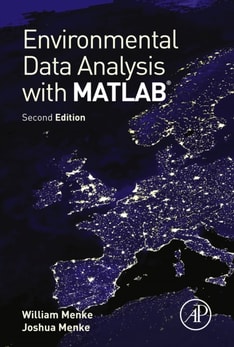
Environmental Data Analysis with MatLab is a new edition that expands fundamentally on the original with an expanded tutorial approach, new crib sheets, and problem sets providing a clear learning path for students and researchers working to analyze real data sets in the environmental sciences.
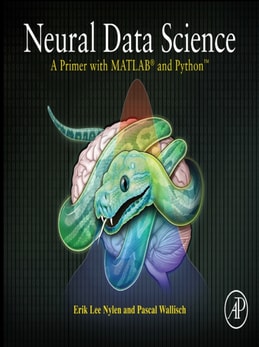
A Primer with MATLAB(R) and Python(TM) present important information on the emergence of the use of Python, a more general purpose option to MATLAB, the preferred computation language for scientific computing and analysis in neuroscience.
Satellite Soil Moisture Retrieval: Techniques and Applications offers readers a better understanding of the scientific underpinnings, development, and application of soil moisture retrieval techniques and their applications for environmental modeling and management, bringing together a collection of recent developments and rigorous applications of soil moisture retrieval techniques from optical and infrared datasets, such as the universal triangle method, vegetation indices based approaches, empirical models, and microwave techniques, particularly by utilizing earth observation datasets such as IRS III, MODIS, Landsat7, Landsat8, SMOS, AMSR-e, AMSR2 and the upcoming SMAP.
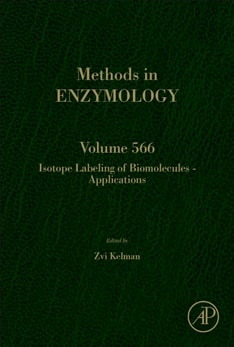
Isotope Labeling of Biomolecules: Applications, the latest in the Methods in Enzymology series, focuses on stable isotope labeling methods and applications for biomolecules.
Neuroepidemiology covers the foundations of neuroepidemiological research and the epidemiology of disorders primarily affecting the nervous system, as well as those originating outside the nervous system.
Electron Paramagnetic Resonance Investigations of Biological Systems by Using Spin Labels, Spin Probes, and Intrinsic Metal Ions Part A & B, are the latest volumes in the Methods in Enzymology series, continuing the legacy of this premier serial with quality chapters authored by leaders in the field.
The artificial intelligence of robots capable of learning from their errors and modifying their behavior accordingly is modeled on the activity of neurons in the brain.
**Selected for Doody's Core Titles(R) 2024 in Neuroscience**MRI/DTI Atlas of the Human Brainstem in Transverse and Sagittal Planes presents a detailed view of the human brainstem in DTI/MRI.
**Selected for Doody's Core Titles(R) 2024 in Neuroscience**MRI/DTI Atlas of the Human Brainstem in Transverse and Sagittal Planes presents a detailed view of the human brainstem in DTI/MRI.
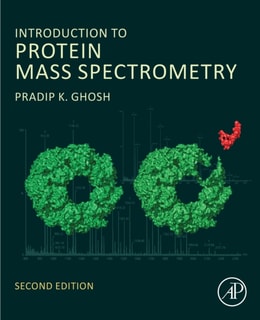
Introduction to Protein Mass Spectrometry, Second Edition provides a comprehensive overview of this increasingly important, yet complex, analytical technique.
Chronicling and analyzing resistance to the threat that autocracy poses to American liberal democracy, this book provides the definitive account of Trump's assault on truth and his populist attacks on expertise, as well as scientific and legal opposition to them.
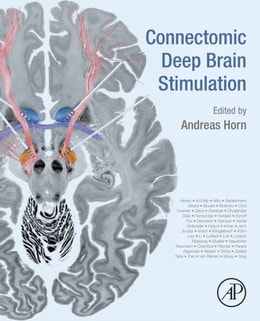
Connectomic Deep Brain Stimulation (DBS) covers this highly efficacious treatment option for movement disorders such as Parkinson's Disease, Essential Tremor and Dystonia.
Satellite Soil Moisture Retrieval: Techniques and Applications offers readers a better understanding of the scientific underpinnings, development, and application of soil moisture retrieval techniques and their applications for environmental modeling and management, bringing together a collection of recent developments and rigorous applications of soil moisture retrieval techniques from optical and infrared datasets, such as the universal triangle method, vegetation indices based approaches, empirical models, and microwave techniques, particularly by utilizing earth observation datasets such as IRS III, MODIS, Landsat7, Landsat8, SMOS, AMSR-e, AMSR2 and the upcoming SMAP.