Before the hydrogen bomb indelibly associated radioactivity with death, many chemists, physicians, botanists, and geneticists believed that radium might hold the secret to life.
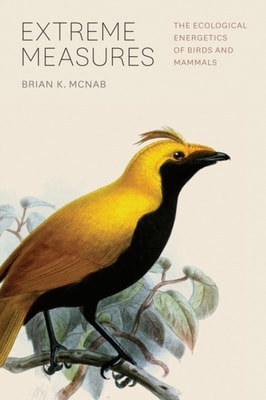
Along with reproduction, balancing energy expenditure with the limits of resource acquisition is essential for both a species and a population to survive.
Naturalism as a guiding philosophy for modern science both disavows any appeal to the supernatural or anything else transcendent to nature, and repudiates any philosophical or religious authority over the workings and conclusions of the sciences.
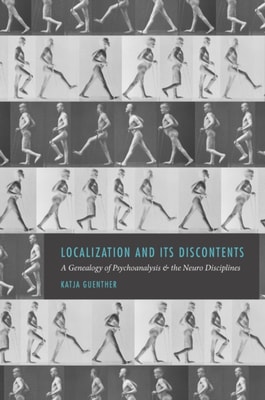
The Science of Walking recounts the story of the growing interest and investment of Western scholars, physicians, and writers in the scientific study of an activity that seems utterly trivial in its everyday performance yet essential to our human nature: walking.
A committed Lutheran excommunicated from his own church, a friend to Catholics and Calvinists alike, a layman who called himself a "e;priest of God,"e; a Copernican in a world where Ptolemy still reigned, a man who argued at the same time for the superiority of one truth and the need for many truths to coexist-German astronomer Johannes Kepler was, to say the least, a complicated figure.
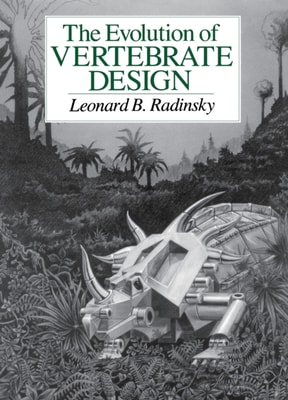
The Evolution of Vertebrate Design is a solid introduction to vertebrate evolution, paleontology, vertebrate biology, and functional, comparative anatomy.
Popular science readers embrace epics-the sweeping stories that claim to tell the history of all the universe, from the cosmological to the biological to the social.
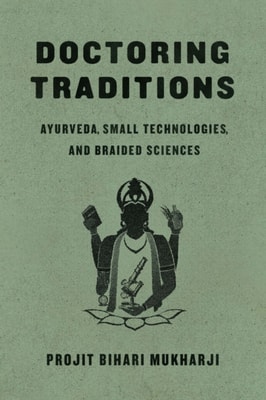
Like many of the traditional medicines of South Asia, Ayurvedic practice transformed dramatically in the later nineteenth and early twentieth centuries.
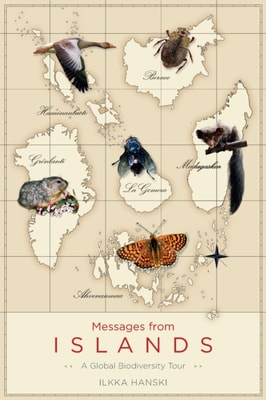
From a small island in the Baltic Sea to the large tropical islands of Borneo and Madagascar, Messages from Islands is a global tour of these natural, water-bound laboratories.
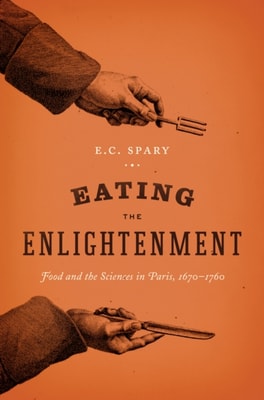
Eating the Enlightenment offers a new perspective on the history of food, looking at writings about cuisine, diet, and food chemistry as a key to larger debates over the state of the nation in Old Regime France.
In this absorbing account of life with the great atomic scientist Enrico Fermi, Laura Fermi tells the story of their emigration to the United States in the 1930s-part of the widespread movement of scientists from Europe to the New World that was so important to the development of the first atomic bomb.
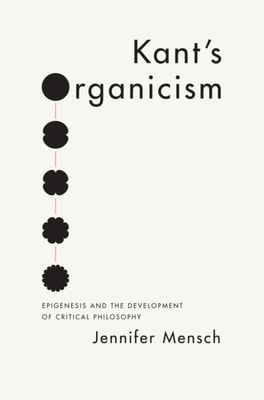
Because it laid the foundation for nearly all subsequent epistemologies, Immanuel Kant's Critique of Pure Reason has overshadowed his other interests in natural history and the life sciences, which scholars have long considered as separate from his rigorous theoretical philosophy-until now.
Modernity in interwar Europe frequently took the form of a preoccupation with mechanizing the natural; fears and fantasies revolved around the notion that the boundaries between people and machines were collapsing.
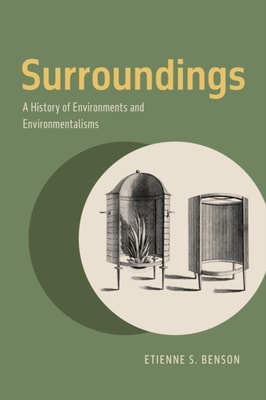
Given the ubiquity of environmental rhetoric in the modern world, it's easy to think that the meaning of the terms environment and environmentalism are and always have been self-evident.
Sir Charles Bell (1774-1842) was a medical reformer in a great age of reform-an occasional and reluctant vivisectionist, a theistic popularizer of natural science, a Fellow of the Royal Society, a surgeon, an artist, and a teacher.
All living things on earth-from individual species to entire ecosystems-have evolved through time, and evolution is the acknowledged framework of modern biology.
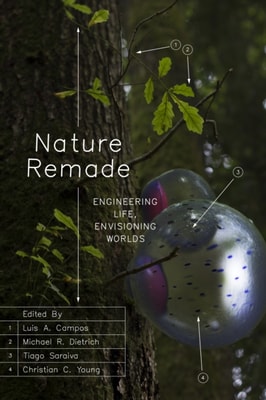
"e;Engineering"e; has firmly taken root in the entangled bank of biology even as proposals to remake the living world have sent tendrils in every direction, and at every scale.
The Republic of Color delves deep into the history of color science in the United States to unearth its origins and examine the scope of its influence on the industrial transformation of turn-of-the-century America.
In recent years, many members of the intellectual community have embraced a radical relativism regarding knowledge in general and scientific knowledge in particular, holding that Kuhn, Quine, and Feyerabend have knocked the traditional picture of scientific knowledge into a cocked hat.
All organisms live in clusters, but such fractured local populations, or demes, nonetheless maintain connectivity with one another by some amount of gene flow between them.
From Blaise Pascal in the 1600s to Charles Babbage in the first half of the nineteenth century, inventors struggled to create the first calculating machines.
"e;We frequently see one idea appear in one discipline as if it were new, when it migrated from another discipline, like a mole that had dug under a fence and popped up on the other side.
For decades, conservation and research initiatives in tropical forests have focused almost exclusively on old-growth forests because scientists believed that these "e;pristine"e; ecosystems housed superior levels of biodiversity.
The connection between mind and brain has been one of the most persistent problems in modern Western thought; even recent advances in neuroscience haven't been able to explain it satisfactorily.
Galileo's telescopic discoveries, and especially his observation of sunspots, caused great debate in an age when the heavens were thought to be perfect and unchanging.
When asked to compare the practice of medicine today to that of a hundred years ago, most people will respond with a story of therapeutic revolution: Back then we had few effective remedies, but now we have more (and more powerful) tools to fight disease, from antibiotics to psychotropics to steroids to anticancer agents.