A cornerstone of applied probability, Markov chains can be used to help model how plants grow, chemicals react, and atoms diffuse--and applications are increasingly being found in such areas as engineering, computer science, economics, and education.
To show the importance of stochastic processes in the change of gene frequencies, the authors discuss topics ranging from molecular evolution to two-locus problems in terms of diffusion models.
This book deals with a key area of population genetics: the ratio of the sexes in a population, or the allocation of resources to male versus female reproductive function.
The variety of social systems among the New World blackbirds (Family Icteridae) and the structural simplicity of their foraging environment provide excellent opportunities for testing theorics about the adaptive significance of their behavior.
In this study of arthropod predador-prey systems Michael Hassell shows how many of the components of predation may be simply modeled in order to reveal their effects on the overall dynamics of the interacting populations.
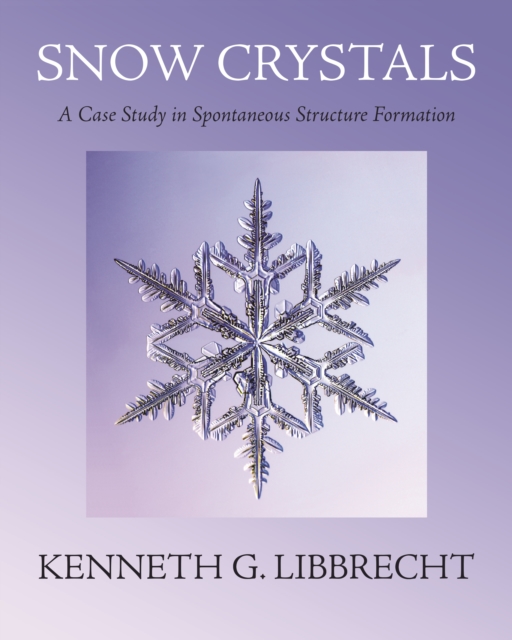
A definitive new investigation of the science of snowflakes by the world's leading expertA snowflake's sophisticated symmetry emerges when crystalline ice grows from water vapor within the winter clouds.
'A joy' Philippe Sands'Glorious' David SpiegelhalterA fascinating, enchanting and personal look at the meaning of luck, and the way in which it has shaped our shared history and continues to inflect our day to day lives.
Although ecologists have long considered morphology and life history to be important determinants of the distribution, abundance, and dynamics of plants in nature, this book contains the first theory to predict explicitly both the evolution of plant traits and the effects of these traits on plant community structure and dynamics.
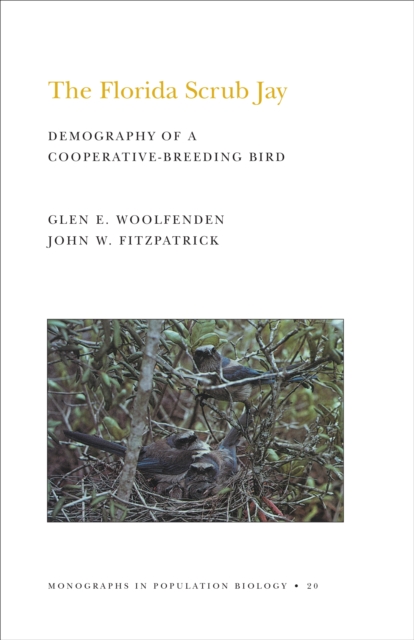
A common tendency in the field of population ecology has been to overlook individual differences by treating populations as homogeneous units; conversely, in behavioral ecology the tendency has been to concentrate on how individual behavior is shaped by evolutionary forces, but not on how this behavior affects population dynamics.
Professor Levins, one of the leading explorers in the field of integrated population biology, considers the mutual interpenetration and joint evolution of organism and environment, occurring on several levels at once.
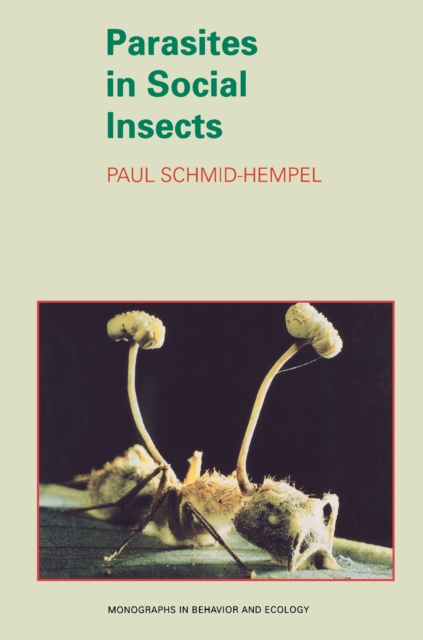
In spite of the fact that parasites represent more than half of all living species of plants and animals, their role in the evolution of life on earth has been substantially underestimated.
A number of scholars have found that concepts such as mutation, selection, and random drift, which emerged from the theory of biological evolution, may also explain evolutionary phenomena in other disciplines as well.
Through use of the models Professor Horn has devised, plant ecologists, foresters, and botanists will be able to predict the growth and productivity of a forest, the invading and senile species in a forest, the effect of shade tolerance on forest succession, and similar questions.
Professor Cody's monograph emphasizes the role of competition at levels above single species populations, and describes how competition, by way of the niche concept, determines the structure of communities.
In this pathbreaking and far-reaching work George Oster and Edward Wilson provide the first fully developed theory of caste evolution among the social insects.
A pseudorandom generator is an easy-to-compute function that stretches a short random string into a much longer string that "e;looks"e; just like a random string to any efficient adversary.
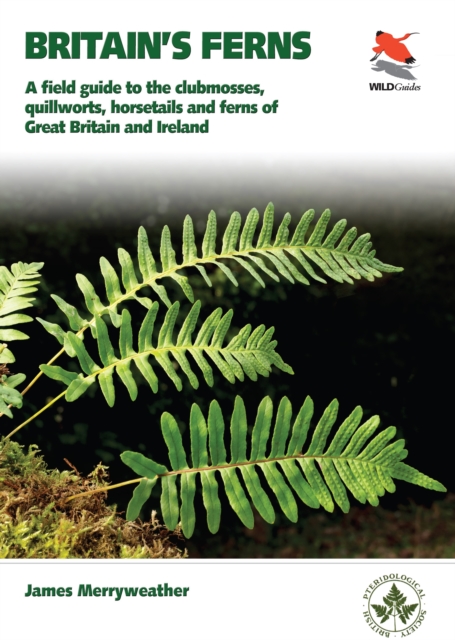
The only comprehensive photographic guide to the ferns, clubmosses, quillworts and horsetails of BritainThis is a comprehensive, lavishly illustrated and user-friendly photographic identification guide to the fifty-seven ferns and seventeen other pteridophytes that occur in Britain.
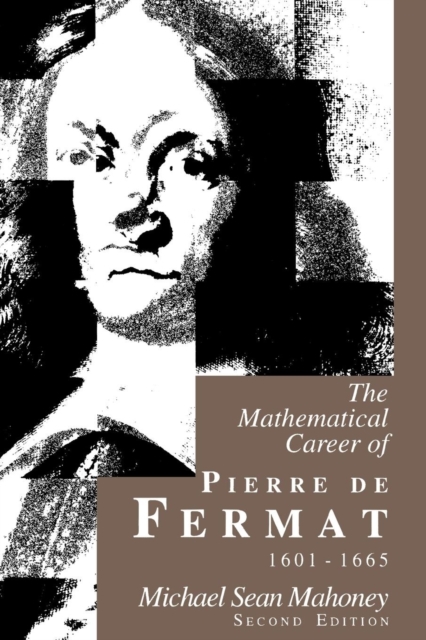
Hailed as one of the greatest mathematical results of the twentieth century, the recent proof of Fermat's Last Theorem by Andrew Wiles brought to public attention the enigmatic problem-solver Pierre de Fermat, who centuries ago stated his famous conjecture in a margin of a book, writing that he did not have enough room to show his "e;truly marvelous demonstration.
Explorers, evolutionists, eugenicists, sexologists, and high school biology teachers--all have contributed to the prominence of the biological sciences in American life.
This book studies the interplay between the geometry and topology of locally symmetric spaces, and the arithmetic aspects of the special values of L-functions.
Differential Equations on Fractals opens the door to understanding the recently developed area of analysis on fractals, focusing on the construction of a Laplacian on the Sierpinski gasket and related fractals.
This second volume of Flies and Disease spans the recorded history of synanthropic flies, from earliest Sumerian writings to contemporary research on their biology and involvement in the transmission of disease agents.
An advanced treatment of surgery theory for graduate students and researchersSurgery theory, a subfield of geometric topology, is the study of the classifications of manifolds.
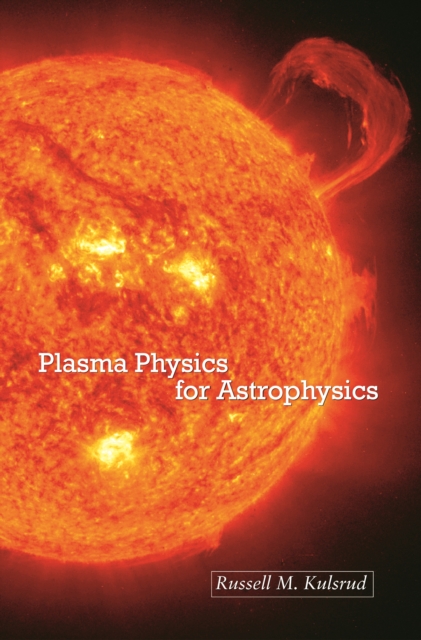
In this book, a distinguished expert introduces plasma physics from the ground up, presenting it as a comprehensible field that can be grasped largely on the basis of physical intuition and qualitative reasoning, similar to other fields of physics.
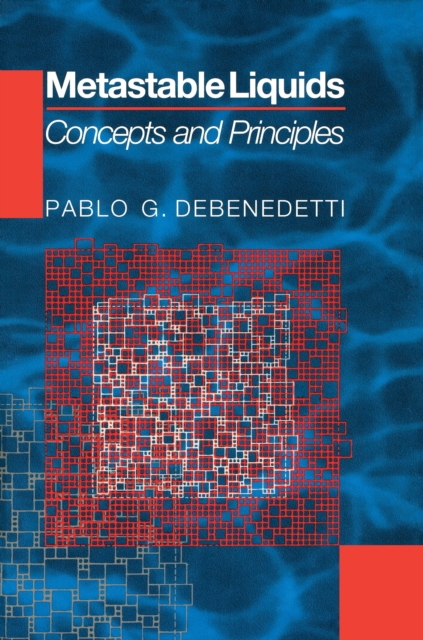
Metastable Liquids provides a comprehensive treatment of the properties of liquids under conditions where the stable state is a vapor, a solid, or a liquid mixture of different composition.
A central concern of number theory is the study of local-to-global principles, which describe the behavior of a global field K in terms of the behavior of various completions of K.
Spatial Ecology addresses the fundamental effects of space on the dynamics of individual species and on the structure, dynamics, diversity, and stability of multispecies communities.
An exploration of mathematical style through 99 different proofs of the same theoremThis book offers a multifaceted perspective on mathematics by demonstrating 99 different proofs of the same theorem.
Evolutionary Community Ecology develops a unified framework for understanding the structure of ecological communities and the dynamics of natural selection that shape the evolution of the species inhabiting them.
Pursuing the questions of how we learn and how memory is made, Edward Kosower introduces a novel and rich approach to connecting molecular properties with the biological properties that enable us to write and read, to create culture and ethics, and to think.
Whether discussing theories of cosmology, the physics of making a violin, or the impact of magazine covers on potential buyers, physicist and writer Tony Rothman brings the worlds of the scientist and nonscientist closer together, with amusing and enlightening results.
Although astrology was viewed with suspicion by the medieval church, it became a major area of inquiry for the renowned cardinal and scholar Pierre d'Ailly, whose astrological and apocalyptic writings had a significant influence on Christopher Columbus.