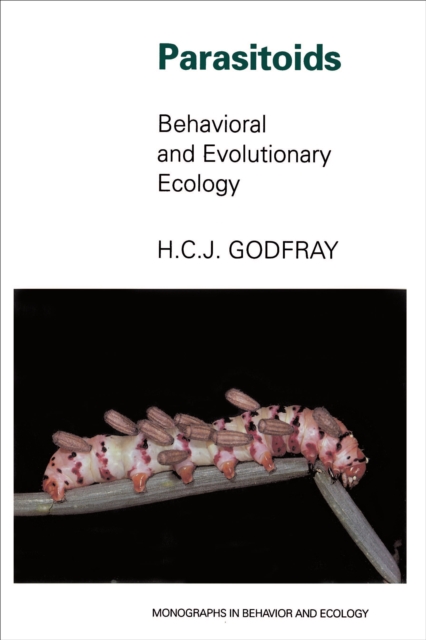
Parasitoids lay their eggs on or in the bodies of other species of insect, and the parasitoid larvae develop by feeding on the host, causing its eventual death.
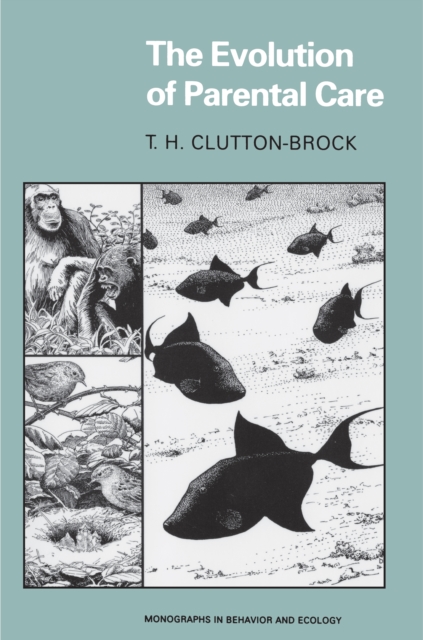
Synthesizing studies of parental care in a wide variety of animals, this book is the first attempt to provide general answers to the following important questions: Why does the extent of parental care vary so widely between species?
The Dutch scientist Hendrik Kramers (1894-1952) was one of the greatest theoretical physicists of the twentieth century--and one of a mere handful who have made major contributions across the whole field.
Problems in theoretical physics often lead to paradoxical answers; yet closer reasoning and a more complete analysis invariably lead to the resolution of the paradox and to a deeper understanding of the physics involved.
Addressing general readers and biologists, Mark Denny shows how the physics of fluids (in this case, air and water) influences the often fantastic ways in which life forms adapt themselves to their terrestrial or aquatic "e;media.
These notes describe a general procedure for calculating the Betti numbers of the projective quotient varieties that geometric invariant theory associates to reductive group actions on nonsingular complex projective varieties.
Like its predecessor, this book by the renowned physicist Sir Rudolf Peierls draws from many diverse fields of theoretical physics to present problems in which the answer differs from what our intuition had led us to expect.
Aimed at a diverse scientific audience, including physicists, astronomers, chemists, geologists, and economists, this book explains the theory underlying the classical statistical methods.
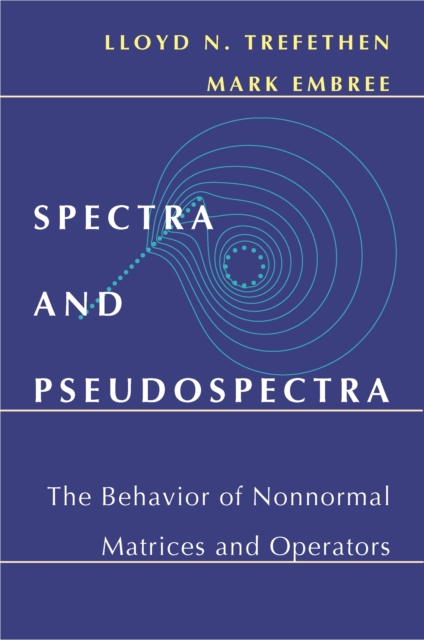
Pure and applied mathematicians, physicists, scientists, and engineers use matrices and operators and their eigenvalues in quantum mechanics, fluid mechanics, structural analysis, acoustics, ecology, numerical analysis, and many other areas.
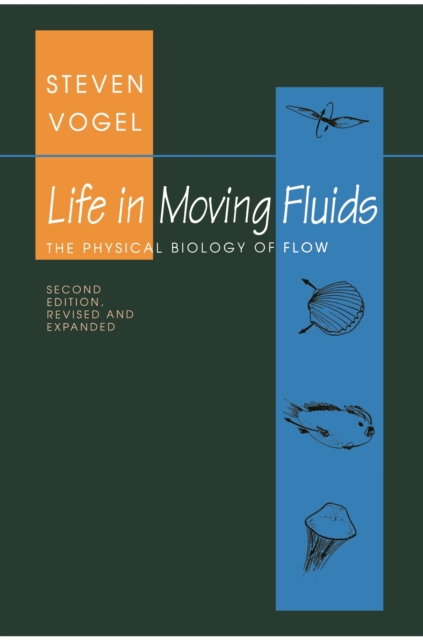
Both a landmark text and reference book, Steven Vogel's Life in Moving Fluids has also played a catalytic role in research involving the applications of fluid mechanics to biology.
The breakup of the Space Shuttle Columbia as it reentered Earth's atmosphere on February 1, 2003, reminded the public--and NASA--of the grave risks posed to spacecraft by everything from insulating foam to space debris.
This widely acclaimed introduction to N = 1 supersymmetry and supergravity is aimed at readers familiar with relativistic quantum field theory who wish to learn about the supersymmetry algebra.
Essential mathematical insights into one of the most important and challenging open problems in general relativity-the stability of black holesOne of the major outstanding questions about black holes is whether they remain stable when subject to small perturbations.
Natural selection is an immense and important subject, yet there have been few attempts to summarize its effects on natural populations, and fewer still which discuss the problems of working with natural selection in the wild.
The definitive field guide to all the sharks, rays and chimaeras of the European Atlantic and MediterraneanThe waters of the northeast Atlantic and Mediterranean Sea are home to an amazing variety of sharks, rays and chimaeras.
Whether in felling trees for wood, rearing insects for biological control, or culling animals for conservation purposes, efficient management of biological systems requires quantitative analysis of population growth and harvesting policies.
Ever since the acorn woodpecker was observed and described by Spanish explorers, its behavior--particularly the unique habit of caching acorns in specialized storage trees or granaries--has impressed observers.
This book maintains that higher plants manifest some degree of sexual selection, and it begins to build a framework that unifies many features of plant reproduction previously considered unrelated.
Many animals regulate their population density by patterns of behavior that would be easy to explain if the forces of natural selection acted to optimize group properties.
'Hugely readable and entertaining' JIM AL-KHALILI'An accessible and crystal-clear portrait of this discipline's breadth, largely told through its history' PHIL BALL, PHYSICS WORLDEinstein's Fridge tells the story of how scientists uncovered the least known and yet most consequential of all the sciences, and learned to harness the power of heat and ice.
A cornerstone of applied probability, Markov chains can be used to help model how plants grow, chemicals react, and atoms diffuse--and applications are increasingly being found in such areas as engineering, computer science, economics, and education.
To show the importance of stochastic processes in the change of gene frequencies, the authors discuss topics ranging from molecular evolution to two-locus problems in terms of diffusion models.
This book deals with a key area of population genetics: the ratio of the sexes in a population, or the allocation of resources to male versus female reproductive function.
The variety of social systems among the New World blackbirds (Family Icteridae) and the structural simplicity of their foraging environment provide excellent opportunities for testing theorics about the adaptive significance of their behavior.
In this study of arthropod predador-prey systems Michael Hassell shows how many of the components of predation may be simply modeled in order to reveal their effects on the overall dynamics of the interacting populations.
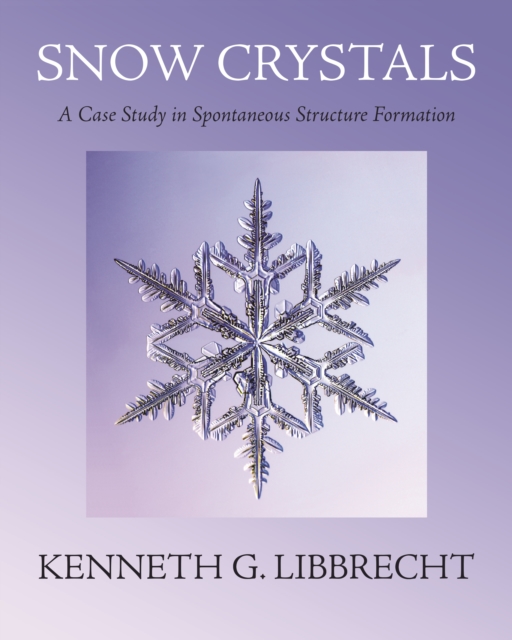
A definitive new investigation of the science of snowflakes by the world's leading expertA snowflake's sophisticated symmetry emerges when crystalline ice grows from water vapor within the winter clouds.
'A joy' Philippe Sands'Glorious' David SpiegelhalterA fascinating, enchanting and personal look at the meaning of luck, and the way in which it has shaped our shared history and continues to inflect our day to day lives.
Although ecologists have long considered morphology and life history to be important determinants of the distribution, abundance, and dynamics of plants in nature, this book contains the first theory to predict explicitly both the evolution of plant traits and the effects of these traits on plant community structure and dynamics.
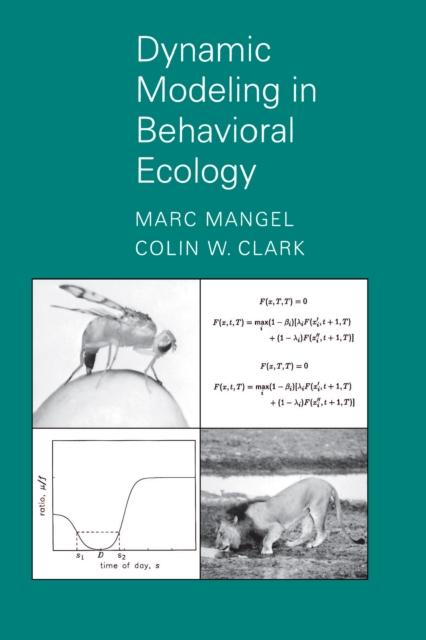
A common tendency in the field of population ecology has been to overlook individual differences by treating populations as homogeneous units; conversely, in behavioral ecology the tendency has been to concentrate on how individual behavior is shaped by evolutionary forces, but not on how this behavior affects population dynamics.