CONGENITAL AND PERINATAL INFECTIONS provides a concise and clinically-oriented primer on the congenital and perinatal infections likely to present in clinical practice.
CONGENITAL AND PERINATAL INFECTIONS provides a concise and clinically-oriented primer on the congenital and perinatal infections likely to present in clinical practice.
Vaccines are among modern medicine's greatest triumphs, but popular misunderstandings about vaccines and the communicable diseases they prevent threaten to undo more than a century's worth of progress in public health.
Vaccines are among modern medicine's greatest triumphs, but popular misunderstandings about vaccines and the communicable diseases they prevent threaten to undo more than a century's worth of progress in public health.
Cancer glycobiology is a blazing hot area of cancer research with aberrant post-translational glycosylations on lipids and proteins considered critical for cancer development and metastasis.
This book is the first to present new medical research establishing a connection between religion and health and to examine the implications for Eastern and Western religious traditions and for society and culture.
Ovarian Cancer Immunotherapy provides a broad overview of several aspects of basic sciences, and clinical and therapeutic aspects of immunotherapy for ovarian cancer, as well as state-of-the-art information on molecular genetics and biology.
Ovarian Cancer Immunotherapy provides a broad overview of several aspects of basic sciences, and clinical and therapeutic aspects of immunotherapy for ovarian cancer, as well as state-of-the-art information on molecular genetics and biology.
A History of Modern Immunology: A Path Toward Understanding describes, analyzes, and conceptualizes several seminal events and discoveries in immunology in the last third of the 20th century, the era when most questions about the biology of the immune system were raised and also found their answers.
Endoscopic Diagnosis and Treatment in Urinary Bladder Pathology: Handbook of Endourology contains five focused, review-oriented volumes that are ideal for students and clinicians looking for a comprehensive review rather than a whole course.
Advances in Cancer Research, Volume 152, the latest release in this ongoing, well-regarded serial, provides invaluable information on the exciting and fast-moving field of cancer research.
Advances in Cancer Research, Volume 150, the latest release in this ongoing series, covers the relationship(s) between autophagy and senescence, how they are defined, and the influence of these cellular responses on tumor dormancy and disease recurrence.
Mechanisms and Therapy of Liver Cancer, Volume 149, presents the latest information on the incidence and mortality of liver cancer research and how it has gained significant momentum because of its direct causative association with obesity-induced fatty liver disease.
This second edition volume expands on the first edition with new developments on Toll-Like Receptors (TLRs) controlling events such as cross-priming of associated pattern recognition receptors, post-transcriptional regulation, interaction with other cellular and biologic systems, and cancer progression.
Delivery Technologies for Immuno-Oncology: Volume 1: Delivery Strategies and Engineering Technologies in Cancer Immunotherapy examines the challenges of delivering immuno-oncology therapies.
Nanotechnology Based Approaches for Tuberculosis Treatment discusses multiple nanotechnology-based approaches that may help overcome persisting limitations of conventional and traditional treatments.
Awareness among clinicians about PIDs, which consist of more than 400 different entities, plays an important role in ensuring that patients receive a timely diagnosis.
The Molecular Immunology of Neurological Diseases provides a comprehensive review of current updates in molecular immunogenetics of different neurological diseases.
In recent years, researchers around the globe have deep dived into the fascination world of the Macrophage and its diverse role in tissue development, angiogenesis, and wound healing, and above all the untapped mystery of the wondering immune system within our body.
Immunoinformatics of Cancers: Practical Machine Learning Approaches Using R takes a bioinformatics approach to understanding and researching the immunological aspects of malignancies.
Applications of Nanobiotechnology for Neglected Tropical Diseases describes recent advances in nanobiotechnology that can be applied to reducing the global disease burden of neglected tropical diseases (NTDs).
Advances in Cancer Research, Volume 148, the latest release in this ongoing, well-regarded serial, provides invaluable information on the exciting and fast-moving field of cancer research.
GPCR Signaling in Cancer, Volume 145, the latest release in the Advances in Cancer Research series, highlights recent developments in the area of GPCRs and cancer biology.
Immunology of Endometriosis: Etiology and Management, a volume in the Reproductive Immunology series, provides updates on one of most common gynecological diseases, including basic science concepts and their clinical applications related to endometriosis immunology.
Advances in Immunology, Volume 148 offers the latest release in a long-established and highly respected publication, presenting current developments and comprehensive reviews in immunology.
Advances in Immunology, Volume 147, the latest release in a long-established and highly respected publication, presents current developments and comprehensive reviews in immunology.
Advances in Immunology, Volume 146, the latest release in a long-established and highly respected publication, presents current developments and comprehensive reviews in immunology.
Basics of Chimeric Antigen Receptor (CAR) Immunotherapy presents the latest on how T cell adoptive immunotherapy has progressed in its ultimate goal of curing metastatic malignant cancers.
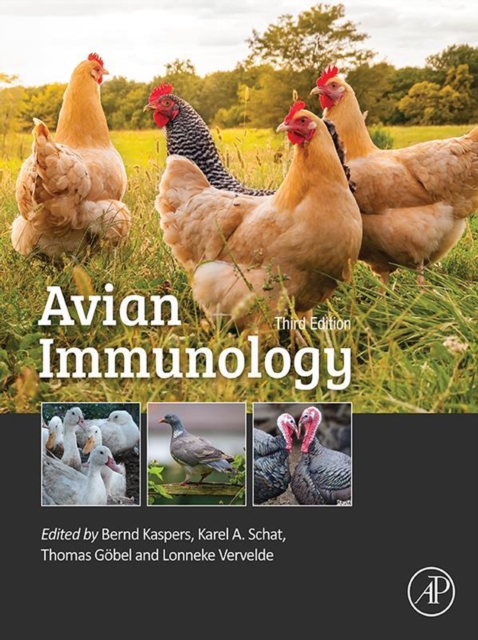
Avian Immunology, Third Edition contains a detailed description of the avian innate immune system, encompassing the mucosal, enteric, respiratory and reproductive systems.
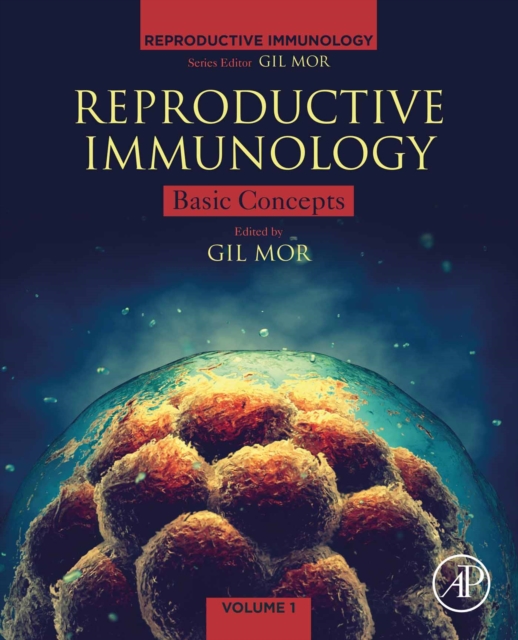
Reproductive Immunology: Basic Concepts gives a holistic insight into the understanding of the complex interactions between the maternal immune system and the fetal/placental unit necessary for the success of pregnancy.
Clinical Immunology not only introduces the reader to the human immune system, it also covers immunology from clinical manifestation to therapeutic approaches in a wide range of conditions.
Epigenetics of the Immune System focuses on different aspects of epigenetics and immunology, providing readers with the fundamental mechanisms relating to epigenetics and the immune system.
Advances in Immunology in China - Part B, Volume 145, the latest release in the Advances in Immunology series, presents the latest release in a long-established and highly respected publication.
Advances in Immunology in China - Part A, Volume 144, the latest release in the Advances in Immunology series, presents the latest release in a long-established and highly respected publication.
Advances in Immunology, Volume 143, the latest release in a long-established and highly respected publication, presents current developments and comprehensive reviews in immunology.
Advances in Immunology, Volume 142, the latest release in a long-established and highly respected publication, presents current developments and comprehensive reviews in immunology.
Advances in Immunology, Volume 141, the latest release in a long-established and highly respected publication, presents current developments and comprehensive reviews in immunology.
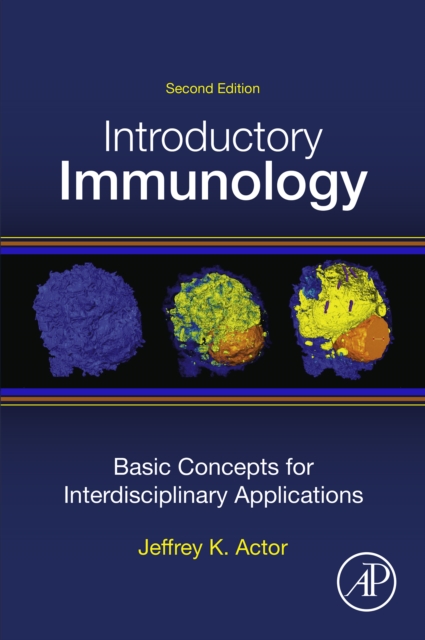
Introductory Immunology: Basic Concepts for Interdisciplinary Applications, Second Edition is a completely updated, revised and expanded resource on the immune system as a primary defense for the maintenance of health and homeostasis.