This book builds upon its previous edition by comprehensively updating important epidemiologic and clinical content of the HIV continuum amongst Black and Latino individuals of the United States, including the epidemiology, prevention, diagnosis, and treatment of HIV within these diverse communities.
This book provides a comprehensive overview of our current understanding of binge eating, which is characterized by the uncontrollable consumption of large amounts of food in a discrete time period.
This book describes a practical approach to the diagnosis, management, and prevention of infectious complications in solid-organ transplant (SOT) candidates and recipients, based on both up-to-date clinical evidence and state of the art expert opinion from world-renowned experts in the field.
This book provides a concise, yet comprehensive overview of cancer risks in patients with inflammatory bowel disease (IBD), as well as the screening modalities used to reduce these risks.
This volume serves to help readers understand and address factors that contribute to the psychological distress and negative self-perception of patients with head and neck cancer to improve their quality of life.
This fully updated and revised second edition address specifically some of the significant advances made in our understanding of the pathophysiology of penile cancer including discussion of the suspected role of the human papilloma virus in penile carcinogenesis.
This book provides, for the first time, a unified approach to the application of MRI in radiotherapy that incorporates both a physics and a clinical perspective.
Radiation Oncology Review for Boards and MOC is a singular study guide, written for those who are preparing for the American Board of Radiology certification exam or maintenance exam.
Disease screening and disease surveillance (DSDS) constitute two critical areas in public health, each presenting distinctive challenges primarily due to their sequential decision-making nature and complex data structures.
A full-color, case-based review of the essentials of pathophysiology--covering all major organs and systemsThe goal of this trusted text is to introduce you to clinical medicine by reviewing the pathophysiologic basis of 120 diseases (and associated signs and symptoms) commonly encountered in medical practice.
This book is the first attempt to provide a general theory of self-destruction in complex systems applicable to natural, social and cultural phenomena.
The terrorist use of diseases as bioweapons has been one of the major security concerns in recent years, particularly after the anthrax letter attacks in the USA in 2001.
This volume provides summarized scientific evidence of the different classes of plant-derived phytocompounds, their sources, chemical structures, anticancer properties, mechanisms of action, methods of extraction, and their applications in cancer therapy.
Handbook of Hematologic Malignancies provides a unique, practical, and concise guide focused on the must-know points of diagnosis, prognosis, therapeutic management, and cutting edge clinical trial opportunities for each hematologic malignancy.
In den letzten zehn Jahren hat sich unser Verständnis des menschlichen Gehirns grundlegend gewandelt – von einer modularen Struktur hin zu einem hoch integrierten neuronalen Netzwerkmodell.
The Blood Group Antigen FactsBook - winner of a 2013 Highly Commended BMA Medical Book Award for Internal Medicine - has been an essential resource in the hematology, transfusion and immunogenetics fields since its first publication in the late 1990s.
Imaging in Dermatology covers a large number of topics in dermatological imaging, the use of lasers in dermatology studies, and the implications of using these technologies in research.
Electronic publishing and electronic means of text and data presentation have changed enormously since the first edition of this book was published in 1997.
Developing Costimulatory Molecules for Immunotherapy of Diseases highlights the novel concept of reverse costimulation and how it can be effectively exploited to develop immunotherapy using either humanized antibodies against CD80, CD86, and other costimulatory molecules or CD28 fusinogenic proteins in the treatment of diseases, including allergies, asthma, rheumatoid arthritis, multiple sclerosis, lupus nephritis, severe psoriasis, vulgaris tuberculosis, thopoid, transplantation therapeutic, cancer, and inflammation.
Anti-angiogenesis Strategies in Cancer Therapeutics provides a detailed look at the current status and future directions in the discovery and development of novel anti-angiogenesis strategies in oncology.
A Historical Introduction to Mathematical Modeling of Infectious Diseases: Seminal Papers in Epidemiology offers step-by-step help on how to navigate the important historical papers on the subject, beginning in the 18th century.
Breast Cancer Screening: Making Sense of Complex and Evolving Evidence covers broad aspects of breast cancer screening specifically focusing on current evidence, emerging evidence, and issues that will be critical for future breast screening practice such as tailored screening and shared decision-making in breast screening.
Drug Discovery in Cancer Epigenetics is a practical resource for scientists involved in the discovery, testing, and development of epigenetic cancer drugs.
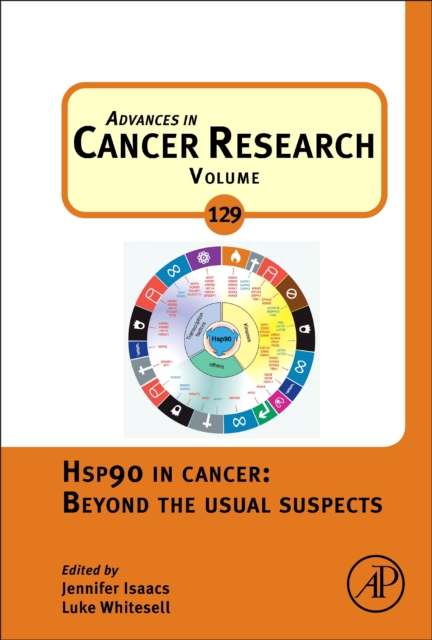
Hsp90 in Cancer: Beyond the Usual Suspects, the latest volume in the Advances in Cancer Research series, focuses on the multifunctional molecular chaperone Hsp90 which regulates the post-translational stability and function of a broad repertoire of client proteins and discusses some of the lesser-known aspects of how Hsp90 and its related family members enable oncogenic transformation and malignant progression.
Advances in Immunology, a long-established and highly respected publication, presents current developments as well as comprehensive reviews in immunology.
Advances in Immunology, a long-established and highly respected publication, presents current developments as well as comprehensive reviews in immunology.
Advances in Immunology, a long-established and highly respected publication, presents current developments as well as comprehensive reviews in immunology.
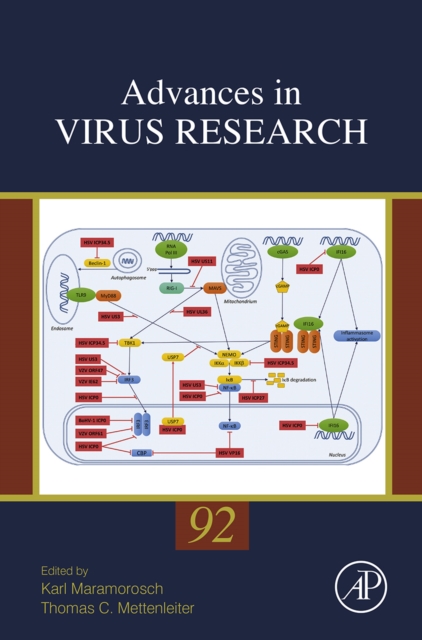
Published since 1953, Advances in Virus Research covers a diverse range of in-depth reviews, providing a valuable overview of the current field of virology.
The Value of BCG and TNF in Autoimmune Diseases, Second Edition provides an overview on the current research related to TNF induction and the use of the BCG vaccine as a potential treatment approach to diverse forms of autoimmunity, allergies, infections and neurologic diseases.
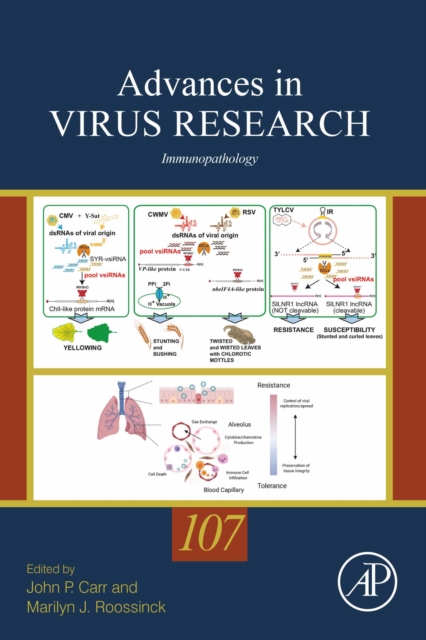
Immunopathology, Volume 107 in the Advances in Virus Research series, highlights new advances in the field, with this new volume presenting interesting chapters.
The increase of immigrant population in developed countries (mainly in Europe and North America) together with an important increase of international travel worldwide are the two most important causes that have contributed to the introduction and diagnosis of imported/tropical infectious diseases in these countries.
Completely revised and updated, Human Herpesviruses HHV-6A, HHV-6B & HHV-7, Third Edition, delivers a contemporary and thorough review of HHV-6, beginning with foundational explorations of classification, molecular biology, and chromosomal integration of the virus, through to clinical details, including pathologic features of infection, and clinical effects on various organ systems.
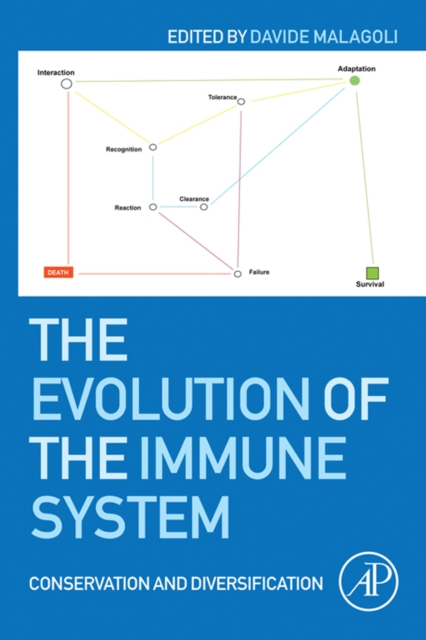
The Evolution of the Immune System: Conservation and Diversification is the first book of its kind that prompts a new perspective when describing and considering the evolution of the immune system.