Dieser Buchtitel ist Teil des Digitalisierungsprojekts Springer Book Archives mit Publikationen, die seit den Anfängen des Verlags von 1842 erschienen sind.
If we possessed a true, well established and undoubted theory concerning the function of the nerves in the human body, the principles of smell would be much easier to understand.
The intention of the VIIth International Symposium on the Facial Nerve was to create a platform for an extensive exchange of knowledge and scientific infor- mation between clinicians and basic research workers.
Teil I des Verhandlungsberichtes 1994 enthält die Referate, die von ausgewählten sachkundigen Wissenschaftlern des Fachgebietes und angrenzender Disziplinen erstellt wurden.
In spite of great advance made by ENT and maxillofacial surgeons as well as radiotherapists to improve therapy of cancer of the oral cavity and oropharynx, it has not been possible in the past 4 decades to raise the chances of patient survival above 40%-45%.
Tumours and tumour-like lesions occurring in the Upper Respiratory Tract and Ear are classified and defined using internationally accepted terminology and diagnostic criteria.
Teil I des Verhandlungsberichtes 1991 der Deutschen Gesellschaft für HNO-Heilkunde, Kopf- und Hals-Chirurgie enthält die Hauptreferate, die von besonderen Sachkennern für die Jahresversammlung geschrieben wurden.
Teil I des Verhandlungsberichtes 1990 der Deutschen Gesellschaft für Hals-Nasen-Ohrenheilkunde, Kopf- und Hals-Chirurgie enthält die Hauptreferate, die von besonderen Sachkennern für die Jahresversammlung geschrieben wurden.
Teil I des Verhandlungsberichtes 1989 der Deutschen Gesellschaft für Hals-Nasen-Ohren-Heilkunde, Kopf- und Hals-Chirurgie enthält die Hauptreferate, die von besonderen Sachkennern für die Jahresversammlung geschrieben wurden.
Teil I des Verhandlungsberichtes 1988 der Deutschen Gesellschaft für Hals-Nasen-Ohren-Heilkunde, Kopf- und Halschirurgie enthält die Hauptreferate, die von besonderen Sachkennern für die Jahresversammlung geschrieben wurden.
Die jährlich erscheinende Reihe bietet eine praxisbezogene Fort- und Weiterbildung speziell für den niedergelassenen HNO-Arzt und den Klinikassistenten.
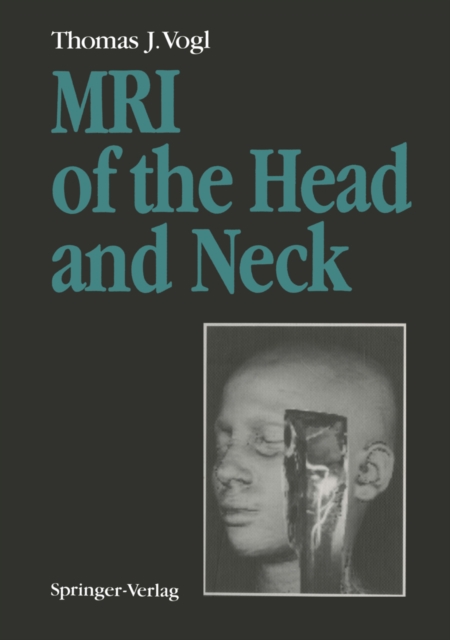
Since the establishment of magnetic resonance imaging theclinical diagnostic of the head and neck has improvedsubstantially and, therefore, in many cases this techniqueis used in the first place of radiological diagnosis.
In Zusammenarbeit mit dem Forschungsrat "Rauchen und Gesund- heit", dem Tumorzentrum Heidelberg/Mannheim, dem Hauptver- band der gewerblichen Berufsgenossenschaften und der Stiftung "Krebs und Scharlach"
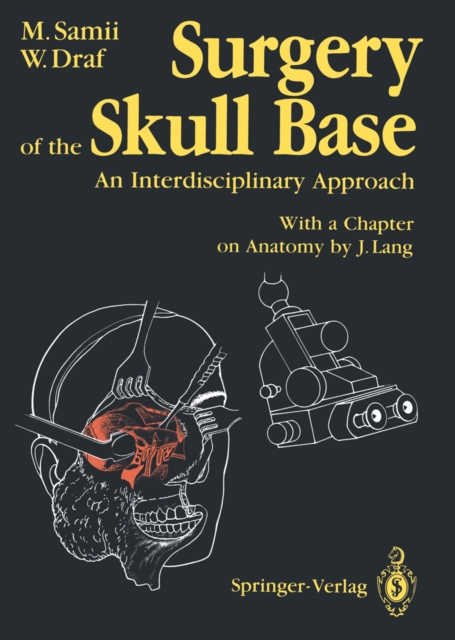
The sellar region and paranasal sinuses constitute the anatomical sections of the skull base in which pathological entities warrant interdisciplinary management.
The International Life Sciences Institute (ILSI) was established in 1978 to stimulate and support scientific research and educational programs related to nutrition, toxicology, and food safety, and to encourage cooper- ation in these programs among scientists in universities, industry, and government agencies to assist in the resolu- tion of health and safety issues.
Die jährlich erscheinende Reihe bietet eine praxisbezogene Fort- und Weiterbildung speziell für den niedergelassenen HNO-Arzt und den Klinikassistenten.
Die jährlich erscheinende Reihe bietet eine praxisbezogene Fort- und Weiterbildung speziell für den niedergelassenen HNO-Arzt und den Klinikassistenten.
In dem Buch wird ein neues Verfahren, die elektromagnetische Artikulographie (EMA), vorgestellt, das erstmals eine direkte, medizinisch ungefährliche Untersuchung der Mundmotorik beim Sprechen erlaubt.