This new edition presents an evidence-based review of extracorporeal membrane oxygenation (ECMO) for adults, with a particular focus on veno-venous (VV) ECMO.
A very handy practical book written by French doctors specialised in disaster medicine, this guide offers their core experience condensed in 50 small, easily digestible chapters.
The first edition of Infection Prevention reviewed evolving areas in infection prevention on topics including contact precautions, technology implementation, specific infections, and care in various settings.
In the USA, the COVID-19 crisis came as an unpleasant surprise and a shock to many healthcare systems and hospitals, especially in the crisis epicenter, New York City.
Published in the series Headache, endorsed by the European Headache Federation, this is the first book on the novel synthetic treatment of migraine with ditans (lasmiditan) and gepants (atogepant, ubrogepant, rimegepant, vazegepant).
This book, part of the European Society of Intensive Care Medicine (ESICM) textbook series, provides detailed up-to-date information on the care of the critical ill very old (=80 years) patients in the ICU.
Respiratory care is the largest overall component of neonatal intensive care, and the fifth edition of the Manual of Neonatal Respiratory Care is the leading bedside guide for all aspects of respiratory care in the neonatal intensive care unit.
This book on post-injury multiple organ failure (MOF) offers a comprehensive overview and clinically focused practical guide to treating the condition.
The Annual Update compiles reviews of the most recent developments in clinical intensive care and emergency medicine research and practice in one comprehensive book.
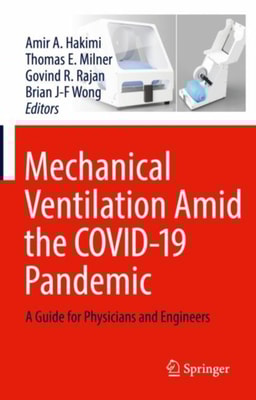
This book aims to give a comprehensive overview of the current challenges and solution posed to the health care professionals who need to use mechanical ventilation to treat their patients.
This comprehensive book addresses the acute emergencies in neuromuscular disease from a novel perspective, focusing on clinical management and treatment of these disorders rather than the more traditional neuropathology, neurogenetics, and neurophysiology approaches.
This book describes a fully integrated approach to the management of elderly patients who are at risk of or suffer trauma, drawing on up-to-date knowledge from multiple specialties in recognition of the fact that the number and severity of comorbidities in this population requires expertise in many fields.
This book analyzes the main topics of Palliative Care in Cardiac Intensive Care Units (CICU), from the changing epidemiology of patients admitted to the ICU, to the main clinical and ethical issues.
The concept for this book evolved over many years of intense clinical practice during which a wide variety of vascular complications were encountered as a result of other surgical or interventional procedures.
This book delineates that COVID-19 is a multisystem inflammatory disease and how its pathophysiology can predispose patients to an increased risk of neurological problems.
The surge in COVID-19 cases leading to hospitalizations around the world quickly depleted hospital resources and reserves, forcing physicians to make extremely difficult life-or-death decisions on ventilator allocation between patients.
This book covers the intersections between neurointervention and neurology, neurointervention and neurosurgery, and neurointervention and other specialties.
Building on the success of the previous edition, this review book includes all of the original content plus several new chapters dedicated to the education and implementation of transthoracic echocardiography and point-of-care ultrasonography.
This textbook comprehensively covers mechanical ventilation in neonates and children integrating the latest knowledge and understanding of developmental biology, age-related and disease-specific physiologic differences in the practice of mechanical ventilation.
This book provides a systemic approach to acute trauma care in line with the ABCDE paradigm and up-to-date information on assessing and managing major trauma from the pre-hospital to the rehabilitation phase.
This practical case-based book assists clinicians in the evaluation and treatment of patellofemoral patients by reviewing critical elements for assessment and presenting clinical scenarios in which different experts provide their recommendations for treatment.
This book focuses on subarachnoid hemorrhage (SAH), describing in detail the neurophysiology, anatomy, epidemiology, grading, anesthesia management, coiling and interventional treatment of this dangerous disease.
This book is an invaluable reference for medical practitioners seeking to integrate opioid use disorder (OUD) treatment into general medical settings, including primary care, the inpatient hospital, and the emergency department.
This textbook addresses the classical use of Transcranial Doppler (TCD) and Transcranial Color-Coded Duplex Sonography (TCCS), focusing on the usefulness of neurological monitoring beyond classical acute brain injuries present in the daily intensive care medical practice.
This book analyzes the main topics of Palliative Care in Cardiac Intensive Care Units (CICU), from the changing epidemiology of patients admitted to the ICU, to the main clinical and ethical issues.
In recent years, substantial progress has been made in the approaches to diagnosis and treatment of severe liver diseases in the pediatric ICU, from various forms of liver failure and hepatitis to acute and chronic liver disease.
This book provides a comprehensive analysis of the contemporary management of all aspects of traumatic brain injury (TBI), combining the findings of several recent randomised controlled trials investigating the role of hypothermia, erythropoietin, intracranial pressure monitoring and decompressive craniectomy in the management of TBI.
This book assesses the main features of COVID-19 from a clinical point of view, based on observations made during the disease epidemic in Northern Italy, one of the most affected areas in the world (the region has been the epicenter of the global pandemic for more than a month), and the first region outside China facing overwhelming numbers of cases.
This book focuses on the placement of vascular access devices under emergent conditions, including the techniques and devices needed to achieve successful device deployment in even the most critically-ill patient.
This book outlines the many anesthesia-related obstacles, concerns, and challenges that may be encountered by western trained anesthesiologist in low-resourced settings.
This book provides a concise yet comprehensive overview on the use of opioids in the ICU, offering practical, real-world recommendations on opioid utilization and alternative therapies.