For over thirty years, the Oxford Handbook of Clinical Specialties has guided students and junior doctors through their clinical placements, renowned for providing all the information needed for both practice and revision in a deceptively small package.
Our understanding of how pain in early life differs to that in maturity is continuing to increase and develop, using a combination of approaches from basic science, clinical science, and implementation science.
Our understanding of how pain in early life differs to that in maturity is continuing to increase and develop, using a combination of approaches from basic science, clinical science, and implementation science.
A case-based guide with expert commentary, Challenging Concepts in Critical Care shows how the experts approach and deal with real-life clinical scenarios.
Prepare with confidence for the Final FRCA with this dedicated guide featuring 300 original single best answer questions (SBAs) covering the whole breadth of the RCOA basic and intermediate curricula.
A Dictionary of Anaesthesia features over 150 entries that clearly define and describe essential terms relating to the science and practice of anaesthesia.
This definitive resource from the eminent Oxford Textbooks series, the Oxford Textbook of Anaesthesia addresses the fundamental principles, underpinning sciences and the full spectrum of clinical practice.
Transcutaneous electrical nerve stimulation (TENS) is a technique that delivers mild electrical currents across the intact surface of the skin to reduce pain.
Transcutaneous electrical nerve stimulation (TENS) is a technique that delivers mild electrical currents across the intact surface of the skin to reduce pain.
Oxford Specialist Handbooks in Anaesthesia offer a concise, didactic way for medical and nursing staff to access practical management advice that is portable, accessible, and reliable.
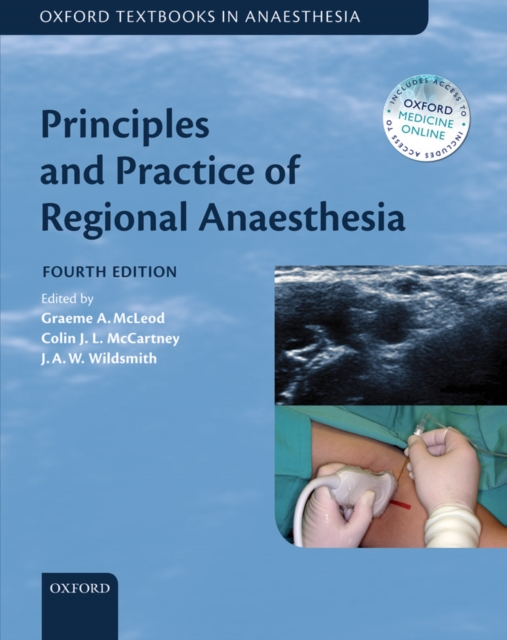
The fourth edition of this highly successful textbook discusses the practical applications of the various methods of regional anaesthesia, including ultrasound, as well as giving an account of their theoretical aspects.
Designed specifically for the revised Final FRCA examination, this book contains four mock exams, combining the new single best answer format with the traditional true/false format MCQs.
Designed specifically for the revised Final FRCA examination, this book contains four mock exams, combining the new single best answer format with the traditional true/false format MCQs.
Oxford Specialist Handbooks in Anaesthesia offer a concise, didactic way for medical and nursing staff to access practical management advice that is portable, accessible, and reliable.
Kidney Disease: From advanced disease to bereavement provides guidance to renal and palliative care professionals dealing with patients with advanced kidney disease, who are approaching end of life.
Released in 2007 and the first handbook-sized practical training guide to provide easily accessible, detailed information on how to get good images, make key measurements and report findings, the first edition of EchocardiographyA rapidly become a bestselling echocardiography manual.
Structured Oral Examination Practice for the Final FRCA offers well-researched, relevant, and carefully constructed questions with evidence-based answers.
Structured Oral Examination Practice for the Final FRCA offers well-researched, relevant, and carefully constructed questions with evidence-based answers.
The effective management of pain from cancer is a top priority for patients, carers and healthcare professionals, and has been the subject of extensive research.
Chronic back pain has been and continues to be a major cause of distress (both to people with persistent pain and their significant others), disability, work loss, and a huge cost to society.
Chronic back pain has been and continues to be a major cause of distress (both to people with persistent pain and their significant others), disability, work loss, and a huge cost to society.
The Oxford Specialist Handbooks series provides readers with clear, concise information on all that is needed to successfully train in the medical sub-specialties.
Orofacial pain - defined as pain lasting over three months in the mouth or face - is increasing in prevelance, with approximately 7% of the UK population having experienced it.
The advancement of tactics used in managing pediatric airway disorders can be attributed to an overall growth of collective knowledge among medical health professionals.
The use of ambulatory or 'day case' surgery has grown tremendously in Western countries in recent years at the expense of more traditional in-hospital surgical care.