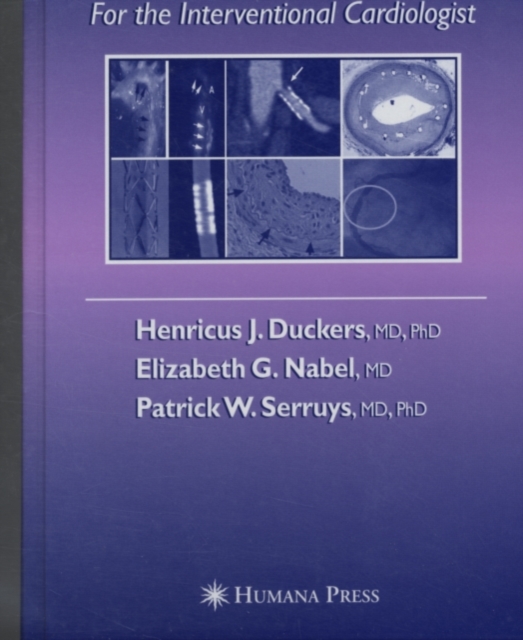
Leading interventional cardiologists, including Patrick Serruys, Eric Topol, David Holmes, Thomas Luscher and others provide the gold-standard reference on the treatment of restenosis (coronary artery blockage) for interventional cardiologists.
Sydney Lou Bonnick, MD, FACP, and Lori Ann Lewis, MRT, CDT, have updated and expanded their highly praised Bone Densitometry for Technologists to reflect the latest standards and developments in the field.
Prominent physicians review past, current, and future applications of the many powerful imaging techniques now used in the diagnosis, staging, treatment, and outcomes assessment of cancers of the prostate, central nervous system (CNS), and breast.
A panel of world-renowned experts presents a complete course on evaluating and treating patients with back pain, including interventional spinal procedures, spinal imaging, and the clinical evaluation of the spine patient.
Fundamentals of MRI: An Interactive Learning Approach explores the physical principles that underpin the technique of magnetic resonance imaging (MRI).
Edited by a renowned international expert in the field, Nuclear Medicine Physics offers an up-to-date, state-of-the-art account of the physics behind the theoretical foundation and applications of nuclear medicine.
Combining facets of health physics with medicine, An Introduction to Radiation Protection in Medicine covers the background of the subject and the medical situations where radiation is the tool to diagnose or treat human disease.
The ability to manipulate and analyze pictorial information to improve medical diagnosis, monitoring, and therapy via imaging is a valuable tool that every professional working in radiography, medical imaging, and medical physics should utilize.
There are numerous advantages to using Bayesian methods in diagnostic medicine, which is why they are employed more and more today in clinical studies.
The book sheds light on medical cyber-physical systems while addressing image processing, microscopy, security, biomedical imaging, automation, robotics, network layers' issues, software design, and biometrics, among other areas.
This book provides a comprehensive analysis of the contemporary management of all aspects of traumatic brain injury (TBI), combining the findings of several recent randomised controlled trials investigating the role of hypothermia, erythropoietin, intracranial pressure monitoring and decompressive craniectomy in the management of TBI.
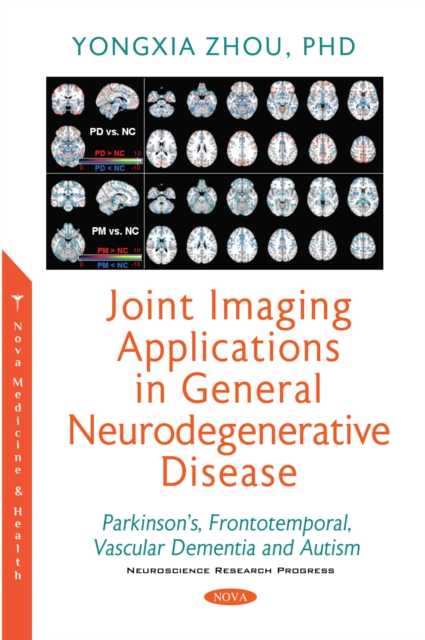
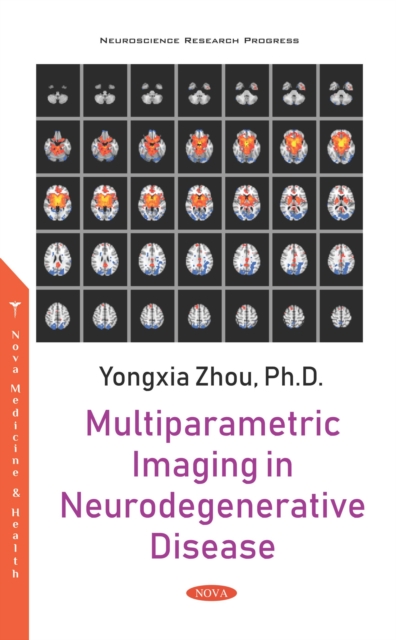
Multiple advanced neuroimaging applications in various neurodegenerative diseases including Parkinson's disease (PD), frontotemporal dementia (FTD), vascular dementia (VaD) and autism spectrum disorder (ASD) are covered in this book.
Neuroimaging techniques that can help elucidate and characterize the nature and mechanism of tissue injury and disease progression in neurodegenerative disease are of particular importance given its their roles in seeking successful preventive and therapeutic treatments.
Neurofeedback: Functions, Applications and Effects presents a number of possible applications for neurofeedback in offender treatment, including perpetuators of domestic violence and various other forms of violent and anti-social behavior, certain forms of sexually abusive behavior, and criminal behavior of an obsessive-compulsive nature.
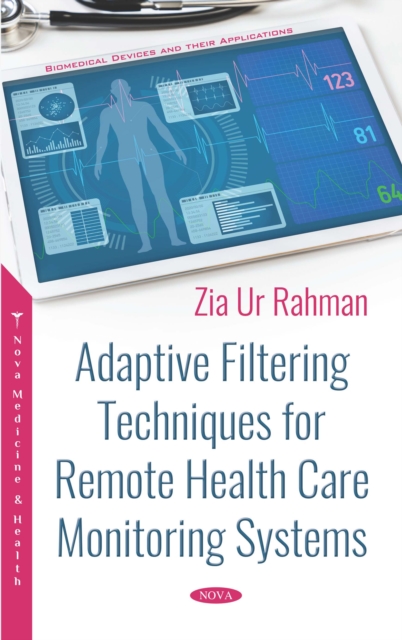
Adaptive Filtering Techniques for Remote Health Care Monitoring Systems aims to present a full picture of the state-of-the-art research and development of adaptive signal processing applications in various real-time applications.
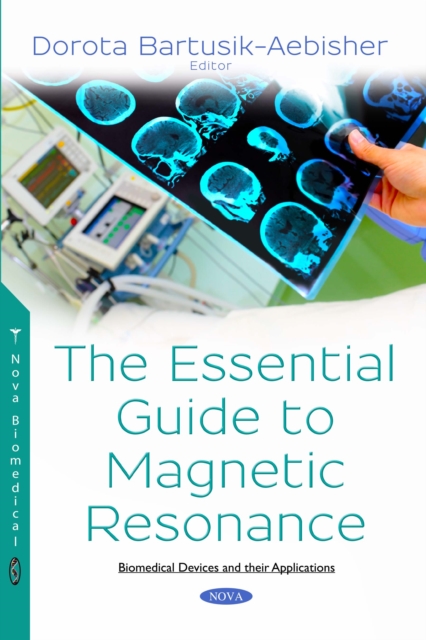
The opening chapter of The Essential Guide to Magnetic Resonance presents applications of Fluorine-19 Magnetic Resonance Imaging (19F MRI) in cancer research, tissue metabolomics, quantification of drug delivery, cellular tracking, tissue pH measurements and detection of 19F labeled cells.
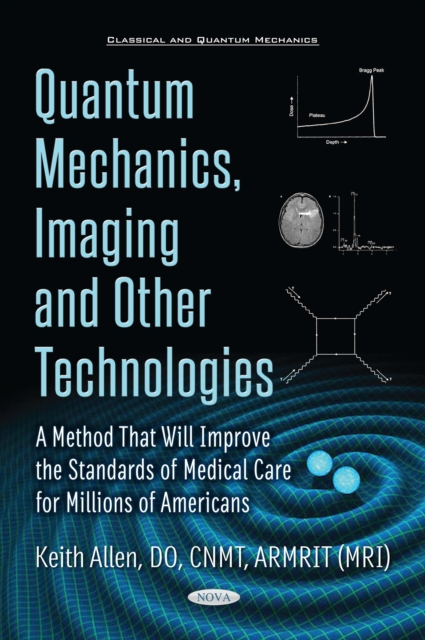
The author wrote this book to accomplish three major objectives: 1) For the appreciation of science, the philosophy of science and its beauty and wonder; 2) to explore the quantum paradigm and other important developments in science that are leading the way to important progress in key areas of research; and most importantly, 3) to appreciate how medical technologies are important medical tools that can improve the human condition.
This book presents original research findings of The Million Person Study of Low-Dose Radiation Health Effects (MPS), the largest and most comprehensive epidemiologic study of its kind to investigate the health effects of low-level chronic radiation exposure on American workers and veterans throughout the 20th century.
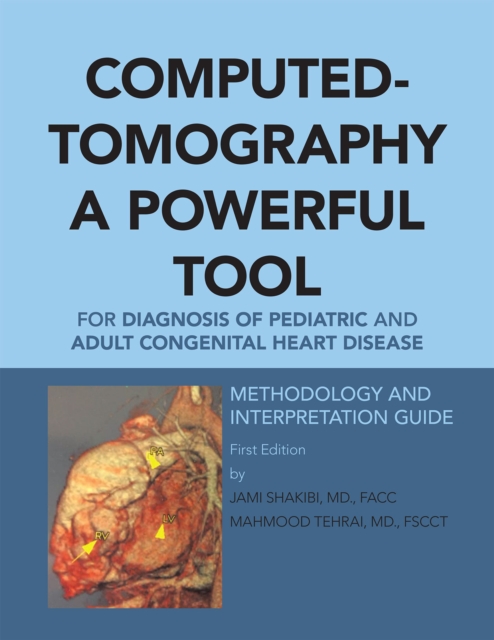
Use this book for step-by-step diagnosis of congenital heart disease and late complications of surgical repair, using CT angiography complemented with the clinical and echocardiographic findings.
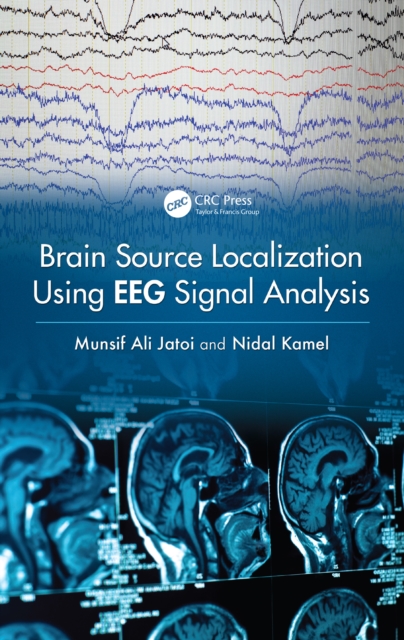
Of the research areas devoted to biomedical sciences, the study of the brain remains a field that continually attracts interest due to the vast range of people afflicted with debilitating brain disorders and those interested in ameliorating its effects.
The Royal College of Radiologists' First Anatomy module aims to ensure that this critical area in the interpretation of radiological images is thoroughly learned in the first year of training.
The focus of the new Fellowship of the Royal College of Radiologists (FRCR) Part 1 exam has shifted to examining the fundamental physics, and radiation protection required to work safely within a radiology department.
This book is an informed, educational and abundantly illustrated guide to the imaging knowledge that medical students in the clinical years of their undergraduate studies will be required to get to know, understand and recall in order to negotiate successfully their finals exams.
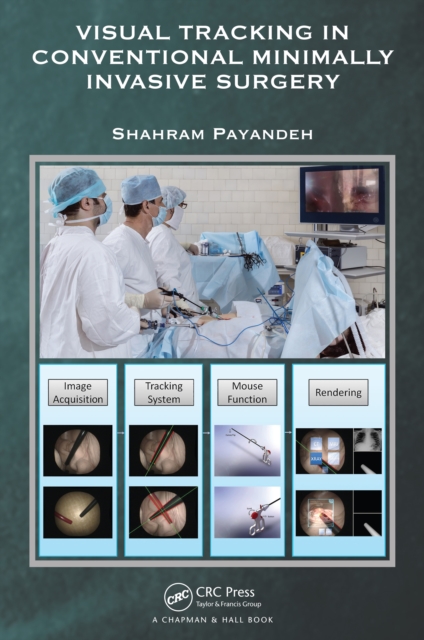
Visual Tracking in Conventional Minimally Invasive Surgery introduces the various tools and methodologies that can be used to enhance a conventional surgical setup with some degree of automation.
Optical imaging is a rapidly emerging imaging technique that has been successfjully translated into biomedical applications ranging from clinical diagnosis to molecular biology.
With the development of rapidly increasing medical imaging modalities and their applications, the need for computers and computing in image generation, processing, visualization, archival, transmission, modeling, and analysis has grown substantially.
Up-to-Date Details on Using Ultrasound Imaging to Help Diagnose Various DiseasesDue to improvements in image quality and the reduced cost of advanced features, ultrasound imaging is playing a greater role in the diagnosis and image-guided intervention of a wide range of diseases.
Placenta accreta comprises a spectrum of disorders where all or part of the placenta becomes attached to the muscular wall of the uterus, which can result in life-threatening hemorrhage at the time of delivery.
Placenta accreta comprises a spectrum of disorders where all or part of the placenta becomes attached to the muscular wall of the uterus, which can result in life-threatening hemorrhage at the time of delivery.
This textbook provides an accessible introduction to the basic principles of medical physics, the applications of medical physics equipment, and the role of a medical physicist in healthcare.
This textbook provides an accessible introduction to the basic principles of medical physics, the applications of medical physics equipment, and the role of a medical physicist in healthcare.