Ein erfahrener Röntgenassistent beschreibt die intraoperativen Durchleuchtungseinstellungen, wie sie für die häufigsten Eingriffe in der Unfallchirurgie und Orthopädie benötigt werden.
Dieses Buch mit umfangreichem Zusatzmaterial auf CD bietet unerfahrenen Sonographienutzern eine systematische Anleitung zur Duplexsonographie der Beinvenen für die Anwendung in der Praxis.
This book presents original research findings of The Million Person Study of Low-Dose Radiation Health Effects (MPS), the largest and most comprehensive epidemiologic study of its kind to investigate the health effects of low-level chronic radiation exposure on American workers and veterans throughout the 20th century.
In this monograph the contribution of imaging modalities to the various stages of drug discovery and development, from early target validation to their use in clinical development programs, is described.
A widely used, classroom-tested text, Applied Medical Image Processing: A Basic Course delivers an ideal introduction to image processing in medicine, emphasizing the clinical relevance and special requirements of the field.
Dieser Buchtitel ist Teil des Digitalisierungsprojekts Springer Book Archives mit Publikationen, die seit den Anfängen des Verlags von 1842 erschienen sind.
Dieser Buchtitel ist Teil des Digitalisierungsprojekts Springer Book Archives mit Publikationen, die seit den Anfängen des Verlags von 1842 erschienen sind.
Dieser Buchtitel ist Teil des Digitalisierungsprojekts Springer Book Archives mit Publikationen, die seit den Anfängen des Verlags von 1842 erschienen sind.
Dieser Buchtitel ist Teil des Digitalisierungsprojekts Springer Book Archives mit Publikationen, die seit den Anfängen des Verlags von 1842 erschienen sind.
Dieser Buchtitel ist Teil des Digitalisierungsprojekts Springer Book Archives mit Publikationen, die seit den Anfängen des Verlags von 1842 erschienen sind.
Das Buch gibt eine umfassende Darstellung zur Diagnose, präoperativen Staging und Vorbereitung, chirurgischen Behandlung, Zusatztherapie (Radio/Chemotherapie, Immuntherapie) sowie Nachsorge und Rehabilitation von Tumoren des Oesphago-Gastrointestinaltraktes, der Leber und der Bauchspeicheldrüse.
Das Buch behandelt die neuesten Methoden und Ergebnisse der Darstellung von Hirnfunktionen und ihren krankheitsbedingten Störungen sowie die Möglichkeit, Struktur und Funktion einzelner Hirnstrukturen in Beziehung zu setzen.
Die psychosoziale Unterstützung von Krebspatienten sowie die psychoonkologische Fortbildung an einer Abteilung für Strahlentherapie werden umfassend dargestellt.
Cervical Spine Research Society European Branch "e;The Cervical Spine Research Society is an organization of individuals interested in clinical and research problems of the cervical spine.
The tumors of the brain similar to other pathological changes of that particular organ claim for a separate position in scientific medicine regarding biology, morphology, features of clinical manifestation, diagnostics and therapy.
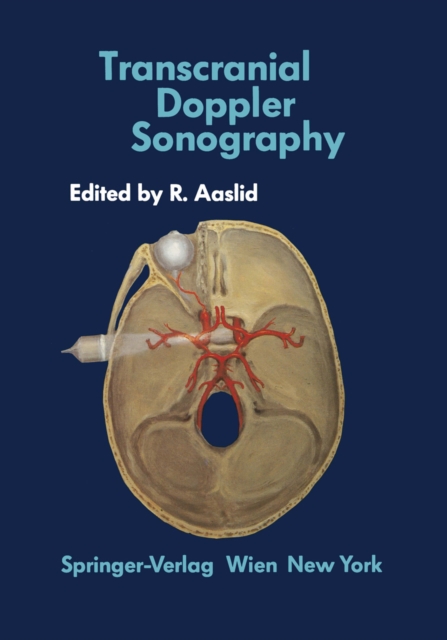
In 1981, the Norwegian physiologist and cyberneticist, Rune Aaslid, developed a device which made it possible to apply the transcranial Doppler sonographic technique in man.
Every few years a dissertation comes to the area of clinical application of medical technology which carries us forward as on a magic carpet into new regions of understanding and patient care.
Various textbooks on stereotactic neurosurgery have been published during the last few years (Riechert 1980, Schaltenbrand and Walker 1982, Spiegel 1982), all of them dealing with functional stereo tactics as the major subject in the field.
Positron Emission Tomography (PET) has been used for a decade in psychiatric research to study regional brain glucose metabolism, and the results seem to be inconsistent.
The second common meeting of the European Section and the Cervical Spine Research Society took place in Marseille (France) from June 12 to 15, 1988 and was organized by Rene Louis.
The last ten years has witnessed a resurgence of interest in stereotactic surgery although this has been mainly in the field of the comparatively simple stereotactic biopsy of intracranial tumours.
At the 8th European Congress of Neurosurgery, which took place in Barcelona, September 6-11, 1987, a great number of papers from all fields of neurosurgery were presented, reflecting the major advances that have been achieved in recent years.
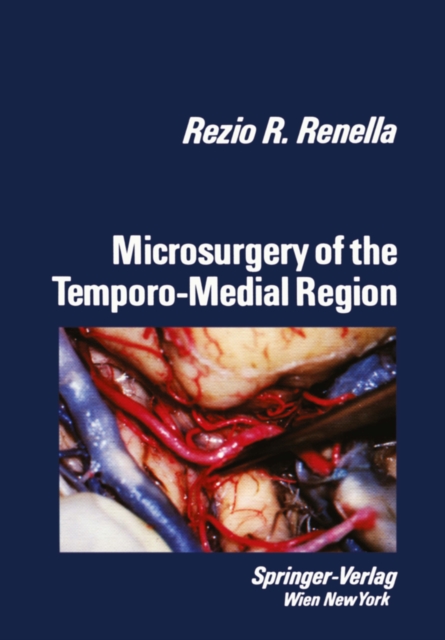
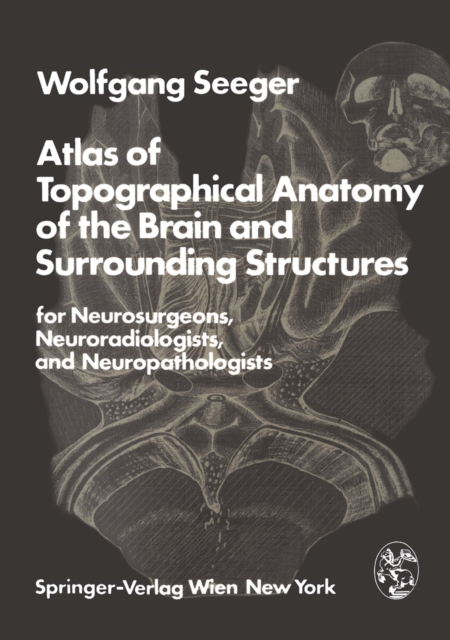
The traditional education of the neurosurgeon and duce simultaneous contrast preparations of the ar- the clinician working in related specialties is based teries and veins and thus obtain a complex photo- on their presumed knowledge of the macroscopic graphic representation of the structures of the prep- anatomy of the brain as traditionally taught.