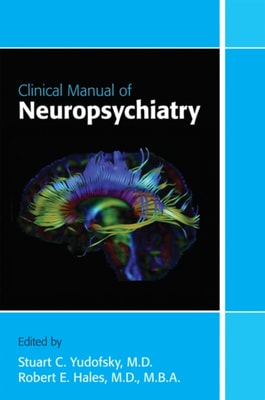
Clinical Manual of Neuropsychiatry focuses on the assessment, diagnosis, and treatment of the full spectrum of neuropsychiatric disorders, as well as those conditions that have significant neuropsychiatric components.
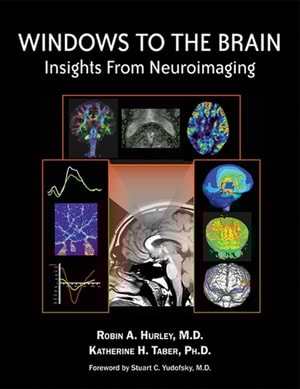
Windows to the Brain is the only book to synthesize neuroanatomical and imaging research as it pertains to selected neuropsychiatric diseases, containing all of the "e;Windows to the Brain"e; papers published from 1999-2006 in the Journal of Neuropsychiatry and Clinical Neurosciences.
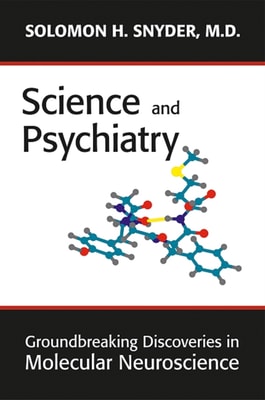
Solomon Snyder has been instrumental in the establishment of modern psychopharmacology -- as a pioneer in the identification of receptors for neurotransmitters and drugs and in the explanation of the actions of psychotropic agents.
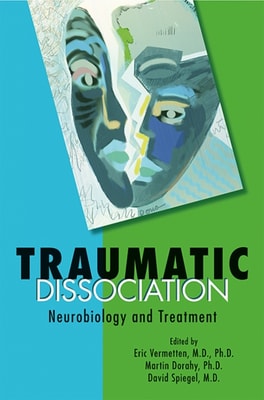
Traumatic Dissociation: Neurobiology and Treatment offers an advanced introduction to this symptom, process, and pattern of personality organization seen in several trauma-related disorders, including acute stress disorder, posttraumatic stress disorder (PTSD), and the dissociative disorders.
Seeking to integrate the large volume of clinical research on relational processes and mental health disorders with other scientific advances in psychiatry, Relational Processes and DSM-V builds on exciting advances in clinical research on troubled relationships.
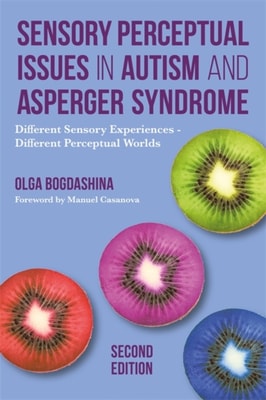
Complex and crucially important, the senses collect the massive amount of information we need to navigate daily life, and serve as a filter between our inner selves and the larger world.
Positive Behaviour Support Strategies for Students with Attention Deficit Hyperactivity Disorder equips parents, educators and professionals with the knowledge and skills to assess, manage and prevent challenging behaviours in children who have been diagnosed with ADHD.
Positive Behaviour Support Strategies for Students with Oppositional and Defiant Behaviours equips parents, educators and professionals with the knowledge and skills to assess, manage and prevent challenging behaviours in children who have been diagnosed with Autism Spectrum Disorder (ASD).
Diffusion MRI is a magnetic resonance imaging (MRI) method that produces in vivo images of biological tissues weighted with the local microstructural characteristics of water diffusion, providing an effective means of visualizing functional connectivities in the nervous system.
Neuroeconomics is a new highly promising approach to understanding the neurobiology of decision making and how it affects cognitive social interactions between humans and societies/economies.
Sex and Gender Differences in Alzheimer's Disease: The Women's Brain Project offers for the first time a critical overview of the evidence documenting sex and gender differences in Alzheimer's disease neurobiology, biomarkers, clinical presentation, treatment, clinical trials and their outcomes, and socioeconomic impact on both patients and caregivers.
Placebo Effects in Neurologic Disease, Volume 153, the latest release in the International Review of Neurobiology series, highlights new advances in the field, with this new volume presenting interesting chapters on Background and Methods in Placebo, Better than Nothing: A Historical Account of Placebos and Placebo Effects from Modern to Contemporary Medicine, Determinants of PE, Strategies for Minimizing PE in Research, Maximizing placebo response in the clinic, Statistical methods for handling PE, Nocebo and Lessebo effects, Ethics of deception, Pain, Parkinson's Disease, Cognitive impairment, Epilepsy, and much more.
Parkinson's Disease Therapeutics: Emphasis on Nanotechnological Advances presents the latest information on the second most common neurodegenerative disorder in the elderly.
Neurobiology of Addiction and Comorbid Disorders, Volume 156, in the International Review of Neurobiology series, highlights new advances in the field of neurobiology, with this new volume presenting interesting chapters on topics such as Pain + Alcohol, Pain + Opioids, Traumatic Stress + Alcohol, Traumatic Stress + Cannabinoids, Traumatic Brain Injury and the Misuse of Alcohol, Opioids, and Cannabis, Depression + Addiction, Microbiome/cytokines + Addiction, Cognitive disorders + Alcohol, Neural stem cells, Neurogenesis and Addiction, Food Addiction, and Poly-drug Addiction.
An AGI Brain for a Robot is the first and only book to give a detailed account and practical demonstration of an Artificial General Intelligence (AGI).
Adolescent Addiction, Second Edition, offers researchers and clinicians a single-volume resource on the nature, extent and treatment of addictive problems in adolescents.
Methods in Neurosciences, Volume 5: Neuropeptide Technology: Gene Expression and Neuropeptide Receptors discusses procedures and tools of assay useful for the identification, purification, and quantification of neuropeptides and their receptors.
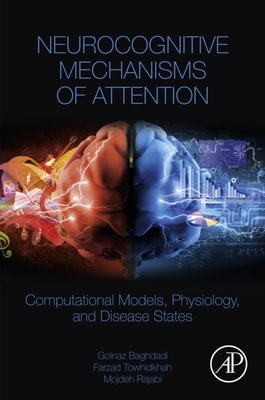
Neurocognitive Mechanisms of Attention: Computational Models, Physiology, and Disease States describes the brain mechanisms underlying the attention control system, how those mechanisms are examined, how they operate in different disease states, and methods for improving them.
This volume of Progress in Brain Research provides a synthetic source of information about state-of-the-art research that has important implications for the evolution of the brain and cognition in primates, including humans.
This second edition of Neurologic Emergencies in Infancy and Childhood is written in response to colleagues who have requested an updated version of the book because of numerous advances in child neurology and medicine in general since the first offering.
Methods in Neurosciences, Volume 4: Electrophysiology and Microinjection is a collection of papers that deals with the electrically excitability feature of many cell types.
Methods in Psychobiology, Volume 2, Specialized Laboratory Techniques in Neuropsychology and Neurobiology is intended for the beginning "e;"e;student"e;"e; in physiological, neuro-, bio-psychology, or whatever label one wishes to attach to the exciting interdisciplinary field which weds the brain and behavior.
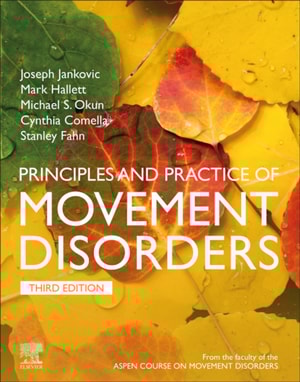
Offering a state-of-the-art, authoritative summary of the most relevant scientific and clinical advances in the field, Principles and Practice of Movement Disorders provides the expert guidance you need to diagnose and manage the full range of these challenging conditions.
The book is focused on defense mechanisms as theoretical constructs as well as the possibilities of their empirical registration by different methods, and the application of these constructs in different fields of psychology with special regard to concurrent and predictive validity.
Adjunctive treatments, in which patients are provided additional modalities that can assist in their behavior change or the maintenance of their behavior change (i.
Adolescent Addiction: Epidemiology, Assessment, and Treatment presents a comprehensive review of information on adolescent addiction, including prevalence and co-morbidity rates, risk factors to addiction, and prevention and treatment strategies.
The traditional view of motor systems as a linear chain of elements switched on and off by command neurons has become increasingly difficult to maintain in the face of accumulating evidence against the existence of command elements.
Topical Reviews in Neurosurgery, Volume 1 focuses on neurosurgery, a medical specialty concerned with the prevention, diagnosis, treatment, and rehabilitation of disorders that affect any portion of the nervous system.
Methods in Neurosciences, Volume 6: Neuropeptide Technology: Synthesis, Assay, Purification, and Processing describes procedures and tools of assay useful for the identification, purification, and quantification of neuropeptides and their receptors.
The Handbook of Clinical Neurology volume on traumatic brain injury (TBI) provides the reader with an updated review of emerging approaches to traumatic brain injury (TBI) research, clinical management and rehabilitation of the traumatic brain injury patient.
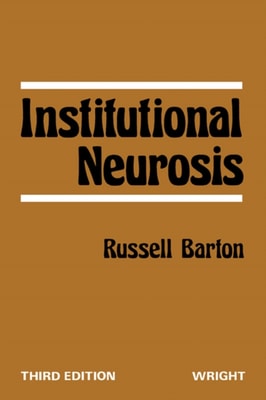
Institutional Neurosis describes the clinical features of the disorder in mental hospitals, its differential diagnosis, etiology, treatment, and prevention.