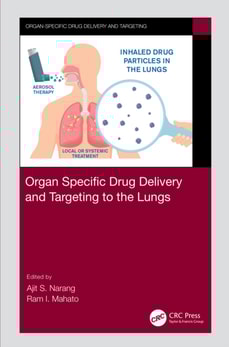
Organ Specific Drug Delivery and Targeting to the Lungs provides up to date information on the multidisciplinary field of particle engineering and drug delivery to the lungs, including advancements of nanotechnology.
Organ Specific Drug Delivery and Targeting to the Lungs provides up to date information on the multidisciplinary field of particle engineering and drug delivery to the lungs, including advancements of nanotechnology.
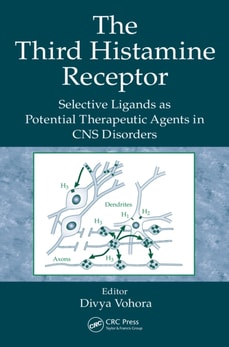
Reveals an Emerging Avenue of Potential Treatments for a Host of Challenging Diseases and DisordersThe H3 receptor is known to play a major role in a range of CNS disorders, including those affecting cognitive functions such as ADHD and Alzheimer's disease, as well as sleep disorders, obesity, epilepsy, schizophrenia, depression, and neurodege
Nanophytomedicine is a branch of medicine that involves the application of nanomedicine-based systems to phytotherapy and phytopharmacology and the use of phytonanoparticles for biomedical applications.
Nanophytomedicine is a branch of medicine that involves the application of nanomedicine-based systems to phytotherapy and phytopharmacology and the use of phytonanoparticles for biomedical applications.
While simultaneous breakthroughs occurring in molecular biology and nanoscience/technology will ultimately revolutionize all of medicine, it is with our efforts to prevent, diagnose, and treat cancer that many of the most dramatic advances will occur.
In the 40 years since the classic review of osmotic and ionic regulation written by Potts and Parry, there has been astonishing growth in scientific productivity, a marked shift in the direction and taxonomic distribution of research, and amazing changes in the technology of scientific research"e; It is indicative of the growth of the subject that as
The virtually universal popularity of caffeine, together with concerns about its potential pathogenic effects, have made it one of the most extensively studied drugs in history.
Key features include: Details the role of plants for the treatment and management of cancer and diabetes Discusses the role of phytocompounds as ligands for cancer and diabetic targets Reviews plants and the potential of phytochemicals as antidiabetic and anticancer drugs Explores the green biosynthesis of nanoparticles and their treatment efficiency
Volume 23, entitled Molecular Bio-Sensors and the Role of Metal Ions, of the series Metal Ions in Life Sciences (MILS) represents a milestone of contemporary progress and understanding of molecular bio-sensors for metal ions.
Volume 23, entitled Molecular Bio-Sensors and the Role of Metal Ions, of the series Metal Ions in Life Sciences (MILS) represents a milestone of contemporary progress and understanding of molecular bio-sensors for metal ions.
Key features include: Details the role of plants for the treatment and management of cancer and diabetes Discusses the role of phytocompounds as ligands for cancer and diabetic targets Reviews plants and the potential of phytochemicals as antidiabetic and anticancer drugs Explores the green biosynthesis of nanoparticles and their treatment efficiency
This book provides a summarized information related to the global herbal drug market and its regulations, ethnopharmacology of traditional crude drugs, isolation of phytopharmaceuticals, phytochemistry, standardization, and quality assessment of crude drugs.
This book provides a summarized information related to the global herbal drug market and its regulations, ethnopharmacology of traditional crude drugs, isolation of phytopharmaceuticals, phytochemistry, standardization, and quality assessment of crude drugs.
Herbal Treatment of Anxiety: Clinical Studies in Western, Chinese and Ayurvedic Traditions explains the nature and types of anxiety, its neurobiology, the pathophysiology that exacerbates and perpetuates it, and the psychopharmacology of the chemical agents that relieve its manifestations.
Herbal Treatment of Anxiety: Clinical Studies in Western, Chinese and Ayurvedic Traditions explains the nature and types of anxiety, its neurobiology, the pathophysiology that exacerbates and perpetuates it, and the psychopharmacology of the chemical agents that relieve its manifestations.
The assessment of cancer risk is a complex process that requires the examination of etiological agents, real-world environments, and individual rates of exposure.
Toxicokinetics in Risk Assessment discusses the noncancer risk assessment process and its reliance on uncertainty factors in order to facilitate the continued study and refinement of the scientific basis for health risk assessment.
In order to understand drug metabolism at its most fundamental level, pharmaceutical scientists must be able to analyze drug compound structure and predict possible metabolic pathways in order to avoid the risk of adverse reactions that lead to the withdrawal of a drug from the market.
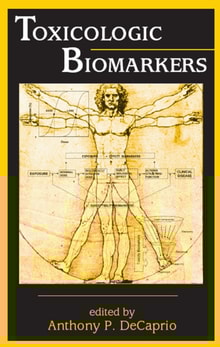
Responding to the explosion of advances in the use of biomarkers to efficiently, rapidly, and economically evaluate the health effects of chemical entities, this authoritative reference provides a detailed overview of the theory, development, and practical application of biomarkers in the toxicological, environmental, forensic, and pharmaceutical s
Carefully crafted to provide tightly focused and authoritative information, the Directory of Therapeutic Enzymes covers all approved therapeutic enzymes currently used in medicine.
Although there are numerous books on drug metabolism, Radiotracers in Drug Development is unique in explaining how radiotracers are used to elucidate a drug's absorption, distribution, metabolism, and excretion (ADME).
As radiological residue, both naturally occurring and technologically driven, works its way through the ecosystem, we see its negative effects on the human population.
Calculations in Chemical Kinetics for Undergraduates aims to restore passion for problem solving and applied quantitative skills in undergraduate chemistry students.
Calculations in Chemical Kinetics for Undergraduates aims to restore passion for problem solving and applied quantitative skills in undergraduate chemistry students.
Pharmaceutical Care in the Digital Revolution: Blending Digital with Human Innovation, Second Edition provides readers with an updated view on how to use technology to improve pharmaceutical care (PC) and enhance drug outcomes with digital tools.
With chapters from experienced and internationally renowned contributors holding positions in research, industry, and clinical practice, this is the fifth edition of what has become the standard reference for cosmetic scientists and dermatologists seeking the latest innovations and technology for the formulation, design, testing, use, and production of cosmetic products for the skin.