This volume reflects the changes that have taken place in the pharmaceutical industry over the last ten years, most notably the increased importance attached to the question of chirality, the growing influence of biotechnology and the need for more rigorous documentation and validation of analytical methods and procedures.
This up-to-date compilation addresses the scientific problems of determining a mode of action of lithium and provides a cross-disciplinary perspective.
It is well established that asthma is an inflammatory disease of the airway mucosa and drugs like inhaled glucocorticoids are now commonly introduced early in therapy.
Specification of Drug Substances and Products: Development and Validation of Analytical Methods is a comprehensive and critical analysis of the requirements and approaches to setting specifications for new pharmaceutical products, with an emphasis on phase-appropriate development and validation of analytical methods.
The disability-adjusted life year (DALY) is a generic measure of health effect that can be used in cost-effectiveness analysis as an alternative to the quality-adjusted life year (QALY).
Acacias: The Genus Acacia (sensu lato) is an evidence-based treatment of this supergenus, through the eyes of a clinical pharmacognosist and integrative medicine specialist.
This book presents a complete overview of the main EEG-based Brain-Computer Interface (BCI) paradigms and the related practical solutions for their design, prototyping, and testing.
Meyler's Side Effects of Herbal Medicines, named to Doody's Core Titles for 2013, is a derivatrive work based on the acclaimed Meyler's Side Effect of Drugs, Fifteenth Edition.
About the Series:In the tradition of Methods in Enzymology and Methods in Neurosciences, Academic Press is pleased to announce a new serial: Methods in Toxicology.
Coordination compounds have been well-known for their wide variety of applications for over a century, as well as enhancing the researcher's interest and concern in evaluating their action mechanism.
The area of food toxicology currently has a high profile of interest in the food industry, universities, and government agencies, and is certainly of great concern to consumers.
Environmental issues such as ozone layer depletion, overpopulation, biodiversity loss, global warming, natural resource depletion, and so on affect every organism on the planet somehow.
Microbial natural products have been an important traditional source of valuable antibiotics and other drugs but interest in them waned in the 1990s when big pharma decided that their discovery was no longer cost-effective and concentrated instead on synthetic chemistry as a source of novel compounds, often with disappointing results.
Microbial natural products have been an important traditional source of valuable antibiotics and other drugs but interest in them waned in the 1990s when big pharma decided that their discovery was no longer cost-effective and concentrated instead on synthetic chemistry as a source of novel compounds, often with disappointing results.
This successful guide assists scientists trained in molecular biology and related fields who now need to know the basic theories, principles and practical applications of pharmacology.
Annual Reports in Medicinal Chemistry provides timely and critical reviews of important topics in medicinal chemistry together with an emphasis on emerging topics in the biological sciences, which are expected to provide the basis for entirely new future therapies.
Volumes in this widely revered series present comprehensive reviews of drug substances and additional materials, with critical review chapters that summarize information related to the characterization of drug substances and excipients.
Reward Deficit Disorders is written for researchers in both academia and the pharmaceutical industry who use animal models in research and development of drugs for reward deficit disorders such as alcohol dependence, nicotine dependence, heroin and cocaine addiction, obesity, and gambling and impulse control disorders.
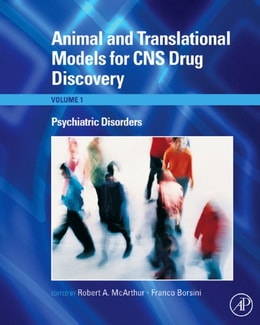
Psychiatric Disorders is written for researchers in both academia and the pharmaceutical industry who use animal models in research and development of drugs for psychiatric disorders such as anxiety, obsessive-compulsive disorder, depression, schizophrenia, bipolar disorder, ADHD, and autistic spectrum disorder.
Neurological Disorders is written for researchers in both academia and the pharmaceutical industry who use animal models in research and development of drugs for neurological disorders such as neurofibromatosis, Alzheimer's disease, Parkinson's disease, Huntington disease, ALS, and the epilepsies.
Clinical or translational science is the field of study devoted to investigating human health and disease, interventions and outcomes for the purposes of developing new treatment approaches, devices, and modalities to improve health.
The Handbook of Glycomics provides the first comprehensive overview of the emerging field of glycomics, defined as the study of all complex carbohydrates in an organism or cell ("e;the glycome"e;).
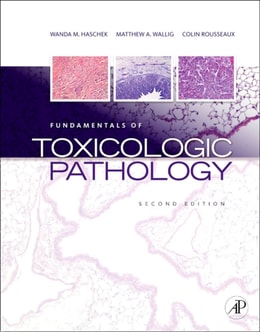
Toxicologic pathology integrates toxicology and the disciplines within it (such as biochemistry, pharmacodynamics and risk assessment) to pathology and its related disciplines (such as physiology, microbiology, immunology, and molecular biology).
Pharmacology meets the rapidly emerging needs of programs training pharmacologic scientists seeking careers in basic research and drug discovery rather than such applied fields as pharmacy and medicine.
Overcoming Obstacles in Drug Discovery and Development uses real-world case studies to illustrate how critical thinking and problem solving skills are applied in the discovery and development of drugs.
Single molecule techniques, including single molecule fluorescence, optical tweezers, and scanning probe microscopy, allow for the manipulation and measurement of single biological molecules within a live cell or in culture.
Annual Reports in Medicinal Chemistry provides timely and critical reviews of important topics in medicinal chemistry together with an emphasis on emerging topics in the biological sciences, which are expected to provide the basis for entirely new future therapies.