The Core Model: A Collaborative Paradigm for the Pharmaceutical Industry and Global Health Care develops the innovative core model, an organizational research and design paradigm and economic theory that proposes a collaborative approach to resolving global health issues and improving the productivity of drug development.
Nonclinical Assessment of Abuse Potential for New Pharmaceuticals offers a complete reference on the current international regulatory guidelines and details best practice methodology for the three standard animal models used to evaluate abuse potential: physical dependence, self-administration and drug discrimination.
Nanotechnology Based Approaches for Tuberculosis Treatment discusses multiple nanotechnology-based approaches that may help overcome persisting limitations of conventional and traditional treatments.
Clinical Pharmacology During Pregnancy is written for clinicians, physicians, midwives, nurses, pharmacists and other medical professionals directly involved in the care of women during pregnancy.
A STEP-BY-STEP GUIDE TO IMPLEMENTING ADVANCED PHARMACY SERVICES IN COMMUNITY AND CLINIC SETTINGSCommunity and Clinical Pharmacy Services teaches pharmacy students and practicing pharmacists how to provide advanced levels of pharmacy services in community and clinic settings designed to help patients achieve specific health goals and treat common disease states.
Life-Threatening Effects of Antipsychotic Drugs describes in detail more than 20 life-threatening effects associated with antipsychotics, presents the best available data on their incidence and case fatality, and gives comprehensive advice on diagnosis, management and preventive strategies.
Mutagenicity: Assays and Applications presents an extensive examination of the detection, assessment and future of mutagenicity, particularly as it concerns human health and the environment.
Pharmacological Mechanisms and the Modulation of Pain, the newest volume in the Advances in Pharmacology series, presents the pharmacological mechanisms and the modulation of pain.
For this volume of Advances in Pharmacology we have brought together some of the foremost basic science and clinical researchers to discuss some of the new frontiers in the development of targeted cancer therapy.
Annual Reports in Medicinal Chemistry provides timely and critical reviews of important topics in medicinal chemistry together with an emphasis on emerging topics in the biological sciences, which are expected to provide the basis for entirely new future therapies.
Equitable Access to High-Cost Pharmaceuticals seeks to aid the development and implementation of equitable public health policies by pharmaco-economics professionals, health economists, and policymakers.
Gain a full understanding of the basic science andclinical use of drugs with the most up-to-date andcomprehensive pharmacology text in the health sciencesA Doody's Core Title for 2017!
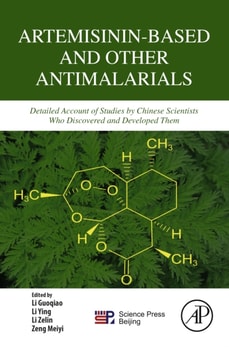
Artemisinin-Based and Other Antimalarials: Detailed Account of Studies by Chinese Scientists Who Discovered and Developed Them provides a historical and scientific background of the discovery and development of artemisinin, artemisinin derivatives, combination drugs and related chemicals.
Volumes in this widely revered series present comprehensive reviews of drug substances and additional materials, with critical review chapters that summarize information related to the characterization of drug substances and excipients.
Principles of Parenteral Solution Validation: A Practical Lifecycle Approach covers all aspects involved in the development and process validation of a parenteral product.
Advances in Heterocyclic Chemistry: Heterocyclic Chemistry in the 21st Century: A Tribute to Alan Katritzky is the definitive series in the field-one of great importance to organic chemists, polymer chemists, and many biological scientists.
Platform Technologies in Drug Discovery and Validation, Volume 50, the latest release in the Annual Reports in Medicinal Chemistry series, provides timely and critical reviews of important topics in medicinal chemistry, with an emphasis on emerging topics in the biological sciences.
Loomis's Essentials of Toxicology, Fifth Edition, provides the information on the harmful biologic effects associated with exposures to chemicals of all types.
Computational Toxicology: Methods and Applications for Risk Assessment is an essential reference on the translation of computational toxicology data into information that can be used for more informed risk assessment decision-making.
Pregnancy and the Pharmaceutical Industry: The Movement towards Evidence-Based Care for Pregnant Women explores the issues surrounding the decision to undertake clinical trials with pregnant women.
Organophosphate compounds, first synthesized in the 1800s, have been used for insecticides, pesticides, and in war and terrorism, such as the 1995 Tokyo subway poisoning.
Naturally Occurring Chemicals against Alzheimer's Disease offers a detailed discussion on the roles, molecular mechanisms, structural activity relationships, toxicology and clinical data on phytochemicals in relation to Alzheimer's disease.
Anesthesia and Analgesia in Laboratory Animals focuses on the special anesthetic, analgesic, and postoperative care requirements associated with experimental surgery.
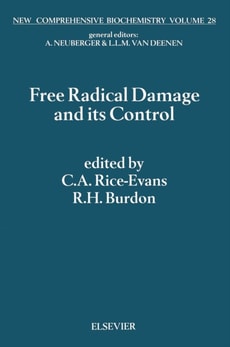
This book provides a comprehensive treatise on the chemical and biochemical consequences of damaging free radical reactions, the implications for the pathogenesis of disease and how this might be controlled endogenously and by radical scavenging drugs.
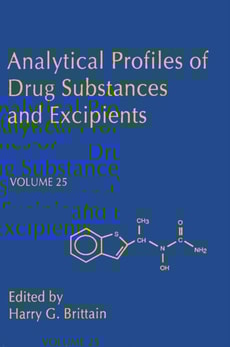
Although the official compendia define a drug substance as to identity, purity, strength, and quality, they normally do not provide other physical or chemical data, nor do they list methods of synthesis or pathways of physical or biological degradation and metabolism.
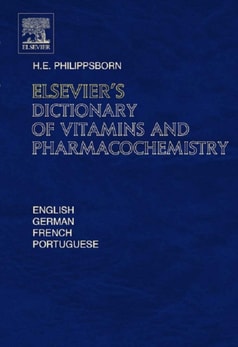
The dictionary will contain terms covering the following fields and subfields: Vitamin Technology: Vitamin biochemistry / Physiology; Origin of vitamins: natural, synthetic; Fat-soluble vitamins; Water-soluble vitamins; Vitamins as antioxidants; Vitamin deficiencies / Hypervitaminosis - Enzymes/Proteins: Biotechnology as applied biological science aimed at industrial exploitation - Hormones: Biochemistry; Physiology - Pharmaceutical Chemistry / Pharmaceutical Technology / Pharmaceutical Processes: Conception of the active principles; Structural analysis; Antibiotics and their way of action; Biochemistry; The Drug / The Medicament: Definition, origin, way of action; Biochemistry - Medical Aspects in the languages English, German, French and Portuguese.
Handbook of Toxicology of Chemical Warfare Agents, Third Edition, covers every aspect of deadly toxic chemicals used in conflicts, warfare and terrorism.
The Future of Pharmaceutical Product Development and Research examines the latest developments in the pharmaceutical sciences, also highlighting key developments, research and future opportunities.
Profiles of Drug Substances, Excipients, and Related Methodology, Volume 43 presents comprehensive reviews of drug substances and additional materials, with critical review chapters that summarize information related to the characterization of drug substances and excipients.
This successful guide assists scientists trained in molecular biology and related fields who now need to know the basic theories, principles and practical applications of pharmacology.
A Pharmacology Primer: Techniques for More Effective and Strategic Drug Discovery, 4th Edition features the latest ideas and research about the application of pharmacology to the process of drug discovery to equip readers with a deeper understanding of the complex and rapid changes in this field.
Pharmaceuticals companies, biotech companies, and CROs, regardless of size, all face the same challenge of managing costs and operational execution associated with bringing a valuable drugs and devices to market.
A practical application-based guide to adult mechanical ventilationThis trusted guide is written from the perspective of authors who have more than seventy-five years' experience as clinicians, educators, researchers, and authors.
Toxicoepigenetics: Core Principles and Applications examines the core aspects of epigenetics, including chromatin biology, DNA methylation, and non-coding RNA, as well as fundamental techniques and considerations for studying each of these mechanisms of epigenetic regulation.
Marine Carbohydrates: Fundamentals and Applications brings together the diverse range of research in this important area which leads to clinical and industrialized products.
SMALL ENOUGH TO FIT IN YOUR POCKET, DETAILED ENOUGH TO PROVIDE EVERYTHING YOU NEED TO KNOW Essential data on more than 1,000 of the most commonly used prescribed medications and more than 75 drugs most often used in the pre-hospital settingDrug-specific EMS pearls, including signs and symptoms of overdose and specific overdose managementSections on popular medicinal herbs and common street drugsQuick-reference tables encapsulate essential informationStreet Drug section updated to include "e;bath salts"e; and salvia