Illustrated with rich case examples, this widely used practitioner resource and text presents a range of play approaches that facilitate healing in a shorter time frame.
When hospitals release seriously mentally ill patients too soon without outpatient follow-up, the patients can end up homeless, jailed, harming others, or even dead.
Until recently, behavioral health was defined within the strict dichotomy of inpatient and outpatient care -- a dichotomy that failed to mirror the range and complexity of human experience and clinical needs.
The first book to focus on measuring the basic processes of mental healthcare, such as access, detection, treatment appropriateness, safety and continuity of care, Improving Mental Healthcare: A Guide to Measurement-Based Quality Improvement integrates practical information about quality measures -- such as their clinical logic, validity and basis in scientific evidence -- into a highly readable guide on how to implement measures and use the results to improve quality of care.
The shifting demographic toward a "e;graying"e; population -- coupled with today's reality of managed care -- makes the need for high-quality, cost-effective psychiatric services within the nursing care setting more urgent than ever.
Inviting the help of colleagues worldwide, the concise Diagnostic Issues in Substance Use Disorders is part of the new series Advancing the Research Agenda for DSM-V.
Ethics, Culture, and Psychiatry: International Perspectives is a textbook that explores the best ways to promote the use of the Declaration of Madrid, which outlines ethical standards for psychiatric practice throughout the world.
Psychoneuroimmunology has emerged as a discipline advancing our knowledge of the relationships among psychosocial factors, the central nervous system, the immune system, and disease.
While the social environment of an individual is an essential component to understanding the management of psychiatric disorders, these aspects are often ignored due to the emphasis on pharmacological treatment in contemporary psychiatry.
While the social environment of an individual is an essential component to understanding the management of psychiatric disorders, these aspects are often ignored due to the emphasis on pharmacological treatment in contemporary psychiatry.
The Operationalized Psychodynamic Diagnosis (OPD) is a multiaxialpsychodynamic diagnostic system that has become a widely acceptedstandard in psychodynamic diagnostics for clinical practice and research inmany countries.
A book written by experts in the field, its comprehensive coverage touches all the main areas of importance to those needing to understand and respond to one of the most pressing contemporary challenges in public mental health.
A book written by experts in the field, its comprehensive coverage touches all the main areas of importance to those needing to understand and respond to one of the most pressing contemporary challenges in public mental health.
ICD-11 Personality Disorders is a comprehensive and clinically helpful overview of ICD-11 personality disorders and related traits, and offers clinical illustrations to guide practitioners.
The body is a cultural vessel, giving voice to the unspoken words of the soul and transforming the nuances of distress into a script of symptoms that echoes across diverse cultural landscapes.
The body is a cultural vessel, giving voice to the unspoken words of the soul and transforming the nuances of distress into a script of symptoms that echoes across diverse cultural landscapes.
Medical Psychotherapy draws together succinct descriptions of the major models of psychotherapy, written by specialists who offer an accessible, theoretical, and evidence based depiction of each therapy and its clinical role for patients.
Seeing Depression Through a Cultural Lens, the collaborative work of a clinical neuroscientist and a scholar of comparative culture, examines the effects of cultural identity on the epidemiology, phenomenology, and narratives of depression, the bipolar spectrum, and suicide.
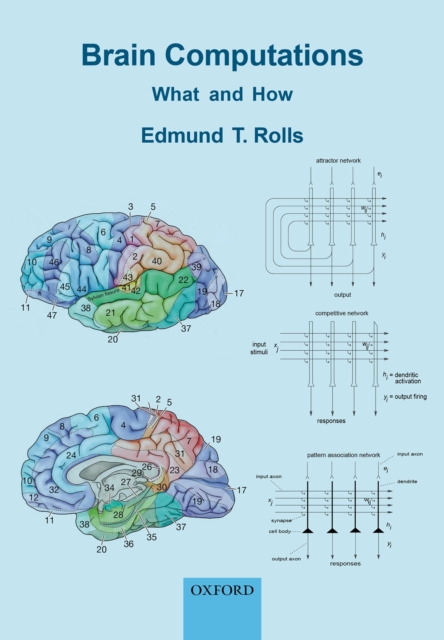
In order to understand how the brain works, it is essential to know what is computed by different brain systems, and how those computations are performed.
Although psychotherapy research shares many of the same methodological issues that pharmacology trials do, psychotherapy research poses unique challenges, including the difficulty (if not near impossibility) of keeping participants blind to treatment assignment, the need for a replicable manual and therapist training procedure, the importance of outside observation of therapy quality ratings, and the problems researchers face in measuring the active ingredients of psychotherapy.
With the publication of the Diagnostic and Statistical Manual of Mental Disorders, 5th Edition (DSM-5), much has changed about the conceptualization of obsessive-compulsive disorder and its associated spectrum conditions.
With the publication of the Diagnostic and Statistical Manual of Mental Disorders, 5th Edition (DSM-5), much has changed about the conceptualization of obsessive-compulsive disorder and its associated spectrum conditions.
In an age of 'scientific psychiatry' and evidenced-based medicine, the judgement of the psychiatric clinician in treating an individual patient has been devalued as the 'art' of medicine as opposed to science, with reduced evidentiary value.
Although school mental health specialists already understand that suicide and self-injury among students represents a significant and growing concern, emerging data challenges traditional perceptions about suicide risk in schools.
Although school mental health specialists already understand that suicide and self-injury among students represents a significant and growing concern, emerging data challenges traditional perceptions about suicide risk in schools.
Seeing Depression Through a Cultural Lens, the collaborative work of a clinical neuroscientist and a scholar of comparative culture, examines the effects of cultural identity on the epidemiology, phenomenology, and narratives of depression, the bipolar spectrum, and suicide.
Empathy in Clinical Psychiatry and Mental Health Care focuses on empathy in clinical psychiatry and mental health care, bringing together the challenging reality of day-to-day clinical mental health work with conceptual and neuroscientific work on empathy.
The genetic correlates of neuropsychiatric disorders are now known, but none have come close to explaining the great variety of human psychiatric illnesses.
Empathy in Clinical Psychiatry and Mental Health Care focuses on empathy in clinical psychiatry and mental health care, bringing together the challenging reality of day-to-day clinical mental health work with conceptual and neuroscientific work on empathy.
There are three aims of Injured Brains of Medical Minds II - Firstly, to provide perceptive accounts of symptoms and the natural history of brain disorders by people specially trained in the art of observing and reporting, thus yielding unique insights into the lived experience of what it is like to be a patient and to be disabled.
The Intimate State explores how state-supported mental health initiatives made emotional intimacy both politically valued and personally desired during a crucial period of modern British psychiatric and cultural history.