In this introductory text, the author presents the law relating to child care and the reforms introduced by the Children Act 1989, assessing its impact on child care practice and procedures.
Comprehensive, concise and easily accessible, this is the first health economics dictionary of its kind and is an essential reference tool for everyone involved, or interested in, healthcare.
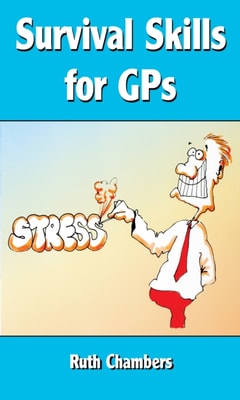
Survival Skills for GPs is an in-depth interactive personal coaching course that: Shows how you can survive the rigours of general practice, teaches you how to stay in control of your professional life, helps you learn to enjoy your career as a GP again, gives you the confidence and skills to develop your career.
Practical and evidence-based, this unique book is the first comprehensive text focused on person-centered approaches to people with serious mental illness such as schizophrenia and bipolar disorder.
Explains the NHS as a political environment, and concentrates on understanding the relationships of power rather than on the role of apparent authority.
The use of home detoxification enables health care workers to avoid episodes of in-patient care, with its inherent high costs and secondary problems of label attachment and possible stigmatization.
Presents information and advice on the extended role of the practice manager for both those with experience and increasing responsibility, and for those new to the primary care team.
Based on the authors' experiences of working with a wide variety of retail pharmacies, this book is designed to provide pharmacists with a clear understanding of the nature of marketing, and the ways it can contribute to the effective management of their business.
Using practical examples this book demonstrates how a theoretical model for shared care operates in practice to deliver improved health outcomes within limited resources.
The publications game can seem tricky: knowing where to start, how to plan and draft a paper, who to pitch it to and how to present it can appear difficult enough.
Twenty-Six Portland Place is a ground-breaking exploration of the early years of the Royal Society of Tropical Medicine and Hygiene, from its foundation in 1907 to its half-century in 1957.
Reflective writing is an established and integral part of undergraduate medical curricula, and also features in postgraduate medical education and revalidation.
Many doctors do not receive training early in their careers on the broad range of non-clinical aspects of their work, and confront day-to-day issues for which initial medical education has failed to prepare them.
Many doctors do not receive training early in their careers on the broad range of non-clinical aspects of their work, and confront day-to-day issues for which initial medical education has failed to prepare them.
The past 50 years - and even the past 20 years - have seen almost revolutionary change in medical education, which has emerged as a distinct discipline during that time.
In the past 10 years spirituality and spiritual care have been much debated in professional healthcare literature, highlighting the need for a recognised definition of spiritual care to enable appropriate assessment of, and response to, spiritual issues.
A simulated patient is an individual who, by pretending to be a patient in a consultation, offers health professionals an opportunity to learn, explore and develop their expertise.
This book explores and offers solutions to critical issues in graduate medical education, including how students are taught and evaluated and how their educational programs are funded.
"e;The OHE Compendium of Health Statistics"e; is the one-stop statistical source specially designed for easy use by anyone interested in the UK health care sector and the NHS.
Quality communication contributes to smoother running practices, better care and services, greater efficiencies, fewer unhealthy conflicts, more satisfied staff and patients, and an improved ability to meet the challenges of an evolving and increasingly complex health care environment - With packed curricula in most health care training institutions, and hectic schedules in practices and administrative offices, time for teaching vital communication and interpersonal skills is often at a premium.
'Successful medical leaders are usually, but not always, experienced and credible clinicians with good people skills, who look beyond the boundaries of their own specialty or institution, who are positive and perseverant and who are prepared to take reasonable risks to achieve their goals.
'In the light of impending environmental catastrophe, people all over the world, in all walks of life, are becoming more aware of the pressing need to act globally.
This work includes Forewords by Benyamin Maoz and John Salinsky, Professor Emeritus of Psychiatry, Faculty for Health Sciences, Ben Gurion University of the Negev, Israel; General Practitioner, Course Organiser and Author, London.
This work includes forewords by Senator Noel A Kinsella and John A Gibson, respectively Speaker, Canadian Senate; Barrister at Law and Principal, International Refugee Consulting.
In recent years, many have come to believe that Western medicine has lost contact with 'holistic' conceptions of health as encompassing physical, emotional, intellectual, social and spiritual dimensions.