A comprehensive, authoritative anesthesia text for trainees at all levels and faculty - perfect for preparing for board review and recertification exams.
A comprehensive, authoritative anesthesia text for trainees at all levels and faculty - perfect for preparing for board review and recertification exams.
'In these pages you will find a rich mixture of the best in leadership and organisation development practice and theory, based on a lifetime of studying and applying the principles of why some healthcare organisations succeed and why some fail.
This guide for practice managers, in a question-and-answer format, explains accounting procedures and describes GMS, health authority and other sources of income.
Statutory and mandatory training is an area that all healthcare organisations are required to tackle, yet it is commonly undertaken as a tick-box exercise without flair or creativity.
Medics need well informed careers advice information guidance and counselling throughout their careers and not just while they are students or newly qualified doctors.
This work contains a Foreword by Baroness Susan Greenfield, Director, Royal Institution of Great Britain, Fullerian Professor of Physiology, Senior Research Fellow Lincoln College and Honorary Fellow, St.
This work contains forewords by Richard Mcdonough and Mari Robbins, respectively, a Member of Council, The Association of Medical Secretaries, Practice Managers, Administrators and Receptionists (AMSPAR); and, a former college lecturer in health studies, and a management and training consultant.
This work includes a foreword by John D Morgan, Professor Emeritus of Philosophy, Coordinator for Kings College Center for Education about Death and Bereavement, Ontario, Canada.
This pioneering work addresses a key issue that confronts all industrialised nations: How do we organise healthcare services in accordance with fundamental human rights, whilst competing with scientific and technological advances, powerful commercial interests and widespread public ignorance?
This is a creative, comprehensive and user-friendly manual comprising a curriculum for residencies and medical schools looking to implement new, or enhance existing, curricula in culturally responsive care.
Health professionals provide care to patients of differing religions and cultures, and knowledge of their cultural and religious background, way of life and beliefs and practices is vital to delivering sensitive and responsive care.
Medical practitioners are key actors in many well-known works of fiction and literature, presenting a vital insight into the social, medical, scientific and ethical concerns of their authors and readers.
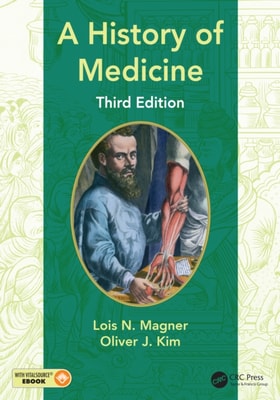
Designed for survey courses in the field A History of Medicine presents a wide-ranging overview for those seeking a solid grounding in the medical history of Western and non-Western cultures.
The ultimate enrichment and survival guide for Foundation Programme doctors, Staying Human During the Foundation Programme and Beyond provides time-tested advice and the latest information on every aspect of a junior doctor's life - from clinical transitions, to coping with stress, enhancing self-care and protecting personal and professional relationships.
This extraordinary and practical book examines neuro linguistic programming (NLP) - the knowledge and skills to detect and affect thinking patterns - and applies it to each phase of the medical consultation.
This book and its companion, Skills for Communicating with Patients, Second Edition, provide a comprehensive approach to improving communication in medicine.
Patients' perspectives on their experiences of illness and treatment are increasingly valued by the medical profession as a source of information to enhance professional development, peer support and the quality of care provided.
This book makes the case for 'ordinary' people to get the health and social care which the state has promised them for over 60 years but which has not been delivered.
It has been claimed by fertility experts that embryos can be screened for 6,000 diseases, thereby the risk of x-linked diseases can be minimised by 'cherry-picking' male embryos that do not carry the abnormal gene.
This guide contains a foreword by Simon Gregory, Dean of Postgraduate GP Education, Leicestershire, Northamptonshire and Rutland and General Practitioner, Northampton.