The purpose of this edited volume is to provide a comprehensive overview on the fundamentals of deep learning, introduce the widely-used learning architectures and algorithms, present its latest theoretical progress, discuss the most popular deep learning platforms and data sets, and describe how many deep learning methodologies have brought great breakthroughs in various applications of text, image, video, speech and audio processing.
In 2010, the 5th edition of the textbook, "e;Statistics Applied to Clinical Studies"e;, was published by Springer and since then has been widely distributed.
This new volume of our successful book series Advances in Anatomy, Embryology and Cell Biology is focused on mitochondrial inheritance in humans and both vertebrate and invertrebate animals including Drosophila, C.
In this book, renowned scientists describe the role of steroid chirality and modification of lipid membrane physical properties in the modulation of G protein-coupled receptors and ion channels.
Understanding the molecular mechanism of muscle contraction started with the discovery that striated muscle is composed of interdigitating filaments which slide against each other.
Reviews in Fluorescence 2017, the tenth volume of the book serial from Springer, serves as a comprehensive collection of current trends and emerging hot topics in the field of fluorescence and closely related disciplines, such as fluorescence based plasmonics.
The view "e;It's all in our genes and we cannot change it"e; developed in the past 150 years since Gregor Mendel's experiments with flowering pea plants.
This book reviews recent work on molecular chaperones of the prefoldin family from their discovery in Archaea to the basic clarification of their structure.
Written by internationally recognized leaders in Heparanase biology, the book's eight chapters offer an opportunity for scientists, clinicians and advanced students in cell biology, tumor biology and oncology to obtain a comprehensive understanding of Heparanase's multifaceted activities in cancer, inflammation, diabetes and other diseases, as well as its related clinical applications.
This book describes the challenges involved in developing mTOR inhibitors for cancer treatment, starting with an in-depth examination of their molecular mechanism of action, with emphasis on the class side-effects, efficacy and mechanisms of resistance, as well as on promising novel directions for their development, including novel compounds and rational combinations with other anti-neoplastic drugs.
La médecine progresse chaque jour, mais il n’est pas toujours évident pour nous, simples patients, de comprendre les applications de nouvelles découvertes.
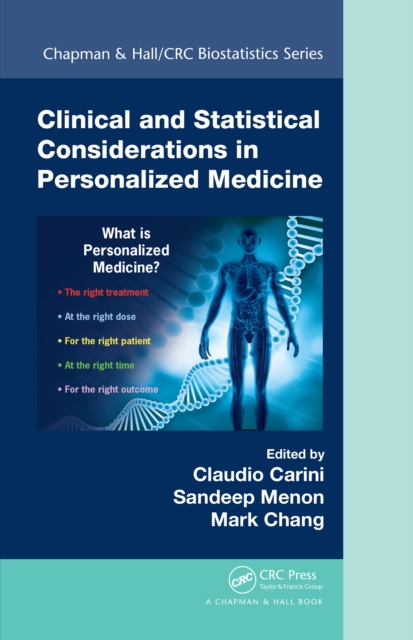
Clinical and Statistical Considerations in Personalized Medicine explores recent advances related to biomarkers and their translation into clinical development.
Inside this Instaread Summary of The Death of Cancer: Summary of the book Important People Character Analysis Analysis of the Themes and Author s Style
The book will contain reviews and brief research articles from the participants attending the International Society for Arterial Chemoreception (ISAC) meeting, to be held in Lisbon in Portugal in June/July 2020.
Clinical trials are the engine of progress in the development of new drugs and devices for the detection, monitoring, prevention and treatment of cancer.
Multiple Myeloma: The second issue of Emerging Cancer Therapeutics focuses on multiple myelomas also known as plasma cell myeloma, KahlerIs Disease and myelomatosis.
In this ground-breaking book, Professor Tracey McDonald, RSL LifeCare Chair of Ageing at the Australian Catholic University, explores some of the many issues arising from an ageing population, ageing veterans and community health.
Clinical trials are the engine of progress in the development of new drugs and devices for the detection, monitoring, prevention and treatment of cancer.
"e;For more than two decades a controversy has raged between the pharmaceutical companies, the health services and independent doctors and scientists over the use of statin drugs.
The Latin American region has been at the forefront in combating infections caused by Escherichia coli strains in humans, animals, and the environment.
The Human Genome Project has spawned a Renaissance of research faced with the daunting expectation of personalized medicine for individuals with sickle cell disease in the Genome Era.
Bringing together a team of leading international experts in the field of research, this book provides an up-to-date and accessible overview of applied research methods in the prehospital environment.
Now in its fourth edition, Fraud and Misconduct in Biomedical Research boasts an impressive list of contributors from around the globe and introduces a new focus for the book, transforming it from a series of monographs into a publication that will quickly become an essential textbook on all areas of research fraud and misconduct.
Tony Seed, Gilbert Thompson, Jackie Downs and John MacDermot at the book's launch in LondonThis book brings together in one volume fifteen Nobel Prize-winning discoveries that have had the greatest impact upon medical science and the practice of medicine during the 20th century and up to the present time.
Blockchain is a new type of technology that combines and secures information exchange between different stakeholders such as medical practitioners, patients, healthcare providers, and other applicable parties.
Recent advances in immunology and biology have opened new horizons in cancer therapy, included in the expanding array of cancer treatment options, which are immunotherapies, or cancer vaccines, for both solid and blood borne cancers.
The book provides a comprehensive overview of classic and modern approaches of centrosome research, including new aspects of centrosome functions focusing on primary cilia and their implications in numerous diseases.