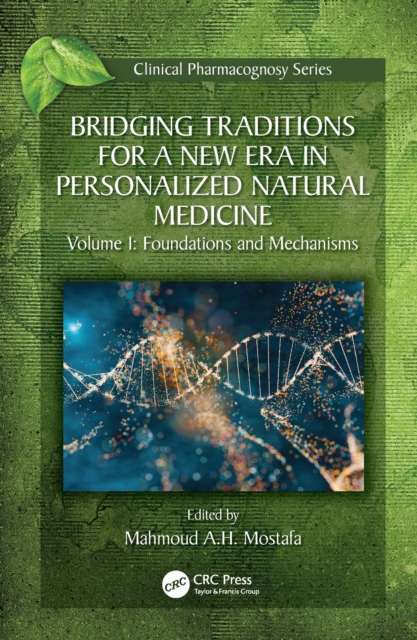
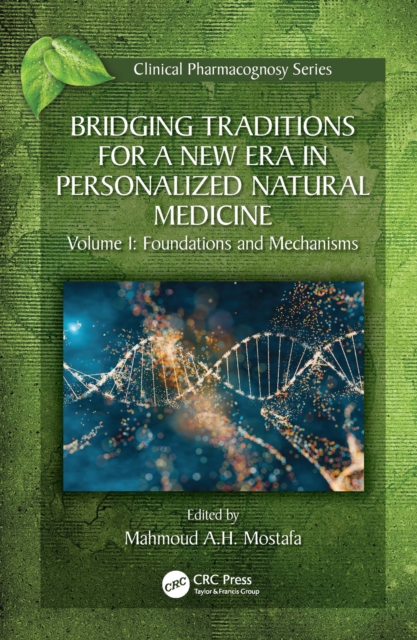
This new 2-volume set aims to share and preserve ethnic and traditional knowledge of herbal medicine and treatments, while also emphasizing the link between biodiversity, human nutrition, and food security.
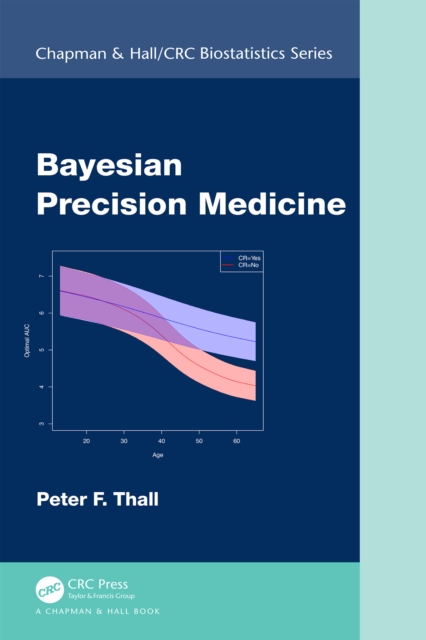
Bayesian Precision Medicine presents modern Bayesian statistical models and methods for identifying treatments tailored to individual patients using their prognostic variables and predictive biomarkers.
This volume presents advanced bio/medical sciences with a particular value for translating research achievements into daily medical practice in the framework of Predictive, Preventive and Personalised Medicine (3PM/PPPM).
This third edition of the classic "e;how-to"e; guide incorporates recent changes in policies and procedures of the NIH, with particular emphasis on the role of the Internet in the research proposal process.
As the biomedical engineering field expands throughout the world, clinical engineers play an evermore-important role as translators between the medical, engineering, and business professions.
Clinical research ethics consultation has emerged in the last 15 years as a service to those involved in the conduct of clinical research who face challenging issues for which more than one course of action may be justified.
Biomedical Ethics for Engineers provides biomedical engineers with a new set of tools and an understanding that the application of ethical measures will seldom reach consensus even among fellow engineers and scientists.
This volume presents advanced bio/medical sciences with a particular value for translating research achievements into daily medical practice in the framework of Predictive, Preventive and Personalised Medicine (3PM/PPPM).
Ahistory of aging in the United Statesand an innovative blueprint for revolutionizingcare for older adultsfrom Northwell Health, New York's largest health care system.
This COSPAR Colloquium Series deals with the main achievements that were accomplished through the collaborative efforts among ISTP participants; the plasma dynamics of magnetic reconnection in a thin plasma sheet, the action of the solar wind on the plasma population in the plasma sheet and around the magnetotail boundary layer, the relationship between the substrom expansion region and the X-line formation in the magnetotail, and the temporal evolution of the dipolarization from from the near-Earth to the distant tail.
Immunology, the third volume in the four volume set, The Mouse in Biomedical Research, is a completely new addition to this series, dedicated to mouse immunology.
Normative Biology, Husbandry, and Models, the third volume in the four volume set, The Mouse in Biomedical Research, encompasses 23 chapters whose contents provide a broad overview on the laboratory mouse's normative biology, husbandry, and its use as a model in biomedical research.
History, Wild Mice, and Genetics, the first volume in the four volume set, The Mouse in Biomedical Research, provides information about the history, biology and genomics of the laboratory mouse (Mus musculus), as well as basic information on maintenance and use of mouse stocks.
Implant and device manufacturers are increasingly facing the challenge of proving that their products are safe and biocompatible, and that they will perform as expected.
This book describes some of the key epidemiological principles, scientific approaches and quality assurance frameworks required to design and conduct biobank studies in various settings.
This volume provides an overview of the cytoskeleton particularly on the fundamental role the cytoskeleton plays in the regulation of cell structure and function.
This book updates knowledge on recent advances in computational, biophysical and bioinformatics tools/techniques and their practical applications in modern drug design and discovery paradigm.
This book considers the intellectual property protection of clinical test data that has been submitted to governments, in particular through test data exclusivity rights.
The Guide to Investigation of Mouse Pregnancy is the first publication to cover the mouse placenta or the angiogenic tree the mother develops to support the placenta.
This contributed volume reviews the latest advances on relevant 3D tissue engineered in vitro models of disease making use of biomaterials and microfluidics.
This second edition volume expands on the previous edition with updates about the latest state-of-the-art techniques used in leading hemostasis and thrombosis laboratories for diagnosis and exclusion of hemorrhagic and thrombotic diseases.
This book looks at where stem cell technology is presently and how it is instrumental in advancing the field of disease modeling and cell transplantation.
The Laboratory Rat, Second Edition features updated information on a variety of topics including: rat genetics and genomics, both spontaneous and induced disease; state-of-the-art technology for housing and husbandry; occupational health, and experimental models.
This highly engaging guide for clinical researchers provides a foundation for improving skills in the understanding of ethical requirements in the design and conduct of clinical research.
This book addresses the needs of new clinical engineers, junior nurses, medics and operating department practitioners (ODPs) with regard to the fundamentals of many of the standard medical devices they will encounter in a hospital environment.
The purpose of this book is to introduce the readers on the perspective of the role that unsaturated fatty acids and complex lipids play on health and disease.
A fun, fast, carry-anywhere review for the Medical Laboratory Technician certification examLANGE Medical Laboratory Science Flashcards for Examination and Certification Review is the perfect way for students to prepare for the MLT exam and become certified medical laboratory technicians.
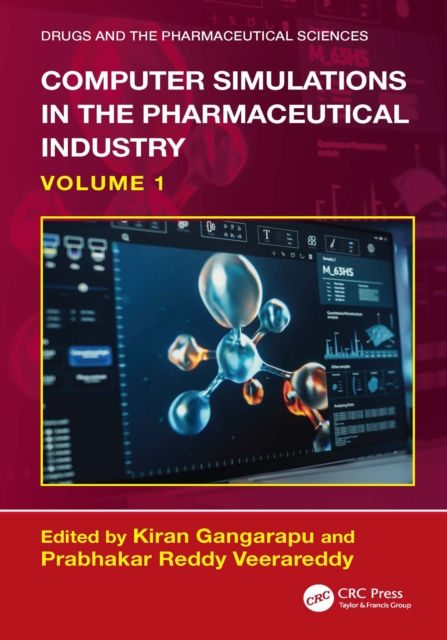
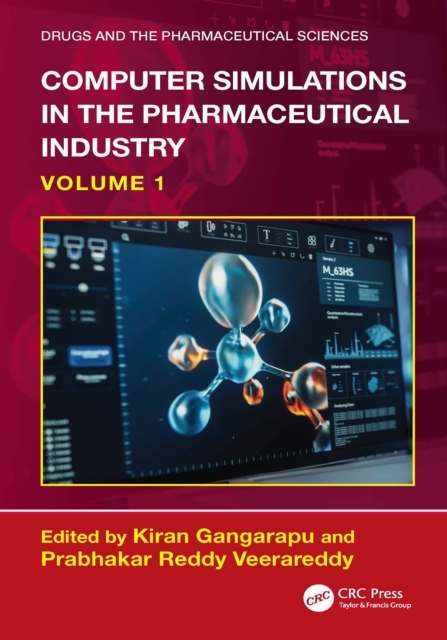
The application of computational modeling and simulation has extended beyond PK/PD prediction of clinical trial outcomes by defining regulatory strategy as well as optimization of therapeutic candidates.
The application of computational modeling and simulation has extended beyond PK/PD prediction of clinical trial outcomes by defining regulatory strategy as well as optimization of therapeutic candidates.