This book addresses the many ethical issues and extraordinary risks that nurses and others are facing during the COVID-19 pandemic, which creates physical, emotional, and economic burdens, affecting nurses' overall health and well-being.
This book discusses the impacts that weather and climate have on human physical health, longevity, and mental wellness, and acts as a guide to the application of meteorological science in health care.
This textbook provides basic quantitative models allowing researchers and decision makers to a) assess viability of threatened populations and evaluate the success of species reintroductions, b) estimate invasion abilities of alien species, c) evaluate the persistence of metapopulations subjected to habitat destruction and fragmentation, d) analyze policies and strategies for the sustainable harvesting of biological resources, and e) assess the course of human and nonhuman diseases and the possible containment measures.
This ambitious sourcebook surveys both the traditional basis for and the present state of indigenous women's reproductive health in Mexico and Central America.
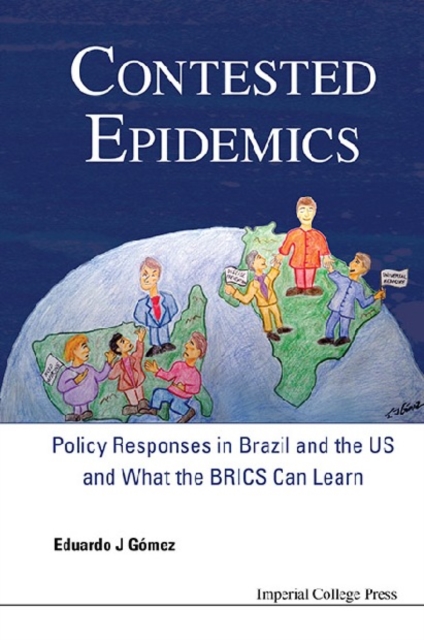
Despite their similar political and economic structures, Brazil and the United States have contrasting relationships with the international community as well as different policy approaches to the prevention and treatment of epidemics.
This book is useful for administrators of different levels involved in counteracting COVID-19, surveillance professionals, clinicians, researchers specializing in epidemiology, microbiology, and infectious diseases, and politicians / legislators engaged in public health sector.
This volume uniquely presents case studies on health geography in Africa, and analyzes health practices in different African regions to illustrate a unified perspective to the geographies of health.
This book addresses the most important postnatal features of Zika virus infection, providing important information on its epidemiology, pathology, clinical aspects, imaging and laboratory diagnosis.
The lifestyles and socio-economic status that are prevalent in regions of the world with limited resources form the background for the unique features of neoplastic diseases in these areas, where the majority of the world population lives.
The lifestyles and socio-economic status that are prevalent in regions of the world with limited resources form the background for the unique features of neoplastic diseases in these areas, where the majority of the world population lives.
This book describes key methods and instruments for assessing diet-related factors, physical activity, social and environmental factors, physical characteristics and health-related outcomes in children and adolescents.
This concise volume analyzes the potential for the workplace environment-where so many people spend so much of their day-to improve workers' capacity for health and wellness.
The book discusses the impact of genetics, social determinants of health, the environment, and lifestyle in the burden of cardiometabolic conditions in African American and Hispanic/Latinx populations.
This interdisciplinary volume gathers selected, refereed contributions on various aspects of public health from several disciplines and research fields, including the philosophy of science, epidemiology, statistics and ethics.
This monograph on measurement error and misclassification covers a broad range of problems and emphasizes unique features in modeling and analyzing problems arising from medical research and epidemiological studies.
Cardiovascular Diseases: Genetic Susceptibility, Environmental Factors and Their Interaction covers the special heritability characteristics and identifying genetic and environmental contributions to cardiovascular health.
Disease screening and disease surveillance (DSDS) constitute two critical areas in public health, each presenting distinctive challenges primarily due to their sequential decision-making nature and complex data structures.
A Historical Introduction to Mathematical Modeling of Infectious Diseases: Seminal Papers in Epidemiology offers step-by-step help on how to navigate the important historical papers on the subject, beginning in the 18th century.
This textbook offers a comprehensive analysis of medical decision making under uncertainty by combining Test Information Theory with Expected Utility Theory.
Progress in Molecular Biology and Translational Science provides a forum for discussion of new discoveries, approaches, and ideas in molecular biology and translational science.
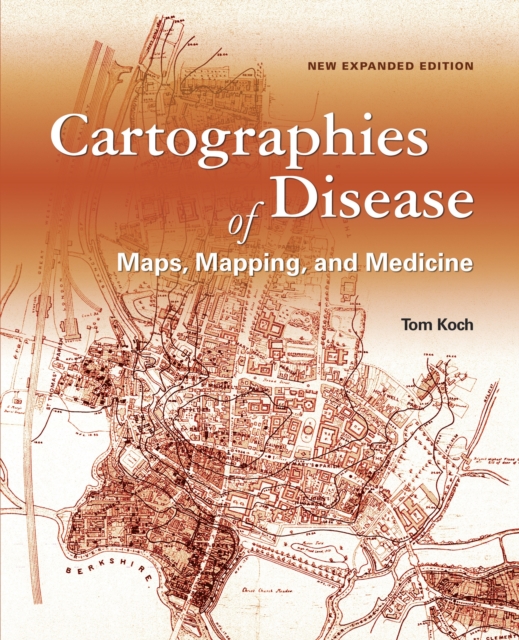
Cartographies of Disease: Maps, Mapping, and Medicine, new expanded edition, is a comprehensive survey of the technology of mapping and its relationship to the battle against disease.
Using an evidence-based, critical, population health approach, this book provides a comprehensive analysis of the key errors and most effective interventions to contain the COVID-19 pandemic.
This compelling book examines mortality risk among former Hispanic and African-American players in Major League Baseball (MLB) during the 40-year period following desegregation in the League.
This volume focuses on Global Catastrophic Biological Risks (GCBRs), a special class of infectious disease outbreaks or pandemics in which the combined capacity of the world's private and government resources becomes severely strained.
This volume provides a serious examination of substance use prevention research and practice as components of the continuum from health promotion through to prevention and health care in sub-groups and in the general population.
Despite occupational diseases in construction contributing to a significant proportion of fatalities, and permanent and temporary incapacities, they have not gained as much attention as occupational injuries from practitioners and researchers.
Useful in many areas of medicine and biology, Bayesian methods are particularly attractive tools for the design of clinical trials and diagnostic tests, which are based on established information, usually from related previous studies.
This new edition builds upon the foundational knowledge covered in the first edition, covering the epidemiology, pathogenesis, and clinical presentation of atopic dermatitis in both pediatric and adult patients.
This book makes an original contribution in addressing contemporary critical discussions and reflections on international health policies, strategies, programmes, systems, diseases, disasters, and public health issues.
This volume consists of three parts: Part I comprises 11 chapters on the basic concepts of statistics, Part II consists of 10 chapters on multivariate statistics and Part III contains 12 chapters on design and analysis for medical research.
AIDS (autoimmune deficiency syndrome) is a devastating human disease caused by HIV, a human immunodeficiency virus, which may be transmitted by either sexual or other contacts in which body fluids are exchanged.
With contributions from an international team of leading researchers, the book pulls together updated research results in the area of HIV/AIDS modeling to provide readers with the latest information in the field.
Initially stimulated by a scholarly workshop convened in Singapore in late 2004, and written over the subsequent 18 months, this volume considers the potentially lethal pattern of infectious disease emergence in Asia.