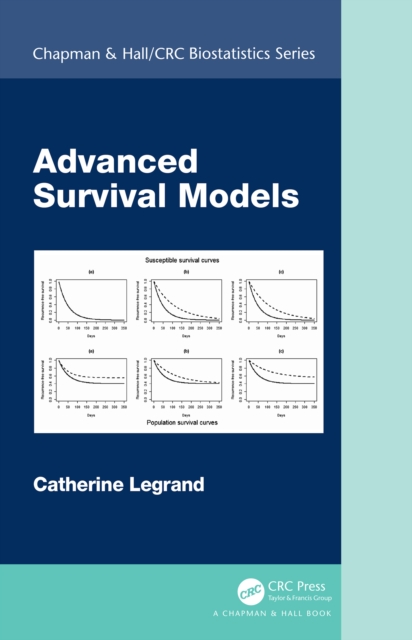
Survival data analysis is a very broad field of statistics, encompassing a large variety of methods used in a wide range of applications, and in particular in medical research.
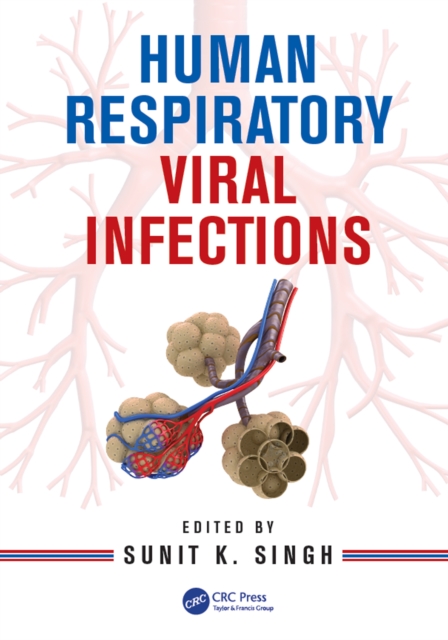
Using a multidisciplinary approach, Human Respiratory Viral Infections is set at the level between the definitive reference work and an essential clinical manual.
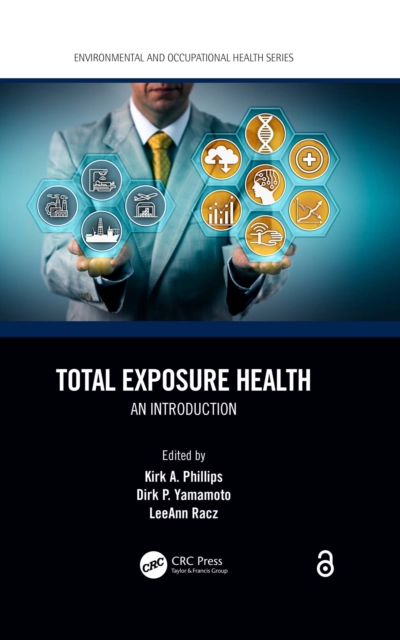
This book provides a comprehensive overview of the concept of "e;Total Exposure Health"e; and presents details on subject areas which make up the framework.
Published in 1986: This book tells the story of how various persons and groups have successfully dealt with a type of problem which may threaten the lives and health of every group of humans - every community.
This book provides a comprehensive overview of the concept of "e;Total Exposure Health"e; and presents details on subject areas which make up the framework.
Published in 1986: This book tells the story of how various persons and groups have successfully dealt with a type of problem which may threaten the lives and health of every group of humans - every community.
Theory of illness causation is an important issue in all biomedical sciences, and solid etiological explanations are needed in order to develop therapeutic approaches in medicine and preventive interventions in public health.
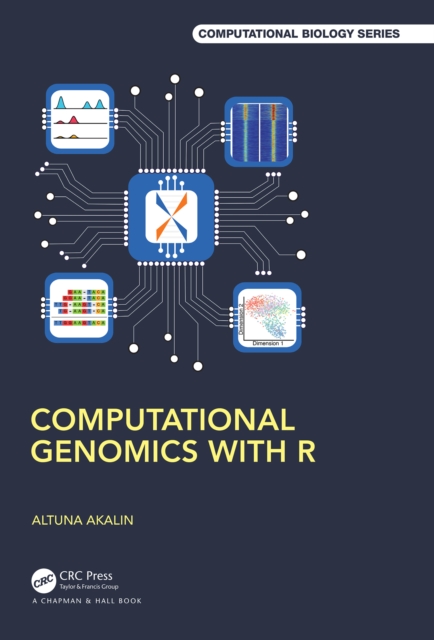
Computational Genomics with R provides a starting point for beginners in genomic data analysis and also guides more advanced practitioners to sophisticated data analysis techniques in genomics.
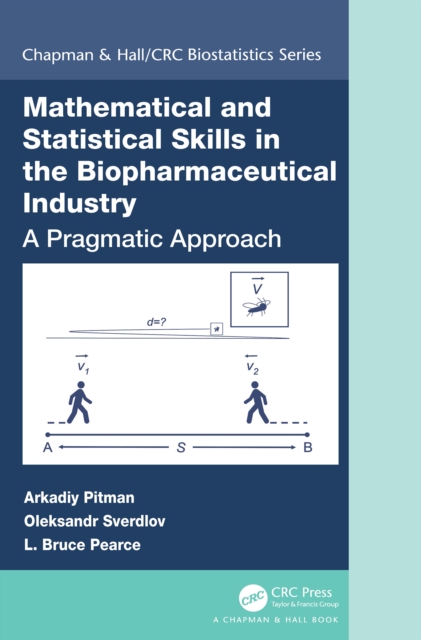
Mathematical and Statistical Skills in the Biopharmaceutical Industry: A Pragmatic Approach describes a philosophy of efficient problem solving showcased using examples pertinent to the biostatistics function in clinical drug development.
Signal Detection for Medical Scientists: Likelihood Ratio Based Test-Based Methodology presents the data mining techniques with focus on likelihood ratio test (LRT) based methods for signal detection.
This work explains the purpose of statistical methods in medical studies and analyzes the statistical techniques used by clinical investigators, with special emphasis on studies published in "e;The New England Journal of Medicine"e;.
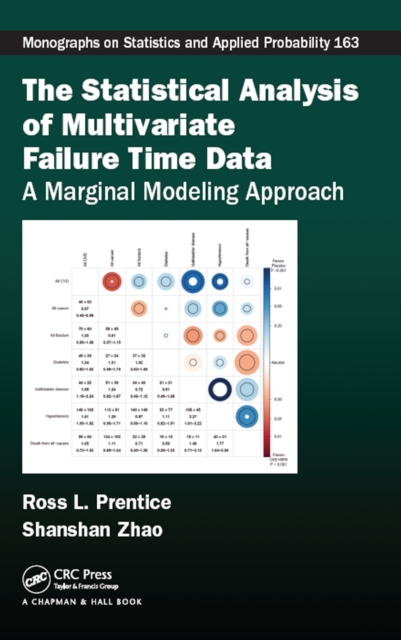
The Statistical Analysis of Multivariate Failure Time Data: A Marginal Modeling Approach provides an innovative look at methods for the analysis of correlated failure times.
Signal Detection for Medical Scientists: Likelihood Ratio Based Test-Based Methodology presents the data mining techniques with focus on likelihood ratio test (LRT) based methods for signal detection.
The Routledge Handbook of Social Work and Addictive Behaviors is a definitive resource about addictive behaviors, emphasizing substance misuse, gambling, and problematic technology use.
The Routledge Handbook of Social Work and Addictive Behaviors is a definitive resource about addictive behaviors, emphasizing substance misuse, gambling, and problematic technology use.
Farming Human Pathogens: Ecological Resilience and Evolutionary Process introduces a cutting-edge mathematical formalism based on the asymptotic limit theorems of information theory to describe how punctuated shifts in mesoscale ecosystems can entrain patterns of gene expression and organismal evolution.
This textbook was born from a disparate collection of written materials that were created to teach Epidemiology and Biostatistics to second year medical students at the University of Washington.
An earlier book by Rodrick Wallace entitled Consciousness: A Mathematical Treatment of the Global Neuronal Workspace Model, introduced a formal information-theoretic approach to individual consciousness implementing approaches developed previously by the cognitive scientist Bernard Baars and the philosopher Fred Dretske.
The purpose of this book is to examine the etiology of cancer in large human populations using mathematical models developed from an inter-disciplinary perspective of the population epidemiological, biodemographic, genetic and physiological basis of the mechanisms of cancer initiation and progression.
The abstract concept of "e;information"e; can be quantified and this has led to many important advances in the analysis of data in the empirical sciences.
Polycystic ovary syndrome (PCOS) is a classic female infertility problem affecting an estimated 6-10% of all women and many of whom are unaware of the problem.
This book represents the compilation of efforts by researchers across the country, each of whom is dedicated not only to the prevention and elimination of HIV infection, but also to the conduct of research according to the highest ethical pr- ciples.
Reasons for Writing This Book The published literature on the economic appraisal of healthcare acquired infection (HAI) is described by phrases such as: "e;With so many virtues of the cost-benefit approach identified, it is perhaps puzzling why greater use of economic appraisal has not been made in the area of infection control"e; [1] "e;Clinicians should partner with economists and policy analysts to expand and improve the economic evidence available"e; [2] "e;the quality of economic evaluations should be increased to inform decision makers and clinicians"e; [3] "e;The economics of preventing hospital-acquired infections is most often described in general terms.
It has now been 25 years since the apocryphal report in the CDC Morbidity and Mortality Weekly Report dated June 5, 1981 entitled, "e;Pneumocystis Pneumonia - Los Angeles"e;, which announced what was to become HIV/AIDS.
The aim of this book is to bridge the gap between standard textbook models and a range of models where the dynamic structure of the data manifests itself fully.
Before AIDS, the role of behavioral interventions in preventing transmission of sexually transmitted diseases was acknowledged in text books and journals but rarely promoted effectively in public health practice.
This book presents knowledge gained by the authors along with methods they developed, over more than 30 years of experience measuring, mod- ing, and mapping environmental space-time ?