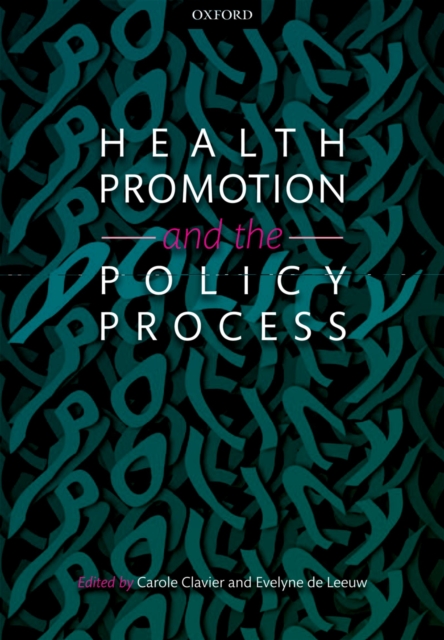
Scholars and governments recognize the importance of policy development and implementation for population health, but there is a lack of systematic theoretical and conceptual development in the health field to address the issue.
A Life Course Approach to Mental Disorders examines the interplay of social and biological factors in the production of a wide range of mental disorders throughout life, from the peri-natal period through to old age.
A Life Course Approach to Mental Disorders examines the interplay of social and biological factors in the production of a wide range of mental disorders throughout life, from the peri-natal period through to old age.
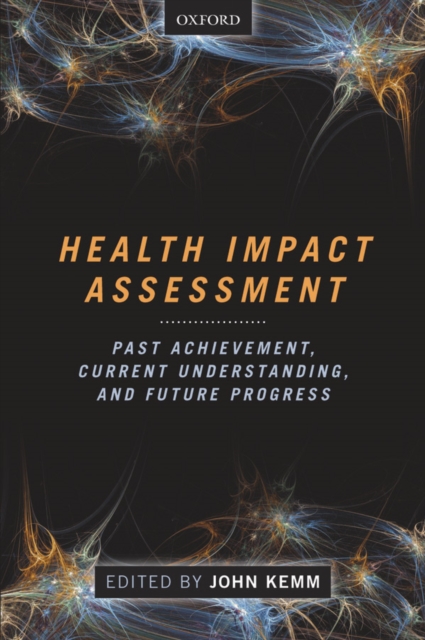
Health Impact Assessment (HIA) is a process which helps decision making by predicting the consequences for health of choosing different options in terms of policies, plans, and projects.
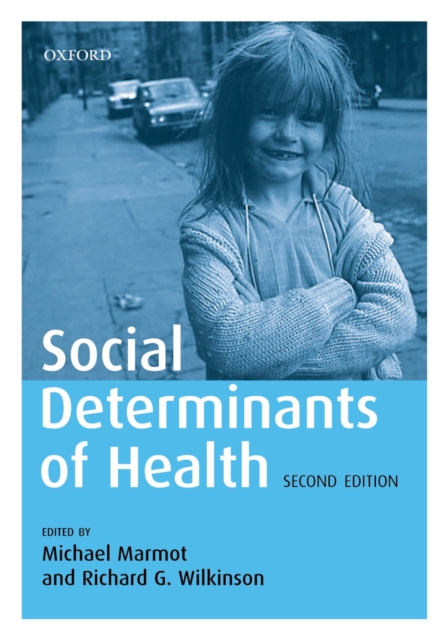
Social Determinants of Health, 2nd Edition gives an authoritative overview of the social and economic factors which are known to be the most powerful determinants of population health in modern societies.
Biogeography has renewed its concepts and methods following important recent advances in phylogenetics, macroecology, and geographic information systems.
Despite children making up around a quarter of the population, the first edition of this book was the first to focus on a public health approach to the health and sickness of children and young people.
The last four decades of human history have seen the emergence of an unprecedented number of 'new' infectious diseases: the familiar roll call includes AIDS, Ebola, H5N1 influenza, hantavirus, hepatitis E, Lassa fever, legionnaires' and Lyme diseases, Marburg fever, Rift Valley fever, SARS, and West Nile.
This book provides the reader with a comprehensive set of instructions and examples of how to perform a cost-benefit analysis (CBA) of a health intervention.
Environmental epidemiology is the study of the environmental causes of disease in populations and how these risks vary in relation to intensity and duration of exposure and other factors like genetic susceptibility.
The third volume in the Handbooks in Health Economic Evaluation series, this book provides the reader with a comprehensive set of instructions and examples of how to perform an economic evaluation of a health intervention.
In this fully revised and updated edition, the editors have integrated a completely new set of contributions from the leading researchers in the field to describe the latest research in evolutionary medicine, providing a fresh summary of this rapidly expanding field 10 years after its predecessor was first compiled.
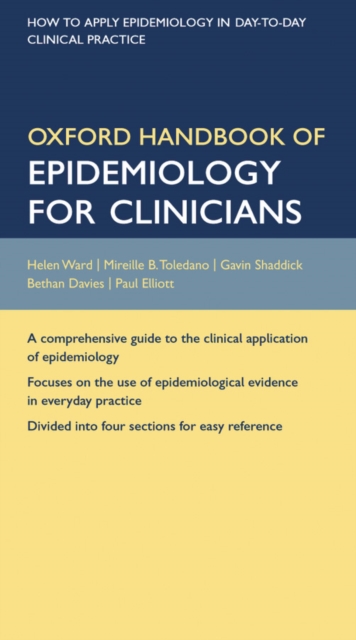
The Oxford Handbook of Epidemiology for Clinicians provides all the information required by students and junior doctors who need to understand and translate key epidemiological concepts into medical practice.
Over the past two decades, the epidemic of HIV/AIDS has challenged the public health community to fundamentally rethink the framework for preventing infectious diseases.
In many disciplines of science it is vital to know the effect of a 'treatment' on a response variable of interest; the effect being known as the 'treatment effect'.
This graduate-level text provides a survey of the logic and reasoning underpinning statistical analysis, as well as giving a broad-brush overview of the various statistical techniques that play a major role in scientific and social investigations.
Discrete or count data arise in experiments where the outcome variables are the numbers of individuals classified into unique, non-overlapping categories.
This book provides a practical, comprehensive and up-to-date overview of the use of spatial statistics in epidemiology - the study of the incidence and distribution of diseases.
The field of molecular evolution has experienced explosive growth in recent years due to the rapid accumulation of genetic sequence data, continuous improvements to computer hardware and software, and the development of sophisticated analytical methods.
Clinicians and those in health sciences are frequently called upon to measure subjective states such as attitudes, feelings, quality of life, educational achievement and aptitude, and learning style in their patients.
Clinicians and those in health sciences are frequently called upon to measure subjective states such as attitudes, feelings, quality of life, educational achievement and aptitude, and learning style in their patients.
It is becoming increasingly important to examine the relationship between the outcomes of a clinical trial and the costs of the medical therapy under study.
It is becoming increasingly important to examine the relationship between the outcomes of a clinical trial and the costs of the medical therapy under study.