Nanotechnology provides us with tools to create functional materials, devices, and systems by controlling materials at the atomic and molecular scales by making use of novel properties and phenomena.
Over the past several decades, much progress has been made in understanding the mechanisms of electrical activity in biological tissues and systems, and for developing non-invasive functional imaging technologies to aid clinical diagnosis of dysfunction in the human body.
Intended for advanced undergraduate and beginning graduate students in biophysics, physiology, medical physics, cell biology, and biomedical engineering, this wide-ranging text bridges the gap between introductory physics and its application to the life and biomedical sciences.
Artificial sight is a frontier area of modern ophthalmology combining the multidisciplinary skills of surgical ophthalmology, biomedical engineering, biological physics, and psychophysical testing.
Fundamentals of Biomechanics, 2nd edition, presents a clear, conceptual approach to understanding biomechanics within the context of the qualitative analysis of human movement.
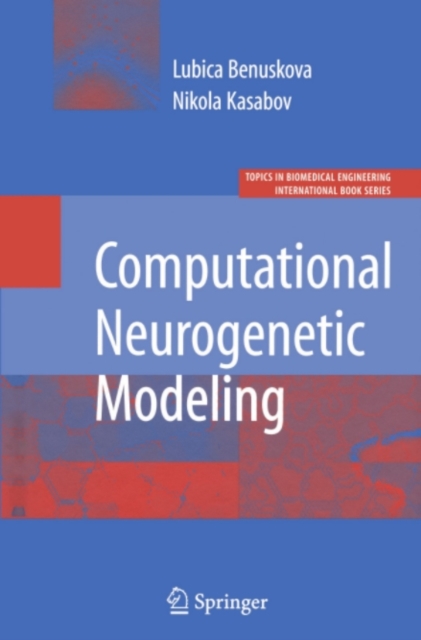
Computational Neurogenetic Modeling is a student text, introducing the scope and problems of a new scientific discipline - Computational Neurogenetic Modeling (CNGM).
Biological homeostasis is maintained via intact function of an array of molecules detecting changes of microenvironments inside and outside of the biological system.
BioNanoFluidic MEMS explains biosensor development fundamentals and initiates an awareness in engineers and scientists who would like to develop and implement novel biosensors for agriculture, biomedicine, home land security, environmental needs, and disease identification.
At the present time, the laboratory mouse has become a central tool for skeletal studies, mainly because of the extensive use of genetic manipulations in this species.
This special issue of Advances in Experimental Medicine and Biology includes much of the research presented at the recent Second International Tissue Engineering Conference.
In the last decade concepts in fluorescence sensing have emerged as powerful techniques with an increasing number of applications in the fields of biology, chemistry, physics, and medicine.
Dynamic Modeling of Musculoskeletal Motion introduces biomechanists to modern methods of modeling and analyzing dynamic biomechanical systems in three dimensions.
Explosive growth in the field of microsystem technology (MST) has introduced a variety of promising products in major disciplines from microelectronics to life sciences.
Mechanosensing and Mechanochemical Transduction in Extracellular Matrix is the only single authored text on biological polymers available for bioengineering and biomedical engineering students.
Medical devices and surgical tools that contain micro and nanoscale features allow surgeons to perform clinical procedures with greater precision and safety while monitoring physiological and biomechanical parameters more accurately.
Advances in Network Electrophysiology: Using Multi Electrode Arrays explores methods for using electrophysiological techniques for monitoring the concurrent activity of ensembles of single neurons.
Biophysicists and medical doctors have learned that malfunction of the control layer in cells is responsible for a host of human disorders ranging from neurological disorders to cancers.
Emergent Computation emphasizes the interrelationship of the different classes of languages studied in mathematical linguistics (regular, context-free, context-sensitive, and type 0) with aspects to the biochemistry of DNA, RNA, and proteins.
Small-Animal SPECT Imaging is an edited work derived from the first workshop on Small-Animal SPECT Imaging held January 14-16, 2004 at the University of Arizona, Tucson, AZ, USA.
Knowledge Management and Data Mining in Biomedicine covers the basic foundations of the area while extending the foundational material to include the recent leading-edge research in the field.
Sliding Filament Mechanism in Muscle Contraction: Fifty Years of Research covers the history of the sliding filament mechanism in muscle contraction from its discovery in 1954 by H.
Hemodynamics makes it possible to characterize in a quantitative way, the function of the heart and arterial system, thereby producing information about what genetic and molecular processes are of importance for cardiovascular function.
Medical imaging has been transformed over the past 30 years by the advent of computerized tomography (CT), magnetic resonance imaging (MRI), and various advances in x-ray and ultrasonic techniques.
Bioceramics: Properties, Characterization, and Applications will be a general introduction to the uses of ceramics and glasses in the human body for the purposes of aiding, healing, correcting deformities, and restoring lost function.
Microfluidics for Biological Applications provides researchers and scientists in the biotechnology, pharmaceutical, and life science industries with an introduction to the basics of microfluidics and also discusses how to link these technologies to various biological applications at the industrial and academic level.
Tissue engineering is an exciting new field at the interface of engineering and - ology that uses implanted cells, scaffolds, DNA, proteins, protein fragments, and inductive molecules to repair or replace injured or diseased tissues and organs.
Handbook of Optimization in Medicine is devoted to examining the dramatic increase in the application of effective optimization techniques to the delivery of health care.