This book represents a critical evaluation of the most recent discoveries about carbon nanotubes and includes a cautious description of their impact on personal health and environmental pollution.
Remote health monitoring using wearable sensors is an important research area involving several key steps: physiological parameter sensing and data acquisition, data analysis, data security, data transmission to caregivers, and clinical intervention, all of which play a significant role to form a closed loop system.
In today's world, three great classes of non-infectious diseases - the metabolic syndromes (such as type 2 diabetes and atherosclerosis), the cancers, and the neurodegenerative disorders - have risen to the fore.
Success or failure of biomaterials, whether tissue engineered constructs, joint and dental implants, vascular grafts, or heart valves, depends on molecular-level events that determine subsequent responses of cells and tissues.
In 1979, the Nobel Prize for Medicine and Physiology was awarded jointly to Allan McLeod Cormack and Godfrey Newbold Houns eld, the two pioneering scienti- engineers primarily responsible for the development, in the 1960s and early 1970s, of computerized axial tomography, popularly known as the CAT or CT scan.
TASER(R) Conducted Electrical Weapons are rapidly replacing the club for law-enforcement control of violent subjects within many countries around the globe.
Metalloproteins comprise approximately 30% of all known proteins, and are involved in a variety of biologically important processes, including oxygen transport, biosynthesis, electron transfer, biodegradation, drug metabolism, proteolysis, and hydrolysis of amides and esters, environmental sulfur and nitrogen cycles, and disease mechanisms.
Focus, Organization, and Content This book, like the first edition, deals with the mass transport processes that take place in living systems, with a focus on the normal behavior of eukaryotic cells and the - ganisms they constitute, in their normal physiological environment.
This book represents a collection of recent advances in computational studies in neuroscience research that practically applies to a collaborative and integrative environment in engineering and medical domains.
The main objective in the rehabilitation of people following amputation is to restore or improve their functioning, which includes their return to work.
Neutron Imaging and Applications offers an introduction to the basics of neutron beam production in addition to the wide scope of techniques that enhance imaging application capabilities.
Bioengineering and biotechnology are exploding-the number of career opportunities is expected to increase twice as fast as for other science and engineering fields over the next decade.
Calcium phosphate coatings ( 50 mm thick), especially those made with hyd- xyapatite (HA), produced by the plasma-spraying process have been succe- fully used on orthopedic and dental implants to improve fixation of these implants in bone.
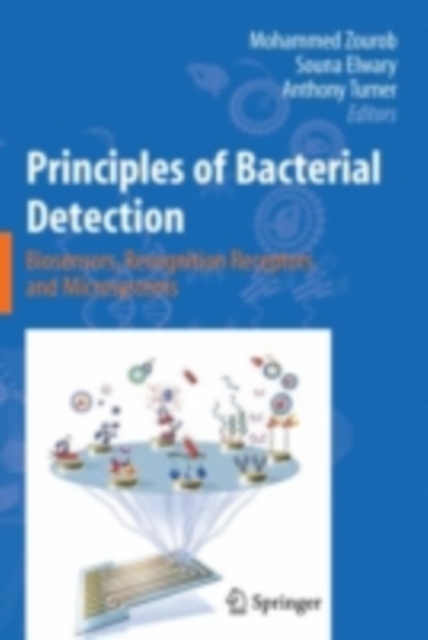
Principles of Bacterial Detection: Biosensors, Recognition Receptors and Microsystems will cover the up-to-date biosensor technologies used for the detection of bacteria.
This book reviews, updates, and synthesizes the recent accomplishments and on- ing research in the field of composite tissue allotransplantation (CTA).
Biology and Mechanics of Blood Flows presents the basic knowledge and state-of-the-art techniques necessary to carry out investigations of the cardiovascular system using modeling and simulation.
Biology and Mechanics of Blood Flows presents the basic knowledge and state-of-the-art techniques necessary to carry out investigations of the cardiovascular system using modeling and simulation.
Image-Guided Interventions: Technology and Applications provides a comprehensive overview of the current technological advances in image-guided surgery.
Proceedings of the Light-Activated Tissue Regeneration and Therapy Conference covers issues such as the latest advances in the field and measurements including the determination of the mechanisms of light-activated tissue regeneration and therapy.
This book presents important recent developments in mathematical and computational methods used in impedance imaging and the theory of composite materials.
We are especially pleased to present our edited book in an area that is quickly emerging as one of the most active research areas that integrate both engineering and medicine.
In the biomedical field, biomedical imaging has come to be a discipline of its own, given the nature of its applications in the understanding of the human body and medical diagnostics.
In the biomedical field, biomedical imagery has come to be a discipline of its own, given the nature of its applications in the understanding of the human body and medical diagnostics.