Tissue engineering is an emerging interdisciplinary field, occupying a major position in the regenerative medicine that aims at restoring lost or damaged tissues and organs with use of cells.
The text begins by discussing the processing and characterization of nano-manufactured resorbable bionanocomposites and presents the latest advances in carbon-based polymer nanocomposite materials for sensing applications.
This third edition overviews the essential contemporary topics of neuroengineering, from basic principles to the state-of-the-art, and is written by leading scholars in the field.
The book reports on advanced topics in interactive robotics research and practice; in particular, it addresses non-technical obstacles to the broadest uptake of these technologies.
This contributed volume reviews the latest advances on relevant 3D tissue engineered in vitro models of disease making use of biomaterials and microfluidics.
The text begins by highlighting the benefits of the Internet of Things-enabled machine learning in the healthcare sector, examines the diagnosis of diseases using machine learning algorithms, and analyzes security and privacy issues in the healthcare systems using the Internet of Things.
This book highlights cutting-edge studies in the development of cell-inspired biomaterials and synthetic materials that manipulate cell functions and provide the next generation with contemporary tools for treating complex human diseases.
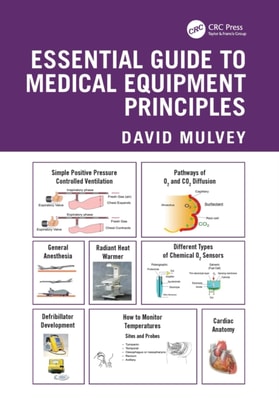
This book addresses the needs of new clinical engineers, junior nurses, medics and operating department practitioners (ODPs) with regard to the fundamentals of many of the standard medical devices they will encounter in a hospital environment.
In this book the recent progress accumulated in studies of the interaction of engineered nanoparticles with cells and cellular constituents is presented.
This book provides the perspectives of many different stakeholders in the biopharmaceuticals field, who share knowledge, challenges, and solutions in an ever-shifting career landscape.
This book discusses the design and implementation aspects of ultra-low power biosignal acquisition platforms that exploit analog-assisted and algorithmic approaches for power savings.
This book aims to provide a thorough resource in biomedical theragnostics nanoplatforms with coverage from the basics of nanotechnology to the nuances of designing and manufacturing nanoplatforms to their many uses in biomedicine.
Redox-active polymers, which are known for their ability to undergo reversible redox reactions, are paving the way for more efficient and sustainable batteries, as well as revolutionary advances in medical devices.
Computational Vision and Medical Image Processing contains keynote lectures and full papers presented at VIPIMAGE 2007 - 1st ECCOMAS Thematic Conference on Computational Vision and Medical Image Processing, held in Porto, Portugal, on 17-19 October 2007.
This book aims to provide a thorough resource in biomedical theragnostics nanoplatforms with coverage from the basics of nanotechnology to the nuances of designing and manufacturing nanoplatforms to their many uses in biomedicine.
Computational Vision and Medical Image Processing contains keynote lectures and full papers presented at VIPIMAGE 2007 - 1st ECCOMAS Thematic Conference on Computational Vision and Medical Image Processing, held in Porto, Portugal, on 17-19 October 2007.
Redox-active polymers, which are known for their ability to undergo reversible redox reactions, are paving the way for more efficient and sustainable batteries, as well as revolutionary advances in medical devices.
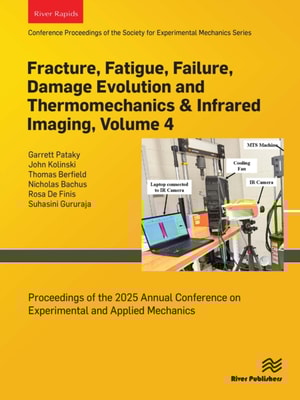
Fracture, Fatigue, Failure, Damage Evolution and Thermomechanics & Infrared Imaging, Volume 4 of the Proceedings of the 2025 SEM Annual Conference & Exposition on Experimental and Applied Mechanics, the fourth volume of five from the Conference, brings together contributions to this important area of research and engineering.
Fracture, Fatigue, Failure, Damage Evolution and Thermomechanics & Infrared Imaging, Volume 4 of the Proceedings of the 2025 SEM Annual Conference & Exposition on Experimental and Applied Mechanics, the fourth volume of five from the Conference, brings together contributions to this important area of research and engineering.
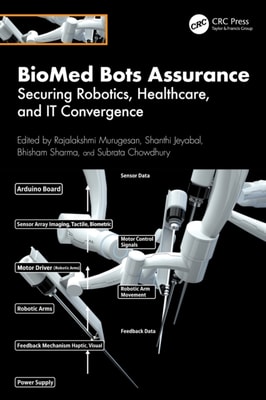
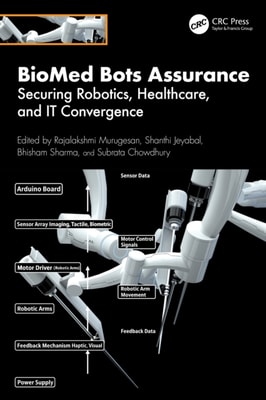
This book presents a comprehensive analysis of the historical progression, present condition, and prospective trajectory of biomedical robotics through the lens of engineering.
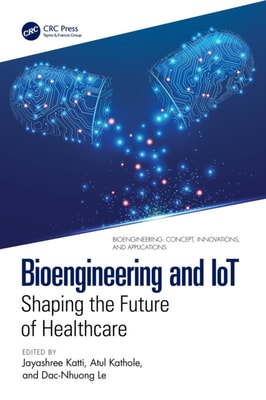
This book provides a unique blend of interdisciplinary information to help readers grasp how bioengineering and Internet of Things (IoT) technologies are transforming healthcare.
This book presents a comprehensive analysis of the historical progression, present condition, and prospective trajectory of biomedical robotics through the lens of engineering.
This book provides a unique blend of interdisciplinary information to help readers grasp how bioengineering and Internet of Things (IoT) technologies are transforming healthcare.
The book was inspired by the urgent need for advanced security methods that can keep pace with the increasingly complex nature of modern healthcare systems.
Transforming Global Healthcare: The Role of AI and IoT in Modern Medical Systems explores the transformative potential of the integration of technologies such as AI, Big Data, IoT, and Blockchain in the healthcare sector.
Transforming Global Healthcare: The Role of AI and IoT in Modern Medical Systems explores the transformative potential of the integration of technologies such as AI, Big Data, IoT, and Blockchain in the healthcare sector.