This book celebrates two decades of groundbreaking research published in the ASAIO Journal, marking significant advancements in artificial organs and circulatory support.
Built on a decade of experience with novel molecular diagnostics, this practice-oriented guide shows how to cope with validation issues during all stages of biomarker development, from the first clinical studies to the eventual commercialization of a new diagnostic test.
3D Printing and Microfluidics in Dermatology provides a thorough exploration and applications of three-dimensional (3D) printing and microfluidics within the field of dermatology.
This book describes the application of signal and image processing technologies, artificial intelligence, and machine learning techniques to support Covid-19 diagnosis and treatment.
This book presents the evolution of the electro-discharge machining (EDM) process from conventional EDM to powder mixed EDM with emphases on biomedical applications.
With the rise of advanced computerized data collection systems, monitoring devices, and instrumentation technologies, large and complex datasets accrue as an inevitable part of biomedical enterprise.
This book discusses advanced instrumental techniques for the rapid bioassay of toxic materials, creep analysis of Delrin stents in cardiac bioprosthesis devices using finite element analysis, and the potential use of electron spectroscopy for chemical analysis for study of biomaterial surface.
This book offers expert guidance on materials for total hip arthroplasty (THA), providing readers with quick access to well-organized summaries on biomaterials such as metals, ceramics, polymers, and composites.
Despite major advances in healthcare over the past century, the successful treatment of cancer has remained a significant challenge, and cancers are the second leading cause of death worldwide behind cardiovascular disease.
Artificial cells, cell engineering and therapy are emerging technologies which will make a significant impact on the future of medicine and healthcare.
Despite major advances in healthcare over the past century, the successful treatment of cancer has remained a significant challenge, and cancers are the second leading cause of death worldwide behind cardiovascular disease.
Distributed Computing to Blockchain: Architecture, Technology, and Applications provides researchers, computer scientists, and data scientists with a comprehensive and applied reference covering the evolution of distributed systems computing into blockchain and associated systems.
Provides immediate help for anyone preparing a biomedical paper by givin specific advice on organizing the components of the paper, effective writing techniques, writing an effective results sections, documentation issues, sentence structure and much more.
This text provides the reader with tools necessary to study biological and bio-inspired flows, all the while developing an appreciation for their evolutionary and engineering constraints.
This is the first book about the "e;Kenzan"e; method for scaffold-free biofabrication, which does not rely on biomaterials as scaffolds to ensure correct multicellular spheroid positioning for building three dimensional construct only made from cells.
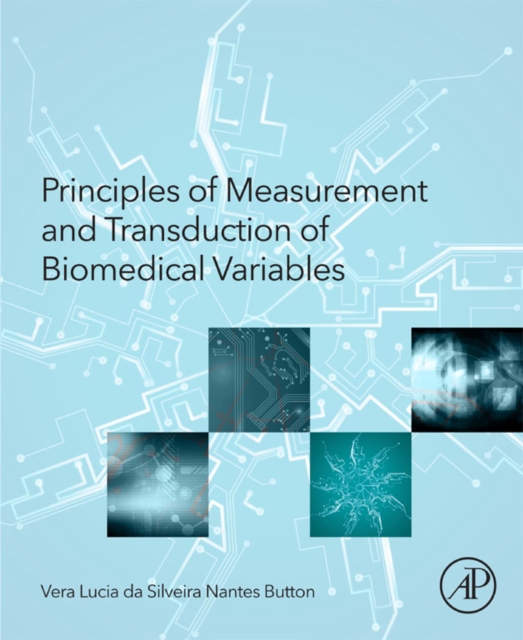
Principles of Measurement and Transduction of Biomedical Variables is a comprehensive text on biomedical transducers covering the principles of functioning, application examples and new technology solutions.
This book provides a holistic evidence-based perspective on conceptual, clinical, assessment, and treatment aspects of key non-substance-based addictive disorders related to: gambling, gaming, social media, smartphone, internet, love, sex, exercise, work, and shopping.
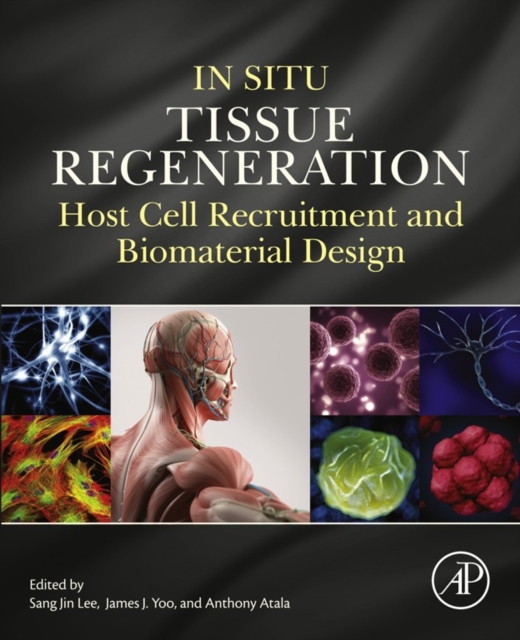
In Situ Tissue Regeneration: Host Cell Recruitment and Biomaterial Design explores the body's ability to mobilize endogenous stem cells to the site of injury and details the latest strategies developed for inducing and supporting the body's own regenerating capacity.
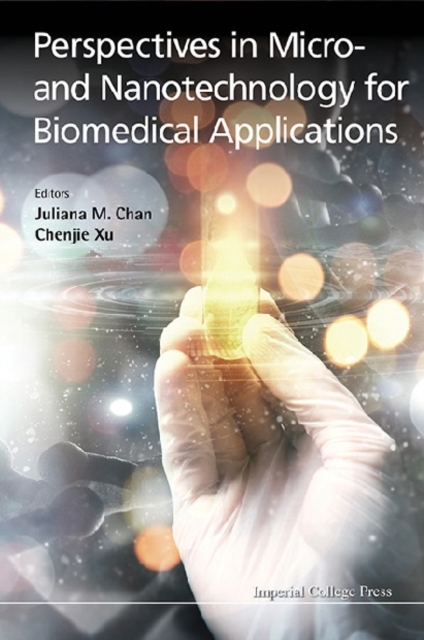
Perspectives in Micro- and Nanotechnology for Biomedical Applications is an exciting new book that takes readers inside the fast-paced world of biomedical sciences fueled by advancements in nanotechnology, polymer chemistry and pharmacology.
This book explores the aggregation-induced emission (AIE) effect, which has opened new avenues for the development of advanced luminogenic materials in the aggregate or solid state.
Biofluid Mechanics: An Introduction to Fluid Mechanics, Macrocirculation, and Microcirculation shows how fluid mechanics principles can be applied not only to blood circulation, but also to air flow through the lungs, joint lubrication, intraocular fluid movement, renal transport among other specialty circulations.
AI Assurance: Towards Trustworthy, Explainable, Safe, and Ethical AI provides readers with solutions and a foundational understanding of the methods that can be applied to test AI systems and provide assurance.
Updated, revised, and restructured to reflect the latest advances in science and applications, the fourth edition of this best-selling industry and research reference covers the fundamental physical acoustics of ultrasonics and transducers, with a focus on piezoelectric and magnetostrictive modalities.
This book offers the first comprehensive coverage of microwave medical imaging, with a special focus on the development of novel devices and methods for different applications in both the diagnosis and treatment of various diseases.
This volume explores the latest techniques used by researchers to study DNA electrophoresis, with focus on various species including bacteria, yeasts, and mammalian cells.
This detailed book brings together a number of state-of-the-art protocols to generate different types of neural cells through the use of reprogramming technologies.
This detailed volume focuses on the CRISPR-associated guide RNA and how it can be designed, modified, and validated for a broad repertoire of purposes.
Contemporary approaches to the synthesis of chemically modified biomacromolecules (proteins, nucleic acids, lipids, and carbohydrates) not only require efficient means to control conjugation and the specific site of attachment of the conjugated moiety but also the effective use of recent developments in the fields of pharmaceutical chemistry, biomolecular/polymer engineering, and nanobiotechnology.
In past decades, the area of bioinformatics has proved to be both dynamic and vital, producing a wide spectrum of novel approaches and assuming an increasingly important role in modern bio-technological development.