Wilson Disease: Pathogenesis, Molecular Mechanisms, Diagnosis, Treatment and Monitoring translates both clinical and experimental findings into a comprehensive approach for anyone involved in research and patient care.
Written by leading optical phase microscopy experts, this book is a comprehensive reference to phase microscopy and nanoscopy techniques for biomedical applications, including differential interference contrast (DIC) microscopy, phase contrast microscopy, digital holographic microscopy, optical coherence tomography, tomographic phase microscopy, spectral-domain phase detection, and nanoparticle usage for phase nanoscopy The Editors show biomedical and optical engineers how to use phase microscopy for visualizing unstained specimens, and support the theoretical coverage with applied content and examples on designing systems and interpreting results in bio- and nanoscience applications.
Mechanical Testing of Orthopaedic Implants provides readers with a thorough overview of the fundamentals of orthopedic implants and various methods of mechanical testing.
Stem Cells and Cancer in Hepatology: From the Essentials to Application offers basic scientists and clinicians in the fields of stem cells, hepatology and oncology an overview of the interaction between liver biology, stem cells and cancer.
Peptide Applications in Biomedicine, Biotechnology and Bioengineering summarizes the current knowledge on peptide applications in biomedicine, biotechnology and bioengineering.
Optical Coherence Tomography gives a broad treatment of the subject which will include 1)the optics, science, and physics needed to understand the technology 2) a description of applications with a critical look at how the technology will successfully address actual clinical need, and 3) a discussion of delivery of OCT to the patient, FDA approval and comparisons with available competing technologies.
Safety Risk Management for Medical Devices demystifies risk management, providing clarity of thought and confidence to the practitioners of risk management as they do their work.
Biomedical Information Technology, Second Edition, contains practical, integrated clinical applications for disease detection, diagnosis, surgery, therapy and biomedical knowledge discovery, including the latest advances in the field, such as biomedical sensors, machine intelligence, artificial intelligence, deep learning in medical imaging, neural networks, natural language processing, large-scale histopathological image analysis, virtual, augmented and mixed reality, neural interfaces, and data analytics and behavioral informatics in modern medicine.
Lung Function Testing in the 21st Century: Methodologies and Tools Bridging Engineering to Clinical Practice covers the complete aspects of lung function testing, ranging from standardized to newly introduced (IOS, FOT) methods.
Secondary Fracture Prevention: An International Perspective presents practitioners and academic clinicians with a better understanding of secondary fracture prevention and models of care from a variety of settings and countries.
Principles of Heart Valve Engineering is the first comprehensive resource for heart valve engineering that covers a wide range of topics, including biology, epidemiology, imaging and cardiovascular medicine.
Realizing the Promise of Precision Medicine: The Role of Patient Data, Mobile Technology, and Consumer Engagement explains the potential of personalized medicine and the value of those approaches in making that potential a reality.
Semi-empirical Neural Network Modeling presents a new approach on how to quickly construct an accurate, multilayered neural network solution of differential equations.
Nanoscale Fabrication, Optimization, Scale-up and Biological Aspects of Pharmaceutical Nanotechnology focuses on the fabrication, optimization, scale-up and biological aspects of pharmaceutical nanotechnology.
One of the major challenges of modern biology and medicine consists in finding means to visualize biomolecules in their natural environment with the greatest level of accuracy, so as to gain insight into their properties and behaviour in a physiological and pathological setting.
Assistive Technology Service Delivery: A Practical Guide for Disability and Employment Professionals provides professionals working in vocational rehabilitation with the guidelines and methodologies they need to carry out their daily work at a high standard.
Microfluidic Devices for Biomedical Applications, Second Edition provides updated coverage on the fundamentals of microfluidics, while also exploring a wide range of medical applications.
Implantable Electronic Medical Devices provides a thorough review of the application of implantable devices, illustrating the techniques currently being used together with overviews of the latest commercially available medical devices.
ODE/PDE Analysis of Antibiotic/Antimicrobial Resistance: Programming in R presents mathematical models for antibiotic/antimicrobial resistance based on ordinary and partial differential equations (ODE/PDEs).
Data Analytics in Biomedical Engineering and Healthcare explores key applications using data analytics, machine learning, and deep learning in health sciences and biomedical data.
Hemocompatibility of Biomaterials for Clinical Applications: Blood-Biomaterials Interactions summarizes the state-of-the-art on this important subject.
Advances in Biomechanics and Tissue Regeneration covers a wide range of recent development and advances in the fields of biomechanics and tissue regeneration.
Second Generation Cell and Gene-Based Therapies: Biological Advances, Clinical Outcomes, and Strategies for Capitalisation serves as the only volume to the market to bridge basic science, clinical therapy, technology development, and business in the field of cellular therapy/cytotherapy.
Virtually any disease that results from malfunctioning, damaged, or failing tissues may be potentially cured through regenerative medicine therapies, by either regenerating the damaged tissues in vivo, or by growing the tissues and organs in vitro and implanting them into the patient.
Design and Operation of Locomotion Systems examines recent advances in locomotion systems with multidisciplinary viewpoints, including mechanical design, biomechanics, control and computer science.
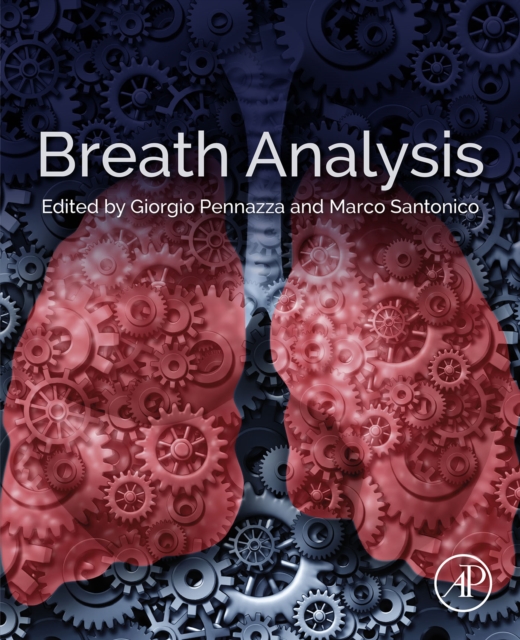
Breath Analysis presents state-of-the-art research in this specialized field, also offering guidance on how best to design the technology and conduct analysis.
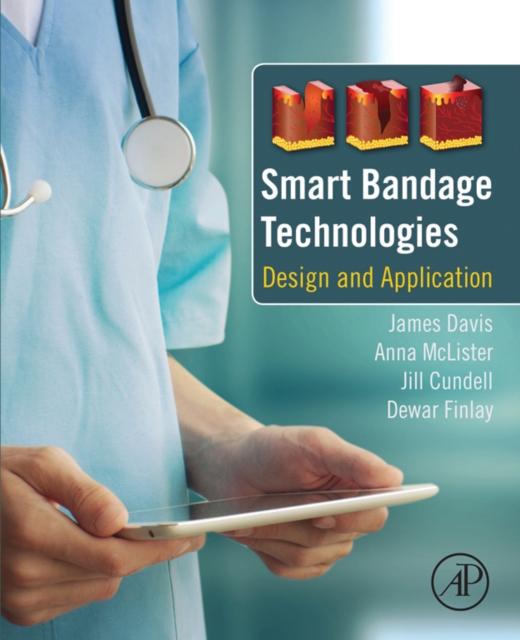
Smart Bandage Technology: Design and Application is a guide to the integration of sensors and electronic systems into bandages for the application of wound management.
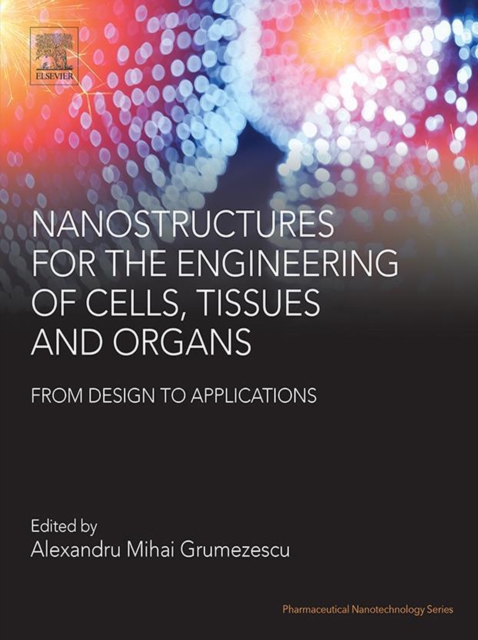
Nanostructures for the Engineering of Cells: Tissues and Organs showcases recent advances in pharmaceutical nanotechnology, with particular emphasis on tissue engineering, organ and cell applications.
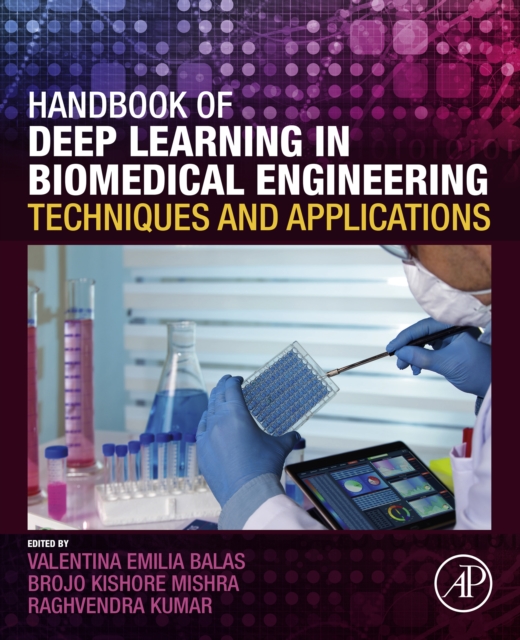
Deep Learning (DL) is a method of machine learning, running over Artificial Neural Networks, that uses multiple layers to extract high-level features from large amounts of raw data.
New discoveries in the field of stem cells increasingly dominate the news and scientific literature revealing an avalanche of new knowledge and research tools that are producing therapies for cancer, heart disease, diabetes, and a wide variety of other diseases that afflict humanity.
Artificial Intelligence in Data Mining: Theories and Applications offers a comprehensive introduction to data mining theories, relevant AI techniques, and their many real-world applications.
New Concepts in the Management of Septic Perianal Conditions provides a comprehensive review of the medically important basic and clinical aspects of perianal diseases in adults.
Novel Designs of Early Phase Trials for Cancer Therapeutics provides a comprehensive review by leaders in the field of the process of drug development, the integration of molecular profiling, the changes in early phase trial designs, and endpoints to optimally develop a new generation of cancer therapeutics.
Telemedicine Technologies: Big Data, Deep Learning, Robotics, Mobile and Remote Applications for Global Healthcare illustrates the innovative concepts, methodologies and frameworks that will increase the feasibility of the existing telemedicine system.
Artificial Intelligence for Computational Modeling of the Heart presents recent research developments towards streamlined and automatic estimation of the digital twin of a patient's heart by combining computational modeling of heart physiology and artificial intelligence.
Biological Network Analysis: Trends, Approaches, Graph Theory, and Algorithms considers three major biological networks, including Gene Regulatory Networks (GRN), Protein-Protein Interaction Networks (PPIN), and Human Brain Connectomes.
A State-of-the-Art Guide to Biomedical Engineering and Design Fundamentals and ApplicationsThe two-volume Biomedical Engineering and Design Handbook, Second Edition offers unsurpassed coverage of the entire biomedical engineering field, including fundamental concepts, design and development processes, and applications.
U-Healthcare Monitoring Systems: Volume One: Design and Applications focuses on designing efficient U-healthcare systems which require the integration and development of information technology service/facilities, wireless sensors technology, wireless communication tools, and localization techniques, along with health management monitoring, including increased commercialized service or trial services.
Biomedical Signal Analysis for Connected Healthcare provides rigorous coverage on several generations of techniques, including time domain approaches for event detection, spectral analysis for interpretation of clinical events of interest, time-varying signal processing for understanding dynamical aspects of complex biomedical systems, the application of machine learning principles in enhanced clinical decision-making, the application of sparse techniques and compressive sensing in providing low-power applications that are essential for wearable designs, the emerging paradigms of the Internet of Things, and connected healthcare.
Wearable Robotics: Systems and Applications provides a comprehensive overview of the entire field of wearable robotics, including active orthotics (exoskeleton) and active prosthetics for the upper and lower limb and full body.
Vitamin D: Volume One: Biochemistry, Physiology and Diagnostics, Fourth Edition, presents the latest information from international experts in endocrinology, bone biology and human physiology, taking readers through the basic research of vitamin D.
Wireless sensor and body area networks (WSN and WBAN respectively) have been seen as a future way to monitor humans' psycho-physiological signs remotely.
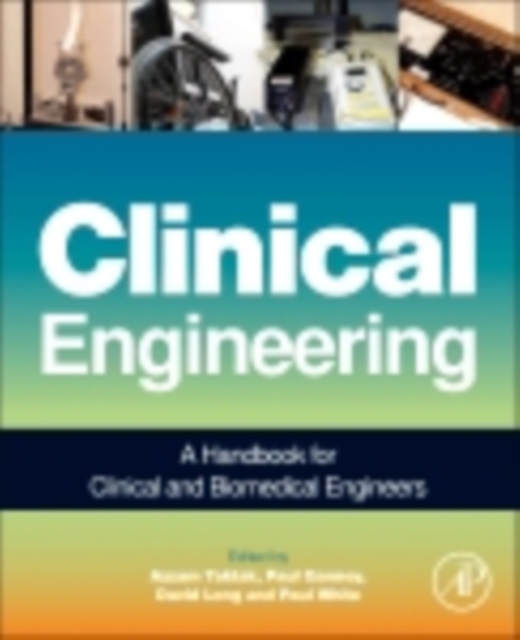
Clinical Engineering is intended for professionals and students in the clinical engineering field who need to successfully deploy medical technologies.