Nanostructures for the Engineering of Cells: Tissues and Organs showcases recent advances in pharmaceutical nanotechnology, with particular emphasis on tissue engineering, organ and cell applications.
Deep Learning (DL) is a method of machine learning, running over Artificial Neural Networks, that uses multiple layers to extract high-level features from large amounts of raw data.
Artificial Intelligence in Data Mining: Theories and Applications offers a comprehensive introduction to data mining theories, relevant AI techniques, and their many real-world applications.
New Concepts in the Management of Septic Perianal Conditions provides a comprehensive review of the medically important basic and clinical aspects of perianal diseases in adults.
Novel Designs of Early Phase Trials for Cancer Therapeutics provides a comprehensive review by leaders in the field of the process of drug development, the integration of molecular profiling, the changes in early phase trial designs, and endpoints to optimally develop a new generation of cancer therapeutics.
Telemedicine Technologies: Big Data, Deep Learning, Robotics, Mobile and Remote Applications for Global Healthcare illustrates the innovative concepts, methodologies and frameworks that will increase the feasibility of the existing telemedicine system.
Artificial Intelligence for Computational Modeling of the Heart presents recent research developments towards streamlined and automatic estimation of the digital twin of a patient's heart by combining computational modeling of heart physiology and artificial intelligence.
Biological Network Analysis: Trends, Approaches, Graph Theory, and Algorithms considers three major biological networks, including Gene Regulatory Networks (GRN), Protein-Protein Interaction Networks (PPIN), and Human Brain Connectomes.
A State-of-the-Art Guide to Biomedical Engineering and Design Fundamentals and ApplicationsThe two-volume Biomedical Engineering and Design Handbook, Second Edition offers unsurpassed coverage of the entire biomedical engineering field, including fundamental concepts, design and development processes, and applications.
U-Healthcare Monitoring Systems: Volume One: Design and Applications focuses on designing efficient U-healthcare systems which require the integration and development of information technology service/facilities, wireless sensors technology, wireless communication tools, and localization techniques, along with health management monitoring, including increased commercialized service or trial services.
Biomedical Signal Analysis for Connected Healthcare provides rigorous coverage on several generations of techniques, including time domain approaches for event detection, spectral analysis for interpretation of clinical events of interest, time-varying signal processing for understanding dynamical aspects of complex biomedical systems, the application of machine learning principles in enhanced clinical decision-making, the application of sparse techniques and compressive sensing in providing low-power applications that are essential for wearable designs, the emerging paradigms of the Internet of Things, and connected healthcare.
Wearable Robotics: Systems and Applications provides a comprehensive overview of the entire field of wearable robotics, including active orthotics (exoskeleton) and active prosthetics for the upper and lower limb and full body.
Vitamin D: Volume One: Biochemistry, Physiology and Diagnostics, Fourth Edition, presents the latest information from international experts in endocrinology, bone biology and human physiology, taking readers through the basic research of vitamin D.
Wireless sensor and body area networks (WSN and WBAN respectively) have been seen as a future way to monitor humans' psycho-physiological signs remotely.
Clinical Engineering is intended for professionals and students in the clinical engineering field who need to successfully deploy medical technologies.
Design of Nanostructures for Versatile Therapeutic Applications focuses on antimicrobial, antioxidant and nutraceutical applications of nanostructured materials.
Classification Techniques for Medical Image Analysis and Computer Aided Diagnosis covers the most current advances on how to apply classification techniques to a wide variety of clinical applications that are appropriate for researchers and biomedical engineers in the areas of machine learning, deep learning, data analysis, data management and computer-aided diagnosis (CAD) systems design.
A Comprehensive Physically Based Approach to Modeling in Bioengineering and Life Sciences provides a systematic methodology to the formulation of problems in biomedical engineering and the life sciences through the adoption of mathematical models based on physical principles, such as the conservation of mass, electric charge, momentum, and energy.
Advances in Polyurethane Biomaterials brings together a thorough review of advances in the properties and applications of polyurethanes for biomedical applications.
Real-Time Data Analytics for Large-Scale Sensor Data covers the theory and applications of hardware platforms and architectures, the development of software methods, techniques and tools, applications, governance and adoption strategies for the use of massive sensor data in real-time data analytics.
Cutting-edge coverage of mechatronics in medical systemsMechatronics in Medicine: A Biomedical Engineering Approach describes novel solutions for utilizing mechatronics to design innovative, accurate, and intelligent medical devices and optimize conventional medical instruments.
Vitamin D: Volume 2: Health, Disease and Therapeutics, Fourth Edition, authoritatively covers the evidence for new roles for vitamin D, ranging from cardiovascular disease, to cancer, diabetes, inflammatory bowel disease, multiple sclerosis and renal disease.
Laboratory Assessment of Vitamin Status provides a comprehensive understanding of the limitations of commonly used approaches used for the evaluation of vitamin status, reducing harm in the general health setting.
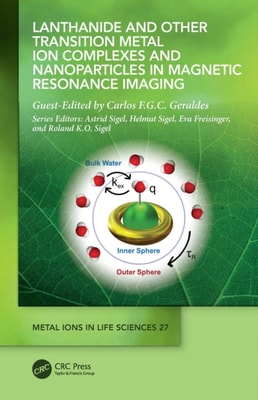
Since the development of the first clinical MRI contrast agent, Gd(DTPA) (or Magnevist(R)) in the early 1980s, another three linear and three macrocyclic (eg.
The Artificial Pancreas: Current Situation and Future Directions presents research on the top issues relating to the artificial pancreas (AP) and its application to diabetes.
Clinical Simulation: Education, Operations and Engineering, Second Edition, offers readers a restructured, comprehensive and updated approach to learn about simulation practices and techniques in a clinical setting.
Review Questions of Clinical Molecular Genetics presents a comprehensive study guide for the board and certificate exams presented by the American College of Medical Genetics and Genomics (ACMG) and the American Board of Medical Genetics and Genomics (ABMGG).
Systems Biology and Its Application in TCM Formulas Research presents a theoretical research system formed for Traditional Chinese Medicine (TCM) formulas, along with information on the study of Shexiang Baoxin Pill (SBP), a TCM formula that has shown significant clinical efficacy in the treatment of cardiovascular diseases.
Intelligent Biomechatronics in Neurorehabilitation presents global research and advancements in intelligent biomechatronics and its applications in neurorehabilitation.
Transport in Biological Media is a solid resource of mathematical models for researchers across a broad range of scientific and engineering problems such as the effects of drug delivery, chemotherapy, or insulin intake to interpret transport experiments in areas of cutting edge biological research.
Medical Device Technologies: A Systems Based Overview Using Engineering Standards, Second Edition, is a comprehensive overview of medical device technology, with a unified approach to each device area covering technical operation, clinical need, regulatory issues and standards and historical devices.
Atlas of Comparative Vertebrate Histology looks at the histology of a wide range of vertebrates, representative of all the major classes and families, with examples ranging from amphioxus to primates.
Engineering of Biomaterials for Drug Delivery Systems: Beyond Polyethylene Glycol examines the combined issues of PEGylation and viable biomaterials as alternatives.
Digital Health: Mobile and Wearable Devices for Participatory Health Applications is a key reference for engineering and clinical professionals considering the development or implementation of mobile and wearable solutions in the healthcare domain.
Osseointegration of Orthopaedic Implants helps product developers at orthopedic implant manufacturers enhance the effectiveness of orthopedic implants and reduce complications, particularly in patients with osteoporotic bones.
Medical Devices and Regulations: Standards and Practices will shed light on the importance of regulations and standards among all stakeholders, bioengineering designers, biomaterial scientists and researchers to enable development of future medical devices.
The Liver: Oxidative Stress and Dietary Antioxidants takes a novel approach to the science of oxidative stress in liver disease by recognizing that diseases are multifactorial and oxidative stress is a single component.
Melt Electrospinning: A Green Method to Produce Superfine Fibers introduces the latest results from a leading research group in this area, exploring the structure, equipment polymer properties and spinning conditions of melt electrospinning.
The growth of implant and fixed prosthodontics practices in dentistry has created a rapidly increasing demand for advanced ceramics and ceramic processes.
Neural Networks Modelling and Control: Applications for Unknown Nonlinear Delayed Systems in Discrete Time focuses on modeling and control of discrete-time unknown nonlinear delayed systems under uncertainties based on Artificial Neural Networks.
Human Genome Informatics: Translating Genes into Health examines the most commonly used electronic tools for translating genomic information into clinically meaningful formats.
Biomedical Applications of Functionalized Nanomaterials: Concepts, Development and Clinical Translation presents a concise overview of the most promising nanomaterials functionalized with ligands for biomedical applications.
Applications of Computational Intelligence in Multi-Disciplinary Research provides the readers with a comprehensive handbook for applying the powerful principles, concepts, and algorithms of computational intelligence to a wide spectrum of research cases.